 Daily Crypto Briefs




BRASILIA, May 1, 2026
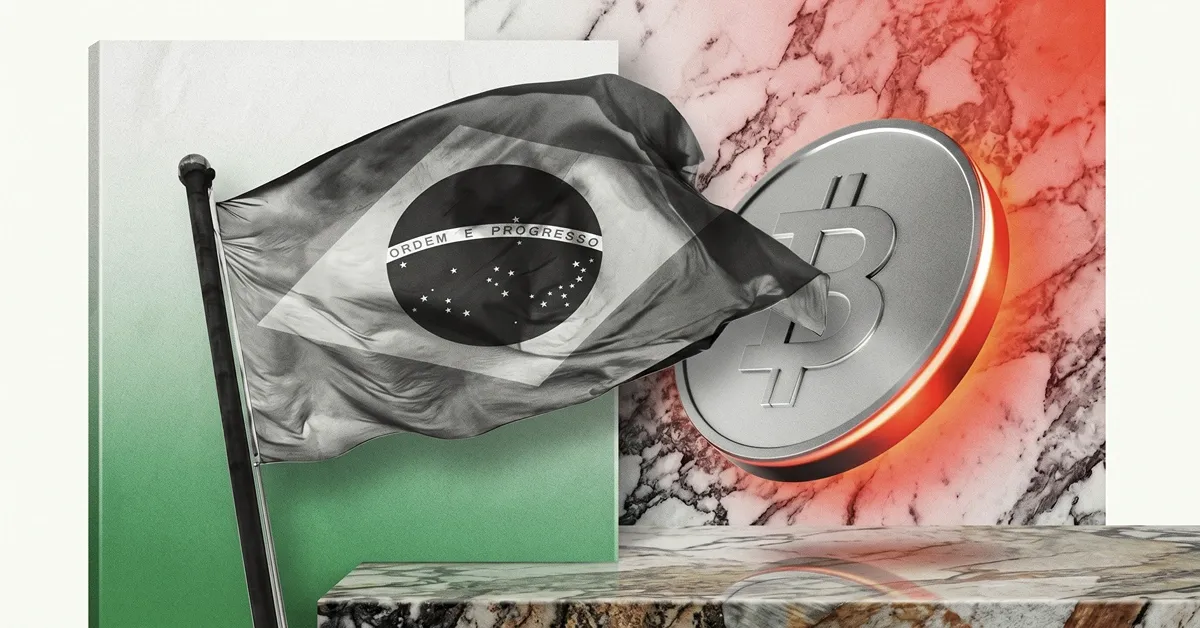
Brazil’s central bank has banned crypto and stablecoins from settlement inside regulated eFX cross-border payment rails, forcing those transfers back through traditional foreign exchange channels. Polymarket traders now price an 80% chance that bitcoin goes over $80,000 before the end of May.
Will Bitcoin go over \$80K before the end of May? Live

The measure comes through Resolution BCB 561, which changes the rules for payment and transfer providers operating under Brazil’s eFX framework. In plain terms, regulated providers can no longer use virtual assets as the settlement layer between a Brazilian eFX firm and its foreign counterparty.
Market snapshot: bitcoin traded around $78,412 on May 1, up about 2.6% over 24 hours, while the total crypto market stood near $2.68 trillion and BTC dominance was about 58.5%, public market data showed. Tether’s market cap was near $189.5 billion and USDC’s was near $77.2 billion, underscoring why stablecoin rails now sit at the center of the payments fight.
The central bank’s rule says the payment or receipt between an eFX provider and its foreign counterparty must be made exclusively through a foreign exchange transaction or movement in a non-resident real account in Brazil, with virtual assets barred from that process. That is a targeted restriction, not a nationwide prohibition on holding bitcoin, ether, USDT, or USDC.
Brazil bans crypto in eFX cross-border payments
The change is narrower than the headline sounds, but the target is important. Brazil is not trying to shut every wallet or exchange account. It is closing a regulated payment channel where firms could use stablecoins or other crypto assets as the operational bridge for international transfers.
Brazil is moving in two directions at once. On one side, regulators are tightening official rails. On the other, lawmakers have also entertained more pro-bitcoin policy ideas, including the country’s separate Bitcoin reserve bill that showed how far the policy debate has widened.
The immediate business impact falls on fintechs, payment institutions, banks, and other eFX providers that built around blockchain settlement for speed or cost. They will need to route regulated eFX flows through the official FX system or approved real-denominated accounts instead.
What was not immediately clear on Friday was how many active eFX providers were already settling through virtual assets, how quickly they must unwind those flows, and whether the central bank will issue additional operational guidance before enforcement tightens.
Stablecoins forced back onto traditional FX rails
Brazilian central bank chief Gabriel Galipolo previously said crypto use in the country had surged over the prior two to three years, with around 90% of flow tied to stablecoins, according to a Reuters report carried by ThePrint.
Stablecoins are no longer just exchange chips for traders. In emerging markets, they increasingly behave like a dollar-based settlement layer for remittances, treasury movement, contractor payments, and savings outside weak local rails.
The central bank is responding to that adoption by trying to keep cross-border flows inside supervised channels. The market signal is the opposite: users are choosing stablecoins because they are fast, liquid, and available around the clock, which means official restrictions can push activity into different venues rather than erase demand.
This is the same policy tension showing up across major markets. Russia is testing a controlled path for retail crypto access under caps, while China has leaned into prohibition and offshore enforcement, as covered in our report on China’s foreign-exchange crypto crackdown.
South Korea is also drawing a hard line around dollar-pegged stablecoins for companies, showing that the fight is less about whether stablecoins work and more about whether states can keep them from becoming parallel dollar rails. That context made our earlier look at Korea’s corporate stablecoin limits part of the same global story.
Crypto adoption keeps moving without permission
Brazil’s action may slow regulated payment companies, but it also confirms the bigger adoption signal. Central banks do not write emergency-style guardrails for products nobody uses. They react when users and businesses have already found a better rail than the one incumbents control.
Crypto does not need a country to bless every use case before the networks function. Countries need useful rails because citizens, exporters, freelancers, and fintechs compare cost, speed, liquidity, and access in real time.
Russia’s more permissive retail framework, China’s crackdown, South Korea’s stablecoin limits, and Brazil’s eFX ban all point to the same conclusion: governments are no longer debating whether crypto exists at the edge of finance. They are trying to decide how much of it they can pull back inside their own perimeter.
Markets are not treating the Brazil rule as a broad risk-off shock so far. The Crypto Fear and Greed Index stood at 26 on May 1, a Fear reading, while bitcoin remained close enough to $80,000 for the Polymarket contract to show the line as a live near-term market test.
Fear & Greed Index
May 1, 2026The next items to watch are any central bank clarification on transition timing, provider compliance deadlines, and whether stablecoin settlement volume shifts toward non-eFX routes. The unresolved question is not whether Brazil can narrow one regulated channel. It is whether official FX systems can become competitive enough to stop users from choosing crypto rails when they are faster and cheaper.
Stay up to date
Get the latest crypto insights delivered to your inbox
Primary sources and further reading
| Source | Title |
|---|---|
| | Banco Central do Brasil: Resolution BCB 561 |
| | Cointelegraph: Brazil central bank bars virtual assets from eFX |
| | ThePrint: Reuters report on Brazil stablecoin flows |
| | CoinMarketCap: Bitcoin market data |
| | Alternative.me: Crypto Fear and Greed Index |
| | Polymarket: Bitcoin May 2026 price market |
Fact-checked by: Daily Crypto Briefs Fact-Check Desk
Related Articles





Frequently Asked Questions
Did Brazil ban crypto payments completely?
No. The new rule bars virtual assets from settlement inside regulated eFX cross-border payment and transfer services. It does not amount to a general ban on buying, selling, or holding crypto in Brazil.
What is Brazil's eFX system?
eFX is Brazil's regulated framework for certain digital international payment and transfer services. The new rule says providers must settle those flows through traditional foreign exchange transactions or non-resident real accounts, not virtual assets.
Why is Brazil targeting stablecoins?
Brazilian officials have pointed to rapid stablecoin growth. Central bank chief Gabriel Galipolo previously said about 90% of the country's crypto flow was linked to stablecoins, raising concerns around supervision, taxation, and foreign exchange controls.
Does Brazil's crypto rule hurt Bitcoin adoption?
It can slow regulated payment providers that used crypto rails for settlement, but it also confirms that stablecoins and Bitcoin are now large enough to shape central bank policy. Adoption continues through open networks, exchanges, wallets, and offshore liquidity.