 Daily Crypto Briefs
BEIJING, Feb. 22, 2026
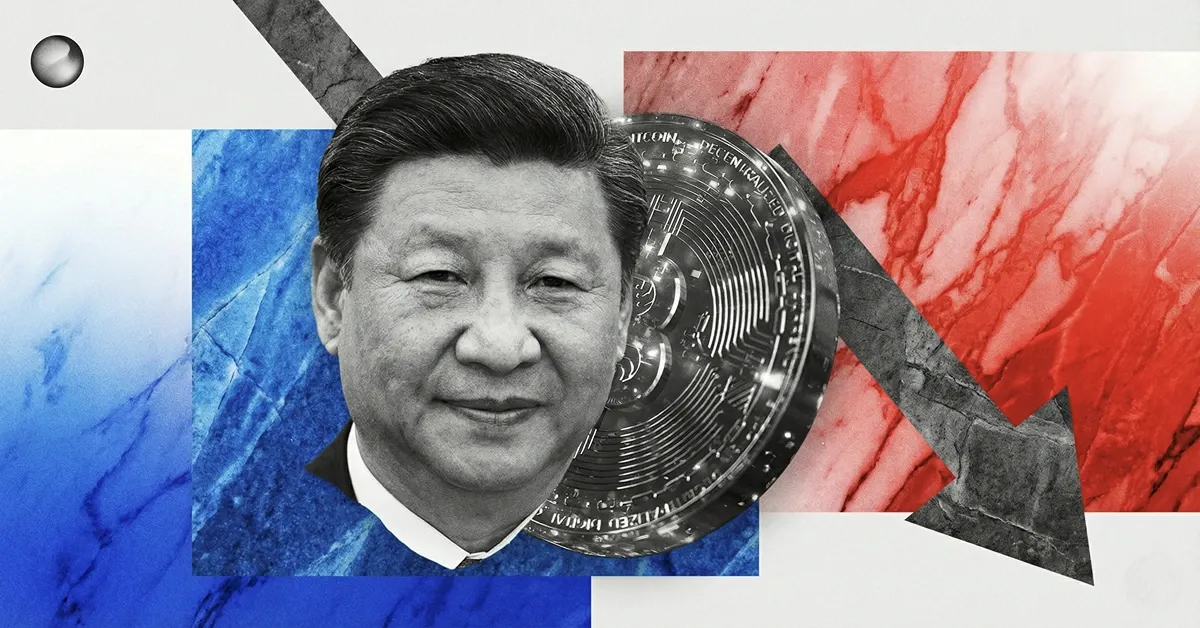
China’s central bank and seven agencies said in a notice that onshore real-world asset (RWA) tokenization activities and related services should be prohibited without explicit approval, extending its crypto crackdown as bitcoin traded around $67,600 on Sunday.
Bitcoin (BTC) - 2-week snapshot
BTCChina’s PBOC notice bans onshore RWA tokenization services
The People’s Bank of China (PBOC) and seven other agencies said the revised document expands China’s enforcement perimeter beyond spot crypto trading to include the tokenization of claims on real-world assets, according to an official Q&A posted the same day.
In the notice itself, regulators wrote that “conducting real-world asset tokenization activities within the borders… should be prohibited,” treating unapproved onshore RWA tokenization and related service provision as illegal financial activity under the same risk lens used for other virtual-currency business. That carveout is narrow, with the text allowing exceptions only when a competent authority agrees and activity runs through designated financial infrastructure, and it was not immediately clear what approvals or venues would qualify.
The Q&A also gives a formal definition for search and compliance teams that have been arguing over where “RWA” ends and regulated securities begin. It describes RWA tokenization as using cryptography and distributed ledgers or similar technology to turn ownership or income rights into token-like claims and then issue and trade them, a structure regulators argue can resemble unauthorized securities issuance or illegal fundraising when it is offered to the public without approval.
Offshore RWA issuance faces “same business, same risk” rules
The Feb. 6 update builds on China’s prohibition-first approach, and follows the same playbook we covered in our earlier breakdown of the broader crackdown on offshore exchanges and RMB stablecoins, when regulators reiterated that bitcoin and other virtual currencies do not have legal tender status in China and that most related business activity is prohibited.
Where this version goes further is in the offshore perimeter. The Q&A says domestic entities that directly or indirectly go abroad to conduct certain RWA tokenization business tied to onshore rights face strict regulation by agencies including the National Development and Reform Commission, the CSRC, and the State Administration of Foreign Exchange, and it says no unit or individual may carry out those activities without required approvals or filings.
The same document frames that approach under a “same business, same risk, same rules” principle, a way of saying the legal wrapper does not matter if the economic exposure looks like an onshore securities or fundraising activity. Practically, that is a warning to issuers, broker style intermediaries, and technology vendors that offering tokenized claims on onshore assets abroad can still pull in onshore compliance obligations, even if the trading venue is outside China.
It also reinforces the cross-border service ban. The notice says overseas entities and individuals must not provide RWA tokenization-related services to onshore entities in any form, a line regulators have used for years in crypto trading enforcement but that is now spelled out for tokenization narratives that tried to present themselves as “not crypto.”
Global DeFi gets the window China shut at home
For markets, the immediate signal is less about whether tokenization exists and more about where it can legally be built. By naming RWA tokenization directly and restricting both domestic activity and cross-border service provision, Beijing reduces ambiguity for onshore actors while increasing incentives for experimentation to concentrate in offshore, compliance-first jurisdictions and products.
That offshore outlet is already measurable. RWA.xyz data showed tokenized U.S. Treasury products at about $10.85 billion in total value across 64 tracked assets, up about 1.8% over the past seven days, a sign that much of the market’s “real-world” on-chain collateral is being built around dollar assets rather than China-linked claims.
Some traders have framed China’s move as a familiar cycle of headline risk that triggers a short-term selloff, then leaves the global market with fewer competitors building at scale onshore. The catch is that the same rules also tighten the offshore path for tokenized claims tied to onshore rights, which means the clearest beneficiaries are likely to be tokenized products that do not rely on China-based collateral and DeFi protocols that integrate those assets.
What remains unclear is how aggressively regulators will enforce the onshore service ban against offshore tokenization platforms, what specific approvals and designated infrastructure will be used for any permitted activity, and whether additional implementation guidance follows from the agencies named in the notice. Investors will also be watching for any new enforcement actions or compliance notices to banks, payment firms, and internet platforms, similar to the earlier cross-border enforcement posture outlined in our coverage of offshore exchanges and RMB stablecoins, that could change how quickly the policy moves from paper to practice.
Stay up to date
Get the latest crypto insights delivered to your inbox
Primary sources and further reading
Fact-checked by: Daily Crypto Briefs Fact-Check Desk
Frequently Asked Questions
Did China ban RWA tokenization?
China’s Feb. 6 joint notice says that conducting real-world asset (RWA) tokenization activity onshore, and providing related intermediary or IT services, should be prohibited unless explicitly approved and conducted through designated financial infrastructure.
What is RWA tokenization?
In the regulator Q&A, authorities define RWA tokenization as using cryptography and distributed ledger or similar technology to turn ownership or income rights into token-like claims that are then issued and traded.
Can offshore platforms offer RWA tokenization to users in mainland China?
The notice says overseas entities and individuals must not provide RWA tokenization-related services to onshore entities in any form, tightening the cross-border perimeter.
What does “same business, same risk, same rules” mean in this notice?
China’s regulators say offshore structures that replicate onshore financial activity should be regulated under the same risk-based approach, including approvals, filings, and AML requirements where applicable.
Why does this matter for DeFi and tokenized Treasuries?
By drawing a sharper line against onshore tokenization while defining the activity, the notice can redirect attention to offshore, compliance-first tokenized products already used as on-chain collateral in DeFi.