 Daily Crypto Briefs
BEIJING, Feb. 7, 2026
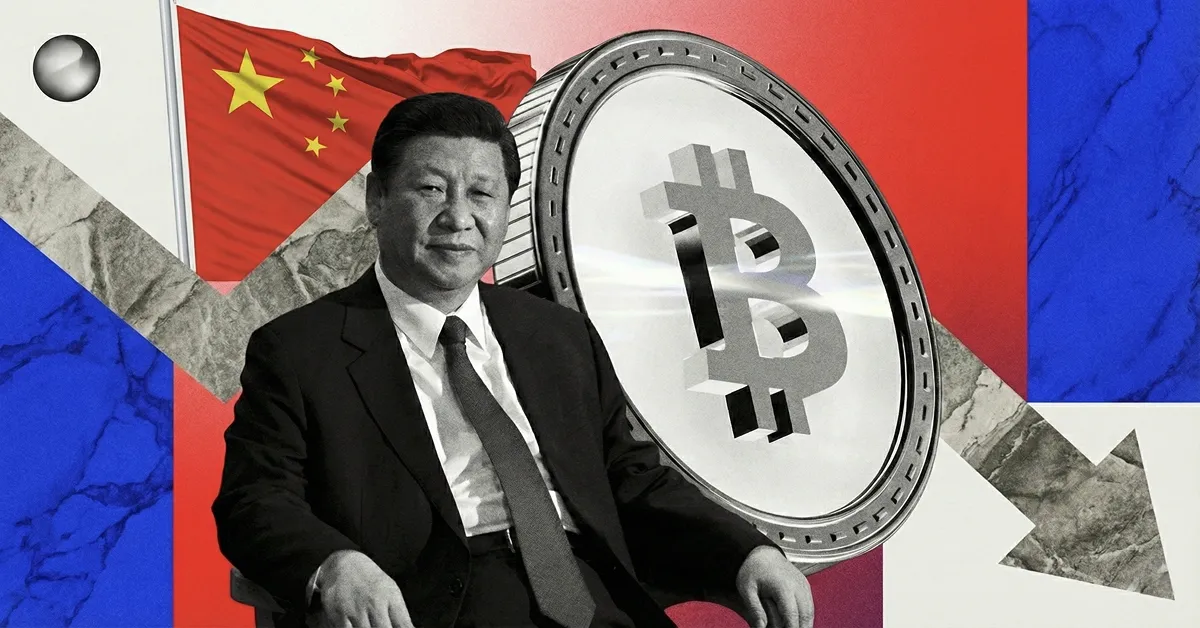
China’s central bank and seven agencies on Feb. 6 updated a joint notice reinforcing the country’s crypto crackdown, as bitcoin traded near $69,500 amid choppy price action.
Polymarket’s odds of China unbanning Bitcoin by 2027 are now priced at 4%, providing a low-priced bet with potentially asymmetric payout, and 2026 still has plenty of room for headlines that can reprice policy odds quickly.
Will China unban Bitcoin by 2027? Live

What China’s crypto notice bans
The People’s Bank of China (PBoC) and the China Securities Regulatory Commission said the updated document revises China’s 2021 playbook and expands the compliance perimeter to cover newer speculation around virtual currencies and “real-world asset” (RWA) tokenization, according to an official Q&A posted Feb. 6.
The notice keeps China’s prohibition-first stance and adds tighter guardrails around offshore issuance and tokenization structures that try to wrap off-chain claims in on-chain tokens, a segment often pitched as “RWA.” The text frames most crypto-facing business activity as illegal financial activity and pairs the policy with enforcement expectations for regulators, police, and local governments.
The core posture is straightforward:
- No legal recognition of crypto as “money”: regulators reiterate that virtual currencies do not share the legal status of fiat currency in China.
- Most crypto-related business activity is treated as illegal financial activity, with penalties and potential criminal referrals depending on conduct.
- Offshore platforms and foreign service providers are barred from offering crypto services into the mainland, tightening the cross-border perimeter.
The revised rules also put stablecoins and tokenization in the same enforcement lane. The notice states that no entity or individual may issue a stablecoin pegged to the renminbi abroad without approval, and it defines RWA tokenization broadly as converting ownership or income rights into token-like claims using cryptography and distributed ledgers, then issuing and trading them under structures that can resemble securities or fundraising activity.
It also gets more granular on what counts as prohibited crypto business, listing activities such as exchanging fiat and virtual currencies, operating as a central counterparty, and providing trading intermediation or pricing services, while adding that domestic entities and their controlled offshore entities may not issue virtual currencies abroad without approval. The same notice includes enforcement measures that explicitly reference ongoing cleanups of virtual-currency “mining” and related promotion and registration activity.
Market snapshot: Bitcoin near $69,500 as China reiterates ban
Bitcoin was down about 0.9% over the past 24 hours at roughly $69,543 as of 20:42 UTC, while ether was up about 1.3% near $2,098. Bitcoin traded in a roughly $67,700–$71,600 range over the past day. Total crypto market cap was about $2.46 trillion, and bitcoin dominance was roughly 56.6%.
Bitcoin (BTC): 6-month snapshot
BTCChina’s hard ban vs. Trump’s U.S. crypto agenda
In the notice, regulators wrote that bitcoin, ether, and tether “do not have legal tender status” and “should not and cannot be used as currency in market circulation,” while outlining a long list of prohibited business activities tied to trading, issuance, and intermediation, according to the PBoC’s published text.
The Feb. 6 package also makes enforcement posture explicit. It directs agencies to investigate and dispose of suspected illegal financial activity and states that cases suspected of constituting crimes should be transferred to judicial authorities, while also warning that investors bear losses for civil acts deemed invalid when they violate public order and good morals, per the same notice.
The policy timing widens a global split. China is choosing a hard perimeter that treats crypto rails as a monetary-sovereignty and financial-stability risk, including constraints on offshore issuance and on RMB-pegged stablecoins. In the U.S., by contrast, the fight is over what legal plumbing crypto is allowed to use and who gets to control it, a debate we track in our guide to US Crypto Regulation 2026.
That U.S. tug-of-war is not only regulators versus exchanges. Coinbase CEO Brian Armstrong said in a Fox Business interview that large banks’ lobbying arms are working to slow pro-crypto policy and protect incumbent payment and deposit economics, underscoring how institutional incentives can shape what “adoption” looks like in practice, according to Fox Business.
For markets, the implication is less about ideology and more about where liquidity and product development concentrate. A prohibition model can push activity offshore and into proxies, while a rulemaking model can channel flows into regulated wrappers that are ultimately mediated by institutions, an outcome early bitcoin advocates warned could turn an anti-bank technology into a bank-routed market.
What remains unclear is how aggressively China will pursue cross-border enforcement against offshore front ends and service providers that still touch mainland users, and how much RWA tokenization activity will migrate into approved financial infrastructure versus being shut down entirely. The next markers to watch are case announcements, new compliance guidance for intermediaries and IT providers, and whether U.S. policymakers convert pro-crypto messaging into durable statutes as China steps further away from the sector.
Stay up to date
Get the latest crypto insights delivered to your inbox
Primary sources and further reading
Fact-checked by: Daily Crypto Briefs Fact-Check Desk
Frequently Asked Questions
Is cryptocurrency legal in China?
China’s central bank and multiple agencies have repeatedly stated that virtual currency-related business activities are illegal financial activity domestically, and that offshore entities are barred from providing related services into the mainland.
Does China recognize Bitcoin as money?
No. China’s regulators say bitcoin and other virtual currencies do not have legal tender status and should not be used as currency in market circulation.
Can foreign crypto exchanges serve users in mainland China?
The notice says overseas entities and individuals must not provide virtual currency-related services to domestic entities, and it outlines enforcement measures for cross-border provision of crypto services.
What is an RMB-pegged stablecoin and why is it targeted?
An RMB-pegged stablecoin is a token designed to track the value of China’s currency. Regulators argue that stablecoins can mimic some money functions, so the notice restricts issuance of RMB-pegged stablecoins abroad without approval as a monetary-sovereignty issue.
What is RWA tokenization in China’s notice?
The document describes RWA tokenization as using cryptography and distributed ledger or similar technologies to turn ownership or income rights into tokens or token-like claims and then issue and trade them, and it warns that many structures could constitute illegal securities or fundraising activity.
How does China’s crackdown compare with the U.S. approach?
China’s framework is prohibition-first, while U.S. policy debates focus on market structure, stablecoin rules, and which agencies supervise crypto activity—topics we map in our guide to US crypto regulation in 2026.