 Daily Crypto Briefs


WASHINGTON, April 29, 2026
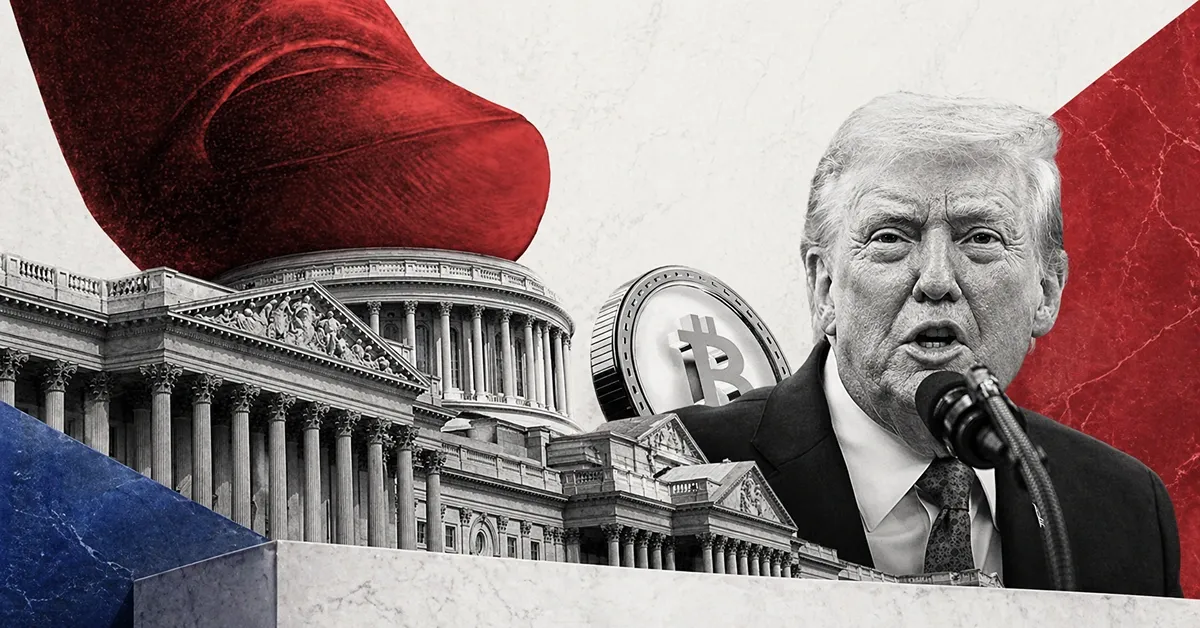
Key Senate Democrats are refusing to give final support to the CLARITY Act without crypto ethics rules aimed at President Donald Trump’s family business interests, leaving the House-passed market-structure bill at 46% on Polymarket after a slide from the 60s into the 40s.
Will the CLARITY Act be signed into law in 2026? Live

A sitting president and immediate family members should not be able to financially benefit from rules they are helping shape, especially when the benefits flow through memecoins, stablecoins, token sales, and branded crypto projects.
The odds of CLARITY passing previously peaked at 82% in February, and now sit around 46%. That swing signals a real political failure path, and the uncertainty is no longer only about banks, Coinbase, DeFi language, or the Senate calendar. It is also about Trump’s crypto extraction, which has turned a pro-crypto bill into a conflict-of-interest test that could fuel future investigations.
The bill, formally H.R. 3633, would divide digital-asset oversight between the SEC and CFTC and create registration paths for crypto intermediaries, according to the GovInfo bill text. The House passed it 294 to 134 on July 17, 2025, but the Senate still has to turn negotiations into committee action.
The House vote drew 216 Republican yes votes and 78 Democratic yes votes, according to the House Clerk.
In a congressional report, House Judiciary Democrats said Trump family crypto ventures had attracted foreign-linked capital and raised constitutional, ethical, and national-security concerns, according to the committee’s official release. That is the primary-source backbone of the ethics fight now bleeding into the CLARITY Act.
The latest turn is that the ethics demand is no longer only Democratic. Sen. Thom Tillis, a Republican on Senate Banking, said he would not support the Senate crypto bill without ethics language, Cointelegraph reported, citing Politico. Democratic Sen. Ruben Gallego was also reported as saying there is no final bill without bipartisan agreement on the ethics provision.
Democrats Want Trump Crypto Rules
The Trump-linked World Liberty Financial has promoted WLFI tokens and USD1 while the White House pushes a friendlier federal digital-asset framework. When the same political machine can loosen rules and profit from the market those rules unlock, the ethics issue becomes a market-structure issue too.
The clean version of the rule should not be partisan. If Congress writes a ban on federal officials sponsoring, endorsing, or issuing digital assets, it should apply to all politicians and their immediate families, not just Trump. The presidency is the obvious stress test, but the conflict is broader than one name.
That distinction matters because the crypto industry should not let bad political actors turn necessary rules into a personal toll booth. The case for clear token, exchange, custody, and stablecoin rules remains strong. The case for letting any officeholder use regulation to pump a family asset is weak.
CLARITY Act Still Has A Path
The bill is still close because the hardest policy questions have already been narrowed. Banks have spent months fighting stablecoin-yield language, a dispute we covered when Trump accused banks of slowing the bill. Coinbase then became a separate flashpoint after critics argued the exchange was protecting its own stablecoin and staking economics, a fight we tracked in the Coinbase backlash.
Those fights wounded the bill, but they did not kill it. The Senate has already absorbed a canceled markup, private negotiations, bank pressure, exchange pressure, and a growing ethics fight. The fact that the market is still near even odds instead of pricing the bill as dead says traders still see a workable compromise.
The Senate Banking calendar is still the next procedural check. A posted date and public text would matter more than another quote from a lawmaker, because this stage is where every unresolved issue has to become actual legislative language.
That is also why the earlier canceled Senate vote still matters. The bill has repeatedly looked close, then slipped once the details reached committee reality. Ethics language could now be the final barrier, or the final cover lawmakers need to say they fixed the conflict and move.
Crypto Can Move Without Congress
Crypto does not need politicians to validate self-custody, stablecoin payments, Bitcoin settlement, DeFi rails, or tokenized markets. In practice, the pressure is the other way around: politicians are trying to catch up to an industry that already created demand outside their control.
If Washington adds serious ethics rules and still passes market-structure legislation, the industry gets a cleaner framework and a stronger argument that crypto can outgrow the political extraction cycle. If Washington fails again, users and builders will keep moving, but more of the activity will likely route around U.S. law instead of through it.
Risk sentiment remains cautious rather than euphoric. Alternative.me describes its index as a 0 to 100 gauge where lower values indicate fear and higher values indicate greed, and third-party historical trackers showed the April 29 reading at 26, labeled Fear.
Fear & Greed Index
April 29, 2026The next catalysts are straightforward: a public Senate draft, a Banking Committee markup date, final language on federal-official crypto conflicts, and proof that the stablecoin-yield compromise can survive both banks and exchanges. Until then, the CLARITY Act is almost done in the same uncomfortable way it has been for months: close enough to keep hope alive, but messy enough that nobody should mistake it for certainty.
Stay up to date
Get the latest crypto insights delivered to your inbox
Primary sources and further reading
| Source | Title |
|---|---|
| | GovInfo: H.R. 3633 bill text |
| | U.S. House Clerk: Roll call 199 on H.R. 3633 |
| | Cointelegraph: Tillis won't support Senate crypto bill without ethics provision |
| | House Judiciary Democrats: Trump family crypto report |
| | Polymarket: CLARITY Act signed into law in 2026? |
| | Alternative.me: Crypto Fear and Greed Index |
| | CoinMarketCap: Bitcoin price |
Fact-checked by: Daily Crypto Briefs Fact-Check Desk
Related Articles

Frequently Asked Questions
Why are Democrats refusing to back the CLARITY Act?
Democrats are demanding ethics language that would limit federal officials, including the president and their immediate families, from sponsoring, endorsing, or issuing digital assets while shaping crypto rules.
Why does Trump's crypto empire matter for the CLARITY Act?
Trump-linked ventures such as World Liberty Financial, USD1, NFTs, and the TRUMP memecoin create a conflict-of-interest issue because the president's family can benefit financially from pro-crypto regulation.
What are the current Polymarket odds for the CLARITY Act?
The market is around 46% now after falling from the 60s into the 40s. It previously peaked at 82% in February.
Does crypto adoption depend on the CLARITY Act passing?
No. A clear federal rulebook could help keep activity onshore and reduce legal uncertainty, but stablecoins, self-custody, DeFi, tokenization, and Bitcoin adoption already move globally without waiting for Congress.
What should crypto traders watch next?
Watch for published Senate text, a Banking Committee markup notice, final ethics language, and whether the stablecoin-yield compromise survives bank and exchange lobbying.