 Daily Crypto Briefs



CASABLANCA, August 30, 2026
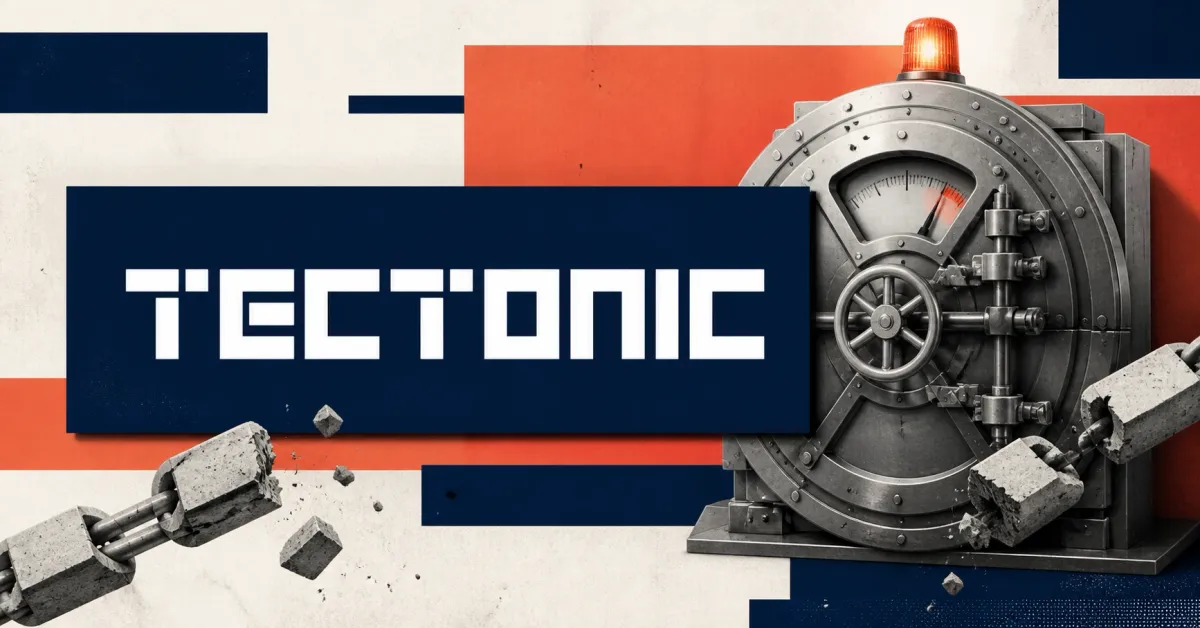
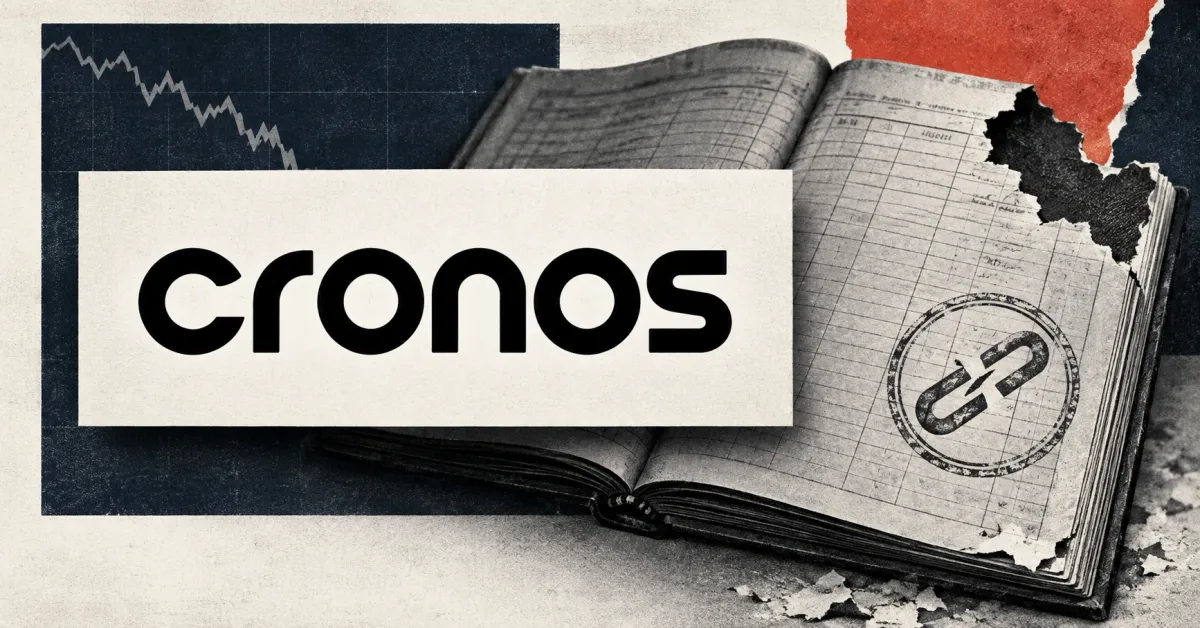
Cronos halted block production on Sunday after identifying an exploit at Tectonic, the network’s largest lending protocol, as on-chain researcher Weilin Li put affected assets at roughly $75 million and said only about $6 million had reached Ethereum before the stop.
Tectonic separately warned users not to interact with the protocol while it investigates. Neither Tectonic nor Cronos had confirmed a final loss, named an attacker, published a post-mortem or said when block production would resume by the time of publication.
The incident immediately made CRO a focal trading asset. CoinMarketCap’s market review showed CRO rising from about $0.05718 at 12:00 UTC to roughly $0.06013 at 15:00 UTC, a move of about 5.2%, while reported hourly trading volume rose from about $7.5 million to $17.2 million. Price action does not establish the health of Tectonic’s lending pools or the value that may be recoverable.
In its official warning, Tectonic said it was aware of an incident and was “actively investigating,” adding that users should not interact with the protocol until it confirms it is safe. Cronos said it had identified an exploit in Tectonic and halted the network, according to The Block’s report.
The combination of a lending-protocol incident and a chain halt has two separate consequences. It can limit an attacker’s ability to move assets, but it also interrupts ordinary transfers, liquidations, bridges and smart-contract activity for other Cronos users. Whether the pause protects depositors, and at what cost, depends on a forensic accounting and recovery plan that have not yet been published.

Cronos
CROCronos Halt Follows Tectonic’s $75M Exploit Estimate
The dedicated loss-impact check supports treating $75 million as a provisional estimate, not a confirmed theft or final customer shortfall. Li initially estimated about $66 million, then added an estimated $8 million at a second attacker-controlled address, The Block reported. Tectonic had not independently confirmed either figure.
The same analysis said about $6 million was bridged to Ethereum before Cronos stopped. That leaves a substantial reported value still on Cronos, but “still on chain” is not equivalent to frozen, recovered or available for repayment. The network and the protocol have not yet identified affected pool balances, bad debt, wallet counts, or assets controlled by any recovery process.
Before the incident, Tectonic had about $121.7 million in total value locked and roughly $82.7 million in active loans, according to The Block’s cited DefiLlama data. TVL is a snapshot of value attributed to contracts, rather than a guarantee of liquidity or a final measure of a lender’s claim after an exploit.
The figure would make this a much larger lending-protocol event than the $8.7 million provisional loss estimate in Moonwell’s recent Base borrowing incident. The mechanisms may look similar in early reporting, but Cronos and Tectonic have not yet released sufficient transaction-level details to declare the same root cause or user outcome.
Crypto.com CEO Kris Marszalek said the company’s app and exchange were not compromised and that its security team was assisting the investigation, The Block reported. That is an important boundary around the incident, but it does not resolve the status of assets supplied to, borrowed from or deployed through Tectonic on Cronos.
TONIC Collateral Is Central to the Reported Attack Path
The working account from Li is a price-manipulation attack. The researcher said the attacker pushed the price of thinly traded TONIC up about 100-fold in roughly 20 minutes, then supplied the token as collateral and borrowed assets with deeper liquidity against its inflated value.
That pattern is a collateral-pricing failure, not evidence that every contract on Cronos or every Crypto.com service was breached. Lending systems use an oracle or price input to judge how much can be borrowed against collateral. When a thin market can be moved quickly and the risk settings accept that move, the apparent collateral value can diverge sharply from what could be sold in normal trading.
The Block noted that Tectonic’s published parameters gave TONIC a 20% collateral factor. In practical terms, a collateral factor is the share of a deposited asset’s recognized value that a user can borrow against. A low percentage can reduce risk, but it cannot fully protect a pool if the source price becomes unrealistic during a fast, low-liquidity move.
The reported sequence recalls the issue in an earlier balance-coin oracle exploit, where a distorted collateral price opened a path to liquid assets. The comparison describes a risk category, not a finding that the protocols have identical contracts, price feeds or remedies.
Tectonic’s own protocol site describes a cross-chain money market. It had not posted a public technical explanation of the incident at publication, so the TONIC account should remain attributed to the research and reporting rather than be treated as Tectonic’s confirmed root cause.
Tectonic Users Await a Restart and Recovery Plan
For ordinary Cronos users, the short-term operational question is not simply whether CRO moved. A halted network can prevent new transfers and can also delay collateral management, liquidation, bridge settlement and interactions with unrelated applications. Users should rely on the project’s official restart notices and on the status policies of any exchange or wallet they use.
For Tectonic participants, the missing data are more specific: which pools were borrowed, whether borrowers or suppliers face bad debt, how much value remains controlled on Cronos, whether the protocol can pause or isolate positions, and whether any party will provide a recapitalization or reimbursement plan. The current warning tells users not to interact, but it does not answer those questions.
The halt also creates a governance choice. Keeping a chain offline may constrain a suspected attacker, while restarting without a defined response can reopen the route that investigators are trying to contain. Cronos has not disclosed whether its validators will use a normal restart, an upgrade, a rollback or another recovery process, so no outcome should be assumed.
The broader market backdrop was positive despite the protocol-specific disruption. Alternative.me’s Crypto Fear and Greed Index registered 70, or Greed, on August 30. That reading measures broad sentiment, not the liquidity or solvency of a single DeFi market.
Fear & Greed Index
August 30, 2026The facts to watch next are a Cronos restart decision, a Tectonic technical post-mortem, transaction-level confirmation of the reported $75 million, an accounting of the roughly $6 million reported bridged to Ethereum, and an explicit plan for any losses borne by borrowers or suppliers. Until then, the confirmed events are the Tectonic warning and the Cronos halt, while the largest financial numbers remain credible but unconfirmed research estimates.
Stay up to date
Get the latest crypto insights delivered to your inbox
Primary sources and further reading
| Source | Title |
|---|---|
| | Tectonic official protocol site |
| | Tectonic official incident statement on X |
| | Cronos official site |
| | Cronos Network official halt statement on X |
| | The Block: Cronos and Tectonic incident report |
| | CoinMarketCap: CRO market move during the Tectonic incident |
| | Alternative.me: Crypto Fear and Greed Index |
Fact-checked by: Daily Crypto Briefs Fact-Check Desk
Related Articles


Frequently Asked Questions
Why did Cronos halt its network?
Cronos said it identified an exploit affecting Tectonic, a lending protocol on the network, and halted block production. The network had not published a restart plan or full technical post-mortem as of August 30.
How much was lost in the Tectonic exploit?
On-chain researcher Weilin Li estimated roughly $75 million in affected assets. The estimate was not a final accounting from Tectonic or Cronos, and neither project had disclosed a final loss, bad-debt or recovery figure at publication.
Was Crypto.com affected by the Tectonic exploit?
Crypto.com CEO Kris Marszalek said the company's app and exchange were not compromised and that its security team was assisting the investigation. That statement does not determine the impact on Tectonic users or Cronos on-chain positions.
What is the reported TONIC price-manipulation attack?
Reporting based on an on-chain researcher's analysis says an attacker pushed up the price of thinly traded TONIC, supplied it as collateral and borrowed other assets against the inflated value. Tectonic had not published a technical root-cause report by publication.