 Daily Crypto Briefs


DUBAI, May 11, 2026
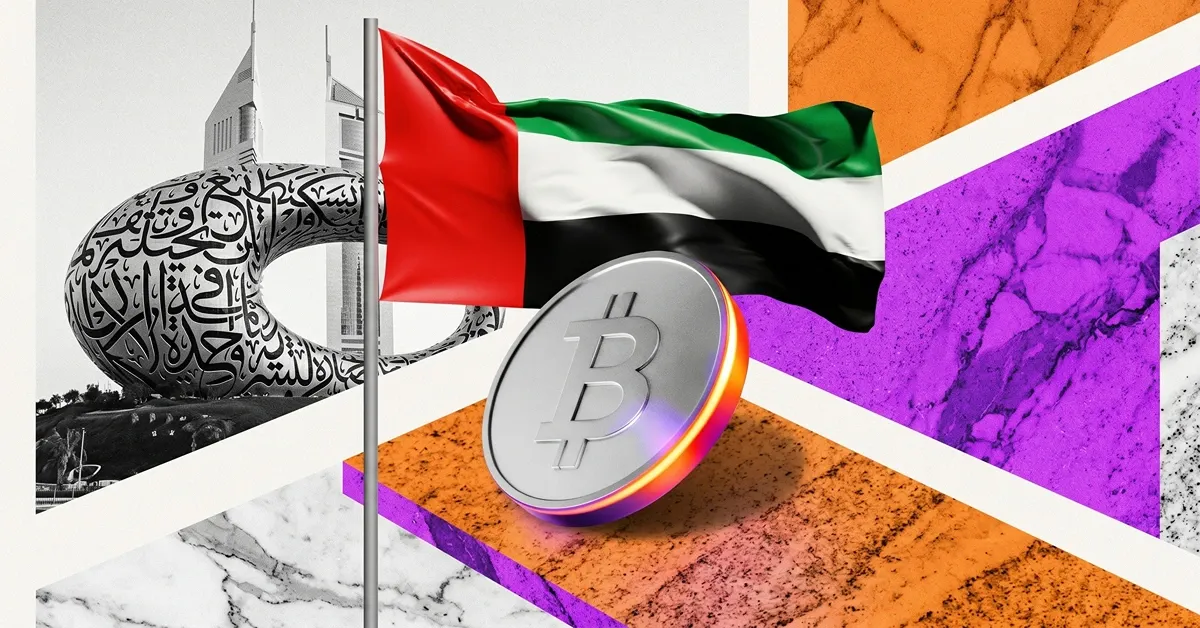
UAE residents can now pay Dubai government fees with crypto after Crypto.com secured a UAE stored-value license tied to its Dubai Finance partnership, marking a major public-payments shift as governments move digital assets from trading apps into official financial infrastructure. The move comes as banks and lawmakers worldwide accelerate digital asset adoption.
The development centers on Crypto.com’s local entity, Foris DAX Middle East, and a Dubai Department of Finance agreement first announced in May 2025. The model lets users pay with digital assets through a regulated platform while government entities receive settlement in UAE dirhams or approved dirham-backed stablecoins.
Market snapshot: CoinGecko data showed bitcoin near $81,992, up about 0.8% over 24 hours, while ether traded near $2,341, down about 0.9%. Crypto.com-linked Cronos traded near $0.079, up about 5.7%, with roughly $37.5 million in 24 hour volume. The Crypto Fear and Greed Index printed 48, a neutral reading.
A republication of the Dubai Finance announcement said the payment channel would let customers use Crypto.com wallets, with crypto converted into Emirati dirhams and transferred to Dubai Finance accounts.
The timing is important because the story is no longer only about exchanges listing tokens. It is about governments, banks, asset managers, and payment networks building around the same rails.
Dubai Crypto Payments Move From MoU To Activation
Dubai Finance and Crypto.com signed their government-fee payments MoU on May 12, 2025, during the Dubai FinTech Summit. The stated purpose was simple: allow government service fees to be paid using cryptocurrency wallets within a regulated payment framework.
Crypto.com then received in-principle approval from the Central Bank of the UAE for a stored-value facilities license in October 2025. At that stage, the company said the final license would allow digital payment services for Dubai government fees, with settlements conducted in dirhams or dirham-pegged stablecoins.
On May 11, 2026, Crypto Briefing reported that the license had been granted and that Crypto.com could launch the Dubai Finance government-fee payment service for UAE residents. The exact list of supported digital assets, rollout dates by government department, and user eligibility details were not immediately clear.
Dubai is not saying every government balance sheet should hold bitcoin tomorrow. It is saying residents can use crypto as a payment interface while the public sector receives regulated settlement assets.
This is the same practical pattern showing up elsewhere. In the UAE, crypto capital and political capital have already intersected through the reported World Liberty stake involving an Abu Dhabi-linked entity, which we covered in the UAE-backed World Liberty deal. The government-fee move is cleaner and more operational: it turns adoption into payment plumbing.
Banks And Countries Are Joining The Same Crypto Race
The broader backdrop is a global race to decide who controls digital-asset rails before those rails become default infrastructure.
Bank of America is part of that shift. Solidus Labs said major U.S. banks, including Bank of America, JPMorgan Chase, Citi, Morgan Stanley, Wells Fargo, and BNY Mellon, opened or filled senior digital-asset compliance, legal, or risk roles over the prior six months.
Bank of America is not a small test case. Its 2025 annual report showed about $3.4 trillion in total assets and roughly 69 million consumer and small-business clients, while its wealth division reported trillions in client balances. When a bank of that scale staffs crypto risk, compliance, and product expertise, it is not treating the sector as a passing app trend.
JPMorgan already has Kinexys, the bank-led blockchain platform formerly known as Onyx. Goldman Sachs has participated in institutional digital-asset markets and tokenization work. BlackRock operates the iShares Bitcoin Trust ETF and its tokenized BUIDL fund surpassed $1 billion in assets, putting a money-market style product on public blockchain infrastructure.
The same pressure is visible at the sovereign level. Brazil is debating a much more aggressive bitcoin reserve path, including the idea of accumulating one million BTC over time, as explained in our look at Brazil’s reserve bill. Russia is taking a more controlled route, with retail access and caps discussed in its proposed investor framework.
These are different models, but the direction is consistent. Countries are not waiting for crypto to become polite enough for legacy systems. They are deciding how to tax it, settle it, cap it, reserve it, or route it through licensed wallets.
CLARITY Act Odds Frame The U.S. Catch-Up
The U.S. policy track is moving in the same direction, even if the process is slower. Capstone recently assigned a 75% probability that Congress enacts a crypto regulatory framework by the end of 2026 in a client note on CLARITY Act momentum, while Polymarket has brought down the odds of the CLARITY Act being signed into law in 2026 to 66%.
Clarity Act signed into law in 2026? Live

That is the catch-up trade for Washington. Dubai can move through a payment license and an operating partner. The United States still has to settle agency authority, stablecoin economics, exchange rules, custody, and disclosure boundaries, the core issues we map in our U.S. crypto policy guide.
If the CLARITY Act advances, the effect would not be limited to exchanges. Clearer market-structure rules would make it easier for banks, brokerages, tokenized-fund issuers, and payment companies to build compliant products without waiting for enforcement-by-interpretation.
Sentiment, however, is not euphoric. The Crypto Fear and Greed Index stood at 48 on May 11, a neutral reading that fits a market absorbing institutional adoption while still waiting for U.S. legislative text, actual Dubai rollout details, and more proof that payment demand extends beyond headlines.
Fear & Greed Index
May 11, 2026The near-term questions are practical: which UAE government services go live first, which assets Crypto.com supports, whether dirham-backed stablecoins become the preferred settlement layer, and whether U.S. lawmakers turn high odds into a signed bill. The adoption argument is becoming less ideological and more administrative. Governments need cheaper, faster, always-on financial rails, and crypto is increasingly where those rails are being built.
Stay up to date
Get the latest crypto insights delivered to your inbox
Primary sources and further reading
| Source | Title |
|---|---|
| | NoCash republication: Government of Dubai to allow cryptocurrency payments for fees |
| | BBX: Crypto.com receives in-principle approval for UAE stored-value facility license |
| | Crypto Briefing: Crypto.com wins UAE central bank license |
| | Solidus Labs: Digital asset compliance hiring surge |
| | Bank of America: 2025 annual report filing |
| | J.P. Morgan: Introducing Kinexys |
| | BlackRock: iShares Bitcoin Trust ETF |
| | PR Newswire: BlackRock BUIDL tokenized by Securitize surpasses $1B in AUM |
| | Capstone: CLARITY Act likelihood of passage boosted |
| | Alternative.me: Crypto Fear and Greed Index |
| | CoinMarketCap: Bitcoin price |
Fact-checked by: Daily Crypto Briefs Fact-Check Desk
Related Articles

Frequently Asked Questions
Can Dubai residents pay government fees with crypto?
Dubai Finance signed an MoU with Crypto.com to enable government service fee payments using cryptocurrencies. Reports on May 11, 2026 said Crypto.com secured the UAE stored-value license needed to activate the government-fee payment partnership.
Does Dubai hold Bitcoin when residents pay government fees?
The payment model is designed so residents can pay with digital assets while settlements to government entities are made in UAE dirhams or central-bank-approved dirham-backed stablecoins, not volatile crypto balances.
Why is the UAE crypto payment move important?
It shows digital assets moving from trading venues into public-sector payment rails, alongside similar policy and institutional moves in the United States, Brazil, Russia, and major global banks.
What is the Crypto Fear and Greed Index reading today?
Alternative.me showed a Crypto Fear and Greed Index reading of 48 on May 11, 2026, which is labeled Neutral.