 Daily Crypto Briefs



SAN FRANCISCO, July 29, 2026
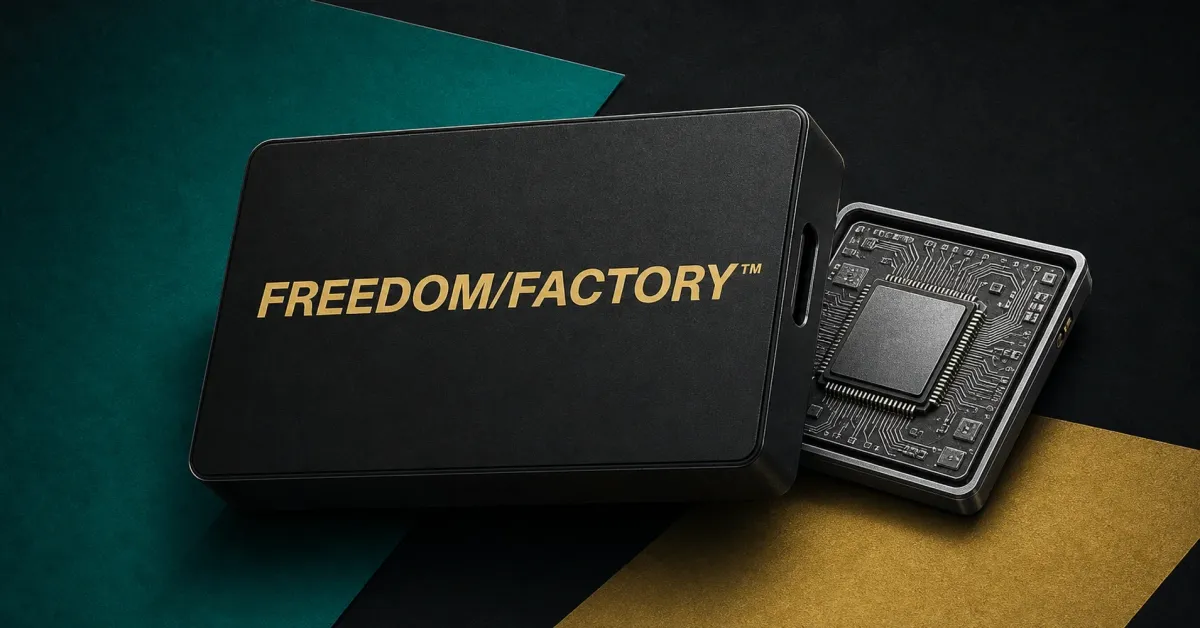
Freedom Factory has unveiled the $179 PQ1 hardware wallet, saying the device will use post-quantum signing through an ERC-4337 Ethereum smart account and begin worldwide shipments in the fourth quarter of 2026, as Ether traded near $1,875 amid a volatile late-July market.
The San Francisco company has opened pre-orders for a device it says combines a hash-based signature design, dual secure elements and local transaction decoding. The PQ1 is announced, not shipped, so its broader security, compatibility and performance claims have not yet been independently established through public testing.
Market snapshot: CoinGecko listed ETH near $1,875 on July 29, up about 4.4% over 24 hours, with a market capitalization around $226 billion and 24-hour volume around $10.8 billion. ETH changed hands near $1,608 at the start of July, based on the provider’s historical data.
Freedom Factory said in its launch release that the PQ1 uses “onchain SPHINCS+C10 hash-based signatures” inside an ERC-4337 smart account. That is the company’s description of its own implementation, and it did not publish an independent audit report alongside the release.
The launch arrives as wallet makers and protocol teams examine how to reduce long-term cryptographic risk without asking every user to wait for a base-layer upgrade. It follows Algorand’s quantum-resistant roadmap and debate over a proposed Bitcoin migration for early addresses.
For buyers, a specialized signing device and smart account can change how one wallet authorizes transactions, but they do not change Ethereum’s consensus rules or prove protection against every hardware, firmware, supply-chain or smart-contract failure mode.

Ethereum
ETHFreedom Factory prices the PQ1 hardware wallet at $179
Freedom Factory lists the PQ1 at $179 and says it will ship worldwide in Q4. The company says the hardware and firmware will be open source, a claim that would allow third parties to inspect code and designs once the relevant materials are available.
The company also says the device has two independent secure elements and locally decodes transactions before signing. Those controls address familiar self-custody concerns, but their effectiveness depends on the final implementation and how the wallet presents transaction data to users.
The $179 price puts the PQ1 in a consumer-hardware category rather than a protocol migration. Freedom Factory did not disclose expected production volumes, a delivery schedule by region, supported chains beyond Ethereum and EVM networks, or return and warranty terms in the materials reviewed.
Hardware wallets are usually judged after release by reproducible firmware builds, secure-element design and external review, not just by a claimed signing primitive. A recent Trezor-wallet attack report similarly shows why a device’s security posture needs to be assessed across more than its headline feature.
PQ1 uses ERC-4337 smart-account architecture
ERC-4337 is not a new Ethereum signature algorithm. It is an account-abstraction standard that lets an account supply validation logic in smart-contract code without a consensus-layer change, as the EIP specification explains.
That flexibility can let a wallet use custom signature checks, recovery methods and transaction rules. Freedom Factory says it is using the standard to surface its signing design on Ethereum, rather than waiting for a new native account type.
The claim needs careful framing. The National Institute of Standards and Technology standardized the hash-based SLH-DSA signature family in FIPS 205, which is based on SPHINCS+. Freedom Factory’s “SPHINCS+C10” naming and integration are product-specific details, not a NIST certification of the PQ1.
Smart accounts can improve flexibility, but they introduce contracts, bundlers and account-deployment assumptions. An error in a wallet contract or signing flow is a different risk from a weakness in the underlying cryptographic algorithm.
Post-quantum claims need public hardware and independent review
Freedom Factory’s launch language says the PQ1 cannot be cracked by quantum computers. That is a broad vendor claim, and the announcement does not identify a completed independent hardware audit or public security evaluation that establishes it.
The company said its device can sign Ethereum and EVM transactions without an Ethereum protocol upgrade. Open questions include which networks and applications will support the smart-account flow, how users recover an account, how firmware updates are authorized and whether researchers can reproduce the security model from public materials.
The Crypto Fear & Greed Index is a broad sentiment measure, not a security metric, but it offers context for a period when price volatility can encourage hurried wallet decisions. The index stood at 29, or Fear, on July 28.
Fear & Greed Index
July 28, 2026The next checkpoint is the device’s Q4 delivery window. Before then, prospective users will be watching for the complete code release, independent audits, supported-network details and evidence that the wallet’s claimed protections work as described in real transaction flows.
Stay up to date
Get the latest crypto insights delivered to your inbox
Primary sources and further reading
| Source | Title |
|---|---|
| | Freedom Factory: PQ1 product site |
| | Freedom Factory launch announcement via PR Newswire |
| | Ethereum Improvement Proposal 4337 |
| | NIST: Stateless Hash-Based Digital Signature Standard |
| | CoinGecko: Ethereum market data |
| | Alternative.me: Crypto Fear and Greed Index |
Fact-checked by: Daily Crypto Briefs Fact-Check Desk
Related Articles




Frequently Asked Questions
What is the Freedom Factory PQ1?
The PQ1 is a hardware wallet announced by Freedom Factory. The company says it will use post-quantum signing through an ERC-4337 smart account for Ethereum and EVM networks.
How much will the PQ1 hardware wallet cost?
Freedom Factory lists the PQ1 at $179 and says it is available for pre-order. The company says worldwide shipments are scheduled to start in the fourth quarter of 2026.
Does the PQ1 make an Ethereum wallet quantum-proof?
Freedom Factory makes that claim for its product design, but the device was announced before shipping. Buyers should distinguish a vendor claim from independent review of the delivered hardware, firmware and smart-account implementation.
What does ERC-4337 change for a wallet?
ERC-4337 is an Ethereum account-abstraction standard that lets a smart account use its own validation logic without a consensus-layer upgrade. It can support custom signature schemes, recovery and other wallet controls.