 Daily Crypto Briefs




NEW YORK, April 24, 2026
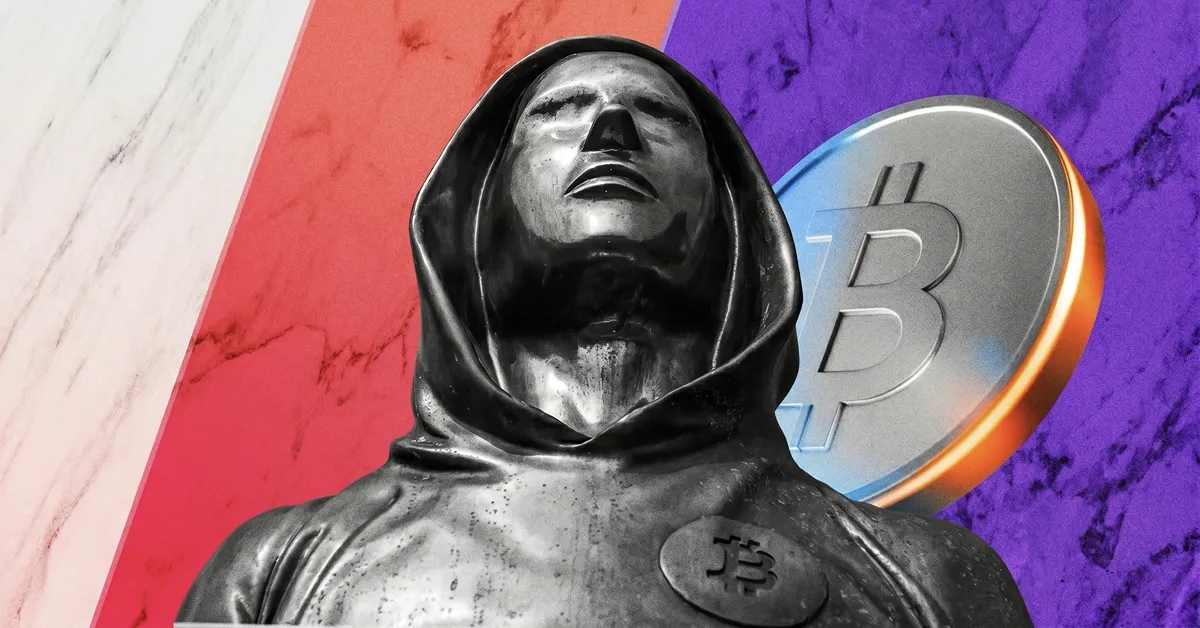
Finding Satoshi, a documentary released April 22, argues that Hal Finney and Len Sassaman jointly created Bitcoin under the Satoshi Nakamoto name, as BTC traded near $77,601 and Polymarket odds of Satoshi moving any bitcoin jumped to 10% after the film.
Will Satoshi move any Bitcoin in 2026? Live

The film, available through FindingSatoshi.com, follows a four-year investigation by journalist William D. Cohan and private investigator Tyler Maroney. Its plain claim is not that Bitcoin appeared from a committee, but that the Satoshi identity makes most sense as a tight collaboration between Finney, the software developer and early Bitcoin tester, and Sassaman, the cryptographer tied to privacy infrastructure and cypherpunk culture.
The official film site says the documentary presents the result of a “four-year, evidence-based investigation” that drew on original reporting and interviews with figures including Michael Saylor, Fred Ehrsam, Joseph Lubin, Brian Brooks, Gary Gensler and Phil Zimmermann. The site does not disclose any cryptographic proof, signed message or private-key evidence.
Finding Satoshi names Finney and Sassaman
The documentary stacks online activity timing, matching technical skills, privacy-tech networks, writing questions, and the way Satoshi disappeared from public view as Bitcoin became self-sustaining.
Decrypt’s review says the film presents Finney as the person behind Bitcoin’s code and Sassaman as central to the white paper and written identity. It also reports that Fran Finney appears in the film and treats the possibility of her husband’s role as emotionally meaningful, which matters because family testimony has always been one of the soft spots in the Finney theory.
Coinbase CEO Brian Armstrong praised the documentary before release, while skeptics pushed back quickly. CoinMarketCap’s summary says Adam Back called the theory odd and argued that the film’s logic remained circumstantial, especially around Sassaman’s location and academic work.
There is a larger pattern here. Back, Nick Szabo, Wei Dai and other candidates each explain part of Bitcoin’s prehistory. Finney and Sassaman explain the widest set of facts at once: code, proof of work, privacy culture, writing, timing, personal proximity and the permanent silence of the coins.
Hal Finney evidence keeps converging
Finney was not a casual observer who noticed Bitcoin after the crowd arrived. Satoshi released Bitcoin v0.1 in January 2009, and Finney was running the software almost immediately, a level of early fluency that still reads less like curiosity and more like prior intimacy with the project.
The Satoshi Nakamoto Institute’s RPOW archive describes Finney’s Reusable Proof-of-Work as a precursor to Bitcoin, while his August 2004 announcement invited cryptography-list members to test a server that turned proof-of-work into transferable tokens. Bitcoin’s mining system removes RPOW’s trusted-server assumption by putting ordering and issuance on a public chain, which looks like an iteration from the same intellectual track.
Finney also had the right career path. He worked in privacy and encryption, contributed to the cypherpunk world, and was tied to PGP, the culture that made digital cash feel less like science fiction and more like unfinished infrastructure.
The geographic and writing clues keep pulling the same way. In 2014, Forbes reporter Andy Greenberg traced the odd proximity between Finney and Dorian Satoshi Nakamoto in Temple City, California, and reported that a writing-analysis firm found Finney’s style closer to Satoshi’s than several other candidates tested.
The timeline fits a little too nicely. On April 23, 2011, Satoshi told Mike Hearn he had moved on, according to Cointelegraph’s review of the final emails. Three days later, on April 26, 2011, the public trail effectively ended, while Finney’s ALS diagnosis in August 2009 and physical decline through 2010 and 2011 align with Satoshi’s withdrawal.
Alcor says Finney died on August 28, 2014, after ALS and became its 128th cryopreservation patient. The Satoshi wallets remained untouched before that date and have remained untouched since, leaving the simplest explanation on the table: the person with access died, lost the keys or arranged never to use them.
The rival theories still have pieces that fit, but they require more exceptions. Szabo explains the Bit Gold lineage, Back explains Hashcash and proof-of-work history, and Wei Dai explains b-money, while Craig Wright’s claim was rejected by a U.K. High Court judge, according to AP. With Finney and Sassaman, the variables converge rather than scatter.
Satoshi coins make the mystery tradeable
The one-million-BTC question is why this identity debate keeps turning into a market story. If Satoshi were alive, had access and wanted to prove continuity, moving even a small amount would settle the matter. Sixteen years of silence points in the opposite direction.
A 10% price does not prove the documentary is right, but it shows traders are assigning real probability to a Satoshi-wallet event after the Finney-Sassaman case returned to the front page.
The move also ties directly into Bitcoin’s post-quantum debate. Older Satoshi-era outputs sit at the center of the Google quantum-risk story and the more aggressive proposal to freeze early BTC wallets if users do not migrate before legacy signatures are sunset.
The documentary ultimately reinforces Bitcoin’s strangest strength: the network did not need its creator to keep working. What remains unknown is whether any direct proof will ever surface, whether the Satoshi coins can still move, and whether future wallet-security fights force the market to price the founder mystery as a live supply and governance risk rather than only a historical argument.
Stay up to date
Get the latest crypto insights delivered to your inbox
Primary sources and further reading
| Source | Title |
|---|---|
| | Finding Satoshi official site |
| | Satoshi Nakamoto Institute: RPOW |
| | Satoshi Nakamoto Institute: RPOW announcement |
| | Polymarket: Will Satoshi move any Bitcoin in 2026? |
| | CoinMarketCap: Bitcoin |
| | Alcor: Hal Finney becomes Alcor's 128th patient |
| | Forbes: Nakamoto's Neighbor |
Fact-checked by: Daily Crypto Briefs Fact-Check Desk
Related Articles


Frequently Asked Questions
What does Finding Satoshi claim?
Finding Satoshi claims Bitcoin was created under the Satoshi Nakamoto pseudonym by Hal Finney and Len Sassaman, with the film presenting Finney as the coding force and Sassaman as central to the written side of the project.
Why is Hal Finney viewed as a strong Satoshi candidate?
Finney built RPOW in 2004, ran Bitcoin immediately in January 2009, received the first Bitcoin transaction, worked deeply in cypherpunk privacy technology and had a life timeline that matches Satoshi's retreat from public work.
What happened to the Satoshi bitcoin odds after the documentary?
The Polymarket market on whether Satoshi will move any bitcoin in 2026 jumped to 10% after Finding Satoshi, showing that traders are treating the documentary as relevant to dormant Satoshi-era coins.
Did Adam Back accept the Finding Satoshi theory?
No. Adam Back objected to the film's conclusion and described the evidence as circumstantial, but the documentary's case still places multiple independent clues around Finney and Sassaman.
Why do Satoshi's dormant coins matter?
The estimated 1 million BTC attributed to Satoshi have never moved, which keeps questions about death, lost keys, inheritance and future quantum-security policy at the center of the identity debate.