 Daily Crypto Briefs




WASHINGTON, Feb. 20, 2026
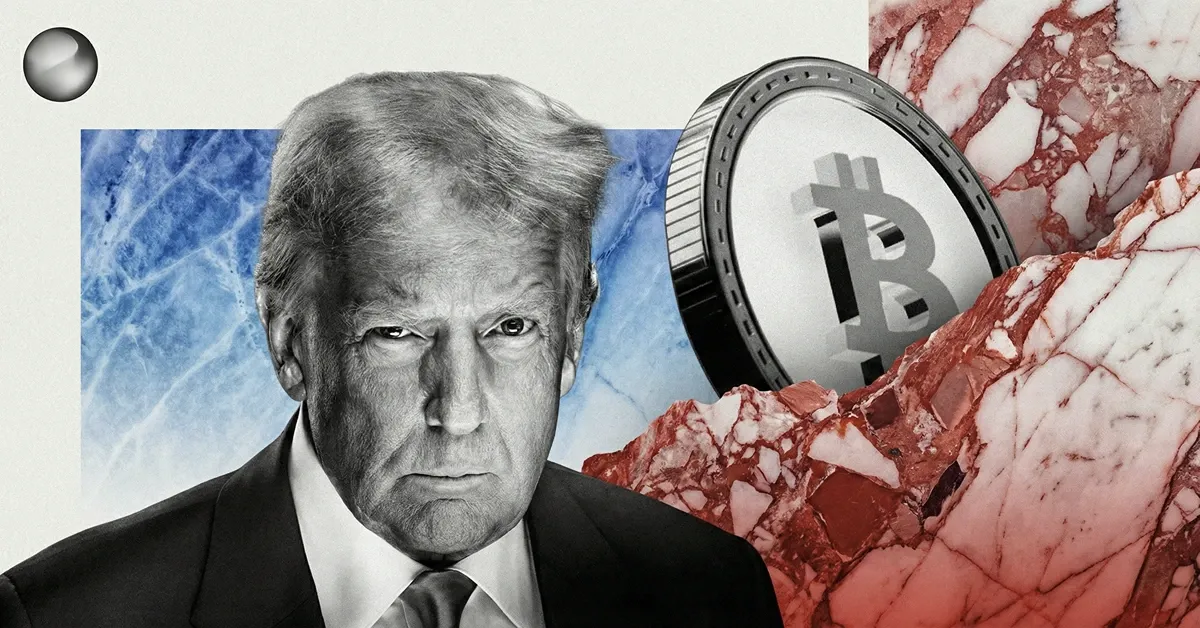
Bitcoin climbed to around $68,000 on Friday after the U.S. Supreme Court ruled that President Donald Trump’s broad emergency-power tariffs exceeded his authority, a trade-policy shock that crypto markets largely shrugged off.

Bitcoin
BTCSupreme Court blocks Trump tariffs under IEEPA
In a splintered 6–3 decision in Learning Resources, Inc. v. Trump, the Court held that the International Emergency Economic Powers Act does not authorize a president to impose tariffs in peacetime, striking down the legal foundation for both Trump’s “reciprocal” duties and separate drug-related import surcharges. In the opinion’s description of the program, that included tariffs as high as 25% on most Canadian and Mexican imports, a 10% duty on most Chinese imports tied to drug trafficking, and a baseline reciprocal tariff of at least 10% across trading partners.
Market snapshot: Bitcoin was up about 1.9% over 24 hours to roughly $67,900 as of 22:45 UTC, with 24-hour spot volume near $53 billion, according to CoinGecko data. Ether was up about 1.5% to roughly $1,970. CoinGecko’s global data put total crypto market cap near $2.41 trillion with bitcoin dominance around 56%, according to its global market snapshot.
The Court’s holding was blunt. “Held: IEEPA does not authorize the President to impose tariffs,” the syllabus said in the slip opinion. The majority leaned heavily on statutory text and the major questions doctrine, while Justice Elena Kagan, joined by Justices Sonia Sotomayor and Ketanji Brown Jackson, agreed with the result but said ordinary statutory interpretation was enough.
The justices framed tariffs as a taxing power the Constitution assigns to Congress, and the opinion pointed to the absence of modern precedent for using IEEPA as a tariff statute. Two dissents, led by Justices Clarence Thomas and Brett Kavanaugh, argued the Court was constraining executive flexibility in foreign economic policy, underscoring how contested emergency authorities remain even when the policy question is trade rather than tech.
The decision also arrived with a procedural wrinkle. The Court vacated and remanded one of the consolidated cases to dismiss for lack of jurisdiction while affirming the trade-court path in the other, a split that reinforces how tariff disputes often end up in specialized forums. How quickly agencies unwind collection and how refund claims get processed was not immediately clear.
Trump pivots to Trade Act Section 122 and a 10% tariff
The case puts a hard edge on a theme markets have been relearning all year: tariff policy can flip from “macro background” to “front-page catalyst” quickly, and crypto often trades the first impulse. We covered a similar whiplash pattern in our earlier tape read on tariff headlines, when bitcoin and crypto-linked stocks faded on sudden trade-policy turns.
Trump’s response was immediate. On Friday he said he would sign an executive order to impose a 10% global tariff under federal law known as Section 122, according to The Associated Press. Section 122 of the Trade Act of 1974 allows a temporary import surcharge of up to 15% for up to 150 days unless Congress extends it, under 19 U.S.C. § 2132.
Refunds are the next variable. The Penn Wharton Budget Model estimated the ruling “could return $175 billion to U.S. importers,” a potential cash flow swing that some traders see as incremental liquidity for risk assets even if the refund path is messy and slow, according to its Feb. 20 analysis.
Even if Section 122 becomes the administration’s new baseline, it is a different tool with different constraints and legal hooks. The statute is designed around balance-of-payments pressures and includes built-in timing limits, which means a prolonged tariff regime could still end up back in Congress, back in court, or both.
Bitcoin holds near 68,000 as politics fades
For crypto investors, the day’s signal was less about Washington’s rhetoric and more about how quickly bitcoin reverted to trading liquidity and positioning. The modest move fits the broader pattern we track in our 2026 U.S. policy map: political headlines can set the hourly tape, but BTC increasingly behaves like a deep, global market that needs sustained policy change to alter its trend.
That is the maturity trade in plain language. When bitcoin was smaller, U.S. political shocks could look like existential threats because they hit access, banking rails, and sentiment at the same time. At today’s size and liquidity, the market often treats Washington as a volatility source, not a single point of failure, especially when the underlying issue is tariffs rather than crypto-specific rules.
What remains unclear is how quickly the administration can implement a replacement tariff regime, what litigation follows, and how any refunds get processed in practice. Crypto traders will also be watching whether the next policy fight is trade again or regulation, where Capitol Hill scheduling has already been a catalyst, as shown by the postponed CLARITY markup.
Stay up to date
Get the latest crypto insights delivered to your inbox
Primary sources and further reading
| Source | Title |
|---|---|
| | Supreme Court slip opinion (Learning Resources, Inc. v. Trump) (PDF) |
| | Trade Act of 1974, Section 122 (19 U.S.C. § 2132) |
| | IEEPA statute text (50 U.S.C. § 1701) |
| | Penn Wharton Budget Model: tariff ruling refunds estimate |
Fact-checked by: Daily Crypto Briefs Fact-Check Desk
Related Articles

Frequently Asked Questions
What did the Supreme Court decide about Trump’s tariffs?
The Court held that the International Emergency Economic Powers Act (IEEPA) does not authorize the President to impose tariffs, striking down the emergency-power basis for Trump’s reciprocal and drug-related duties.
What is IEEPA?
IEEPA is a 1977 law that lets a president declare a national emergency tied to foreign threats and take certain economic actions, but the Court said it does not include a power to impose tariffs.
What is Section 122 of the Trade Act of 1974?
Section 122 (19 U.S.C. § 2132) allows the President to impose temporary import surcharges or quotas to address a serious balance-of-payments issue, with limits on the rate and duration.
How big could tariff refunds be after the ruling?
Refund totals are uncertain and depend on legal and administrative steps, but one widely cited estimate put potential refunds around $175 billion.
Why did bitcoin rise on the tariff ruling?
Bitcoin traded like a macro-sensitive risk asset on the day, with some traders focusing on reduced uncertainty and the possibility that any refund flows could add liquidity.