 Daily Crypto Briefs
ASHGABAT, Jan. 4, 2026 -
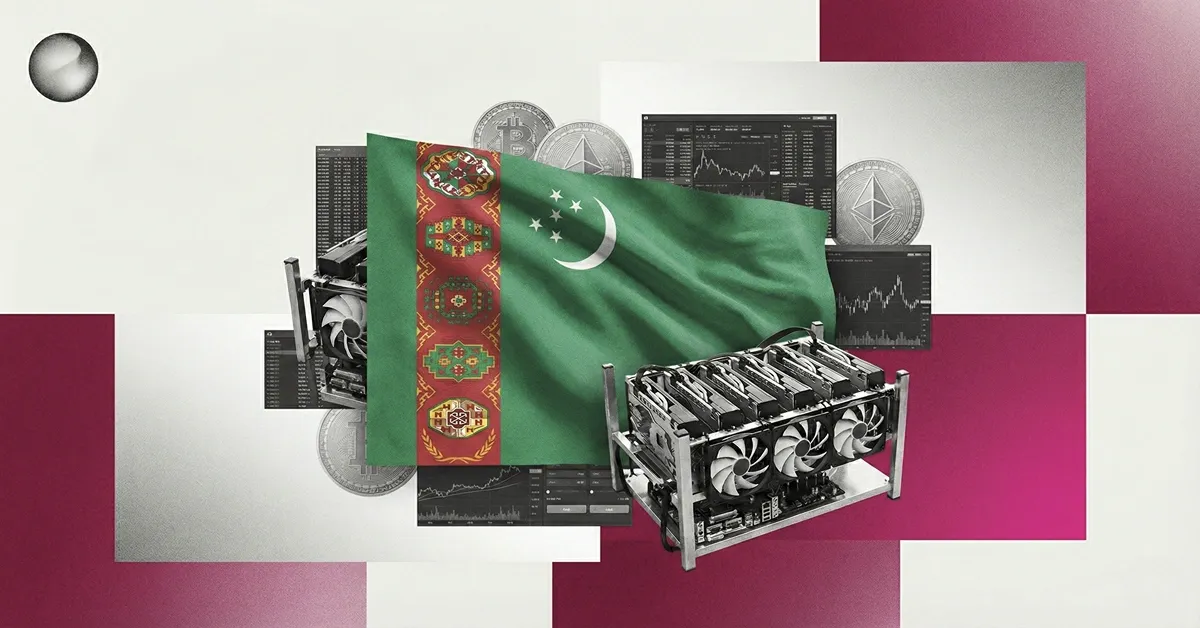
Turkmenistan’s new Law on Virtual Assets took effect on Jan. 1, 2026, legalizing licensed crypto mining and exchange operations as bitcoin trades now around $91,205, in the latest sign that even tightly controlled states are drafting rulebooks for crypto activity.
In plain terms, the law creates a legal framework for producing and trading virtual assets inside Turkmenistan, setting out which activities are regulated, which state bodies oversee them, and what users and operators are allowed to do.
Market reaction: Bitcoin price snapshot from Jan. 1 to Jan. 4, 2026
Bitcoin rose about 4.2% from $87,534 at the start of Jan. 1 to about $91,180 by late Jan. 4, based on six hour BTC-USD candles from Coinbase’s Exchange API. The time window overlaps the law’s effective date, but the move tracked broader crypto market direction and was not clearly linked to a single local policy catalyst.
Bitcoin (BTC) - Jan. 1 to Jan. 4 price snapshot
BTC
In its published text, Turkmenistan’s Law on Virtual Assets says virtual assets are not currency or a means of payment in the country and requires identity verification before an exchange operator can open a virtual asset wallet, tying the market to formal anti money laundering checks.
Turkmenistan’s Law on Virtual Assets: what changed on Jan. 1, 2026
The official text, published on the Turkmen government’s website on Nov. 27, sets out rules for creating, issuing, storing, using, and circulating “virtual assets” in Turkmenistan, and says it “enters into force on 1 January 2026.”
The law also outlines a multi agency oversight structure. It identifies the Cabinet of Ministers, the Central Bank of Turkmenistan as the authorized body, and ministries including finance, communications, and energy as regulators within their competence, according to the legal text.
For readers, the core shift is legal clarity. Mining is defined as a regulated activity, and the law establishes a lane for licensed providers of virtual asset services, including an “operator of exchange of virtual assets” that functions as a crypto exchange, according to the law.
The text also draws lines between types of mining. It describes “private mining” as activity done by an individual entrepreneur and “industrial mining” as activity done by a legal entity, and it says both residents and nonresidents can carry out those activities under the framework.
Licensed crypto mining and exchanges: KYC rules and the ban on crypto payments
A key constraint is that the law does not treat crypto as money. The text defines a virtual asset as data with value that is not “currency,” not a “means of payment,” and not a security, and it states that virtual assets are not a payment instrument in Turkmenistan.
That means the framework is aimed at ownership and trading, not day to day spending. People may see “legalization” and assume a country is moving toward crypto payments, but the legal text points the other way.
The law can be framed as legalization for regulated trading and mining while keeping crypto outside the payments system.
The law also ties access to identity checks. It says a virtual asset wallet is opened by an exchange operator only after the owner completes identification and verification procedures in line with Turkmenistan’s anti money laundering and counterterrorism financing law.
In practice, that resembles the standard compliance stack used by regulated exchanges elsewhere. A user hands over identity documents, a platform screens names and risk indicators, and the platform keeps records to support monitoring and law enforcement requests.
The compliance posture is not limited to sign up checks. The law says service providers must build a “digital profile” of a client, including transaction information and other indicators, to monitor activity and prevent unwanted operations.
For operators, the law sets boundaries on who can participate. The official text lists categories barred from being founders, shareholders, or officers of virtual asset service providers, including certain offshore zone residents and entities, alongside groups flagged for terrorism financing and other risks.
It also narrows which financial institutions can offer core exchange functions. The text says Turkmenistan’s credit institutions, other than licensed exchange operators, are barred from providing buy, sell, and exchange services for virtual assets described in the law.
The law also targets covert mining. It defines “hidden mining” as using someone else’s computing resources without knowledge or consent and says hidden mining is prohibited on the territory of Turkmenistan.
Power, licensing costs, and internet access: what to watch next
The legal text is a framework, not a complete operating manual. It points key details to future decisions, including procedures the Cabinet of Ministers is tasked to approve for miner registration and the creation, operation, and reporting of crypto exchange operators.
That leaves several questions that matter for market participants. Licensing fees, capital requirements, technical standards for platforms, and the process for publishing the registry of licensed miners and exchanges were not immediately clear from the law text alone.
There is also a practical constraint. Mining, by the law’s own definition, requires continuous electricity supply, which puts power allocation and enforcement at the center of the policy even before any large mining buildout materializes.
The political tradeoff is familiar from other energy rich jurisdictions that experimented with crypto mining. Kazakhstan, for example, put digital asset activity under a formal legal framework and later used licensing and electricity rules to manage strain on the grid, according to the country’s “On digital assets” law and related regulations.
Turkmenistan’s tighter information controls could shape how this plays out. Freedom House has described a pattern of blocked tools, monitoring risk, and pressure on social media users, which can affect access to exchanges, custody services, and data required for trading.
The near term signal to watch is simple: which entities get licensed, and on what terms. The first published licenses, any public enforcement actions for unregistered mining, and any official guidance on how residents can legally buy and sell crypto will set expectations for how open the market really is.
For a wider view of how licensing rules are diverging across jurisdictions into 2026, see our guide US Crypto Regulation 2026: SEC, CFTC, Stablecoins, Taxes.
If Turkmenistan can offer predictable licensing and power access, the move could attract miners and exchange operators looking for new jurisdictions. If the combination of strict identity controls, internet friction, and uncertain implementation terms dominates, the market may stay small even with a law on the books.
What remains unknown is the pace of implementing rules, the first list of licensed operators, and whether the government will publish detailed guidance for consumers. Watch for Cabinet of Ministers decrees, Central Bank registry updates, and any public announcements on electricity pricing and compliance inspections tied to mining.
To track how this fits into a wider policy timeline, read US Crypto Regulation 2026: SEC, CFTC, Stablecoins, Taxes and subscribe to the Daily Crypto Briefs newsletter on our homepage.
Stay up to date
Get the latest crypto insights delivered to your inbox
Primary sources and further reading
| Source | Title |
|---|---|
| | Government of Turkmenistan - Law of Turkmenistan On Virtual Assets (official text) |
| | CoinMarketCap - post on X about Turkmenistan legalizing mining and exchanges |
| | Wu Blockchain - post on X summarizing the law’s main points |
| | RealityOnChain - post on X about the law timeline (video) |
| | Coinbase Exchange API - BTC-USD candles (6h) for Jan 1 to Jan 4, 2026 |
| | CoinGecko API - BTC and ETH price snapshot |
| | CoinGecko API - Global crypto market data |
| | Freedom House - Turkmenistan (Freedom in the World 2025) |
| | Adilet - Kazakhstan law On digital assets (English text) |
Fact-checked by: Daily Crypto Briefs Fact-Check Desk
Frequently Asked Questions
Is crypto legal in Turkmenistan as of 2026?
Turkmenistan’s Law on Virtual Assets took effect Jan. 1, 2026 and establishes a legal framework for regulated virtual asset activities such as mining and exchange operations. The law also states virtual assets are not currency and are not a means of payment.
Does the law allow bitcoin payments in stores?
No. The published text says virtual assets are not a payment instrument in Turkmenistan, so the framework is aimed at regulated ownership and trading rather than day to day payments.
What crypto activities does the law cover?
The law sets rules for creating, issuing, storing, using, and circulating virtual assets and defines regulated activities including mining and exchange services through licensed operators.
Who oversees crypto regulation in Turkmenistan under the law?
The law identifies the Cabinet of Ministers and the Central Bank of Turkmenistan as key authorities and references oversight roles for ministries including finance, communications, and energy within their competence.
Can foreigners participate in mining under the framework?
The text describes both residents and nonresidents as able to carry out private or industrial mining under the framework, subject to licensing and other requirements set out in the law and future procedures.
What is still unclear after the law took effect?
The law points some implementation details to future procedures, including miner registration and how exchange operators are created, operated, and required to report. Licensing costs, capital requirements, and technical standards were not immediately clear from the law text alone.