 Daily Crypto Briefs
NEW YORK, Feb. 1, 2026
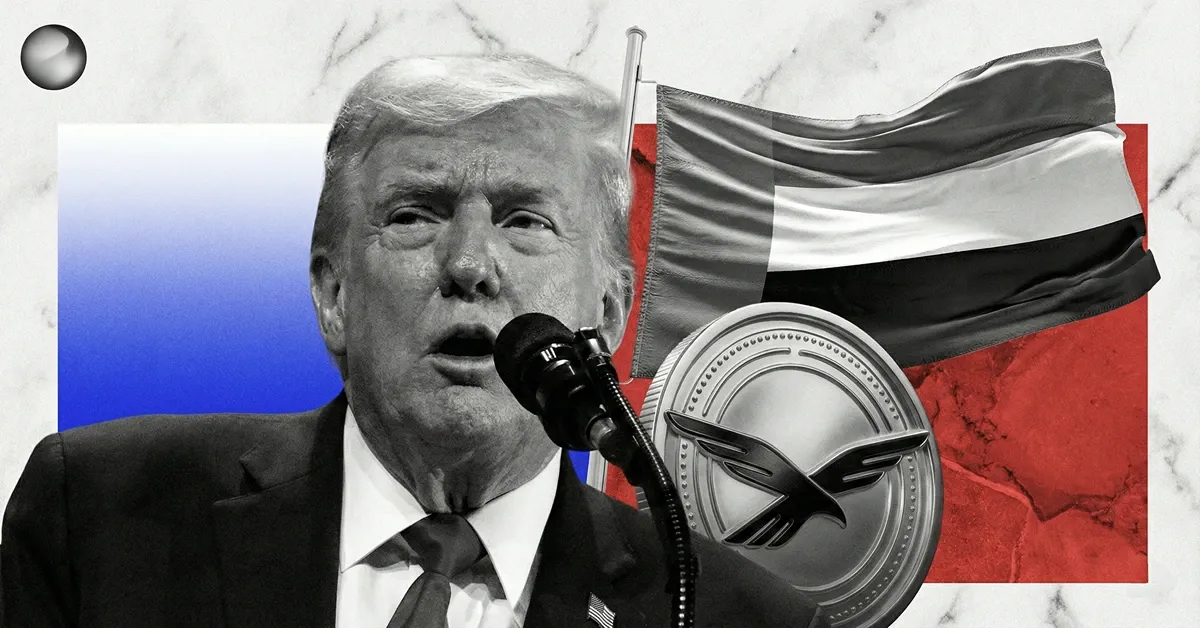
A UAE-backed investment vehicle agreed to buy a 49% stake in Trump-linked crypto firm World Liberty Financial for $500 million, according to Cointelegraph citing a Wall Street Journal report.
The reported agreement would make Aryam Investment 1 a large minority owner of a privately held crypto venture whose business model, ownership structure, and governance rights have not been fully disclosed in public filings.
Cointelegraph said the Journal reported the agreement was signed in January 2025 and that it included a $500 million payment split across multiple entities, including $187 million said to flow to Trump family-linked entities and $237 million to co-founder-linked entities. Neither the company nor the named parties have published primary documents confirming the terms described in the report.
Interestingly, prediction markets have yet to react to these latest developments. Trump’s odds of being impeached by June 30 remain at just 6% on Polymarket, unchanged despite the steady drip of controversial headlines. But with the way things are going, that number could shift. Foreign financial entanglements, opaque ownership structures, and potential conflicts of interest are exactly the kind of fuel that impeachment narratives run on.
Will Trump be impeached by June 30? Live

Market snapshot: The World Liberty token (WLFI) has declined about 43% from its launch-week price near $0.234 to roughly $0.133 as of Feb. 1, 2026.
World Liberty Financial (WLFI) — price since launch
WLFIWhat’s being reported
- The deal was described as $500M for 49% of the company.
- A portion of the payment reportedly flowed to Trump family-linked entities and to co-founder-linked entities.
- The agreement was reportedly signed by Eric Trump, according to the account cited by Cointelegraph.
What’s missing is the kind of primary material that would normally let readers independently validate ownership and governance: a cap table disclosure, a financing announcement, a court filing, or any public regulatory document tying specific entities to specific rights.
That distinction matters because a 49% stake can mean very different things depending on the terms. Some minority stakes come with board seats, veto rights, or revenue claims; others are largely economic. The report, as presented, does not include enough detail to determine which applies here.
If confirmation arrives, it will likely take a form that can be checked: an official statement from the company, a disclosed investment agreement, a regulatory filing, or third-party documentation establishing beneficial ownership and control. Absent that, the story remains a high-profile claim tied to third-party reporting rather than a disclosed corporate event.
In the absence of primary documents, the cleanest way to treat the claim is as an attributed report: the Journal (as summarized by Cointelegraph) described the arrangement, while confirmation from the company and involved parties was not immediately available in the public record.
Is there any wrongdoing?
This story fits a pattern that repeatedly triggers headline churn: private, opaque ownership arrangements collide with public claims about decentralization, transparency, and conflicts. Even when the underlying business is small, the reputational spillover can be large when the names are large.
None of that proves wrongdoing, and the report does not, by itself, establish illegality. But it does explain why lawmakers and regulators often demand clearer disclosures when politically connected entities are tied to crypto businesses, especially when foreign investment is alleged.
For broader context on the lines regulators draw around custody, stablecoins, and market structure, see: US Crypto Regulation 2026: SEC, CFTC, Stablecoins, Taxes. For the banking angle in plain English, see: Banks Want Your Stablecoins.
Even setting politics aside, the market relevance comes from the overlap of three issues that routinely move crypto narratives and counterparties:
- Regulatory scrutiny: regulators and lawmakers tend to focus on who controls token revenue, governance, distributions, and any affiliated-party payments.
- National-security framing: foreign capital and influence questions can escalate quickly when politically connected U.S. entities are involved.
- Stablecoin/payment rails: political and compliance controversies often show up first in banking access, exchange relationships, and stablecoin integrations rather than in protocol code.
That last point is practical, not theoretical. Crypto businesses are still dependent on permissioned rails for fiat on- and off-ramps, card networks, and banking services. When reputational risk rises, these counterparts can tighten terms, delay integrations, or ask for more diligence.
What to watch next
- Any primary disclosure from World Liberty Financial clarifying ownership, governance rights, and how proceeds are allocated across related entities.
- Whether U.S. lawmakers escalate investigation calls or request documentation related to foreign participation and potential conflicts.
- Knock-on effects in the places crypto firms feel pressure first: banking access, exchange listings/partnerships, and stablecoin integrations.
The key open questions are basic but decisive:
- Was the agreement executed, or only signed in principle?
- What rights, if any, attach to the minority stake (board seats, vetoes, revenue rights)?
- Were any disclosures made to regulators or key counterparties at the time?
- Is any party disputing the reported arrangement?
Until those questions are answered with primary documentation, readers should treat the report as an attributed claim and watch for confirmation in the form that actually resolves these stories: filings, contracts disclosed in court, official statements, or verifiable disclosures about beneficial ownership and control.
Related reading:
- Our coverage of the Trump-linked token distribution angle: Trump Launches New Coin to DJT Shareholders on Crypto.com
Stay up to date
Get the latest crypto insights delivered to your inbox
Primary sources and further reading
| Source | Title |
|---|---|
| | Cointelegraph: UAE-backed investor took 49% stake in Trump-linked crypto firm for $500M |
| | The Wall Street Journal (as cited by Cointelegraph) |
| | CoinGecko: World Liberty Financial (WLFI) price |
Fact-checked by: Daily Crypto Briefs Fact-Check Desk
Frequently Asked Questions
Is the $500M / 49% deal confirmed by official filings?
Not from the primary sources we reviewed here. The details in this article are attributed to the Wall Street Journal report as relayed by Cointelegraph.
Why does this matter for crypto markets?
It touches regulatory scrutiny, reputational risk, and potential conflicts of interest—factors that can affect exchange relationships, stablecoin adoption, and policy direction.