 Daily Crypto Briefs
WASHINGTON, Jan. 15, 2026
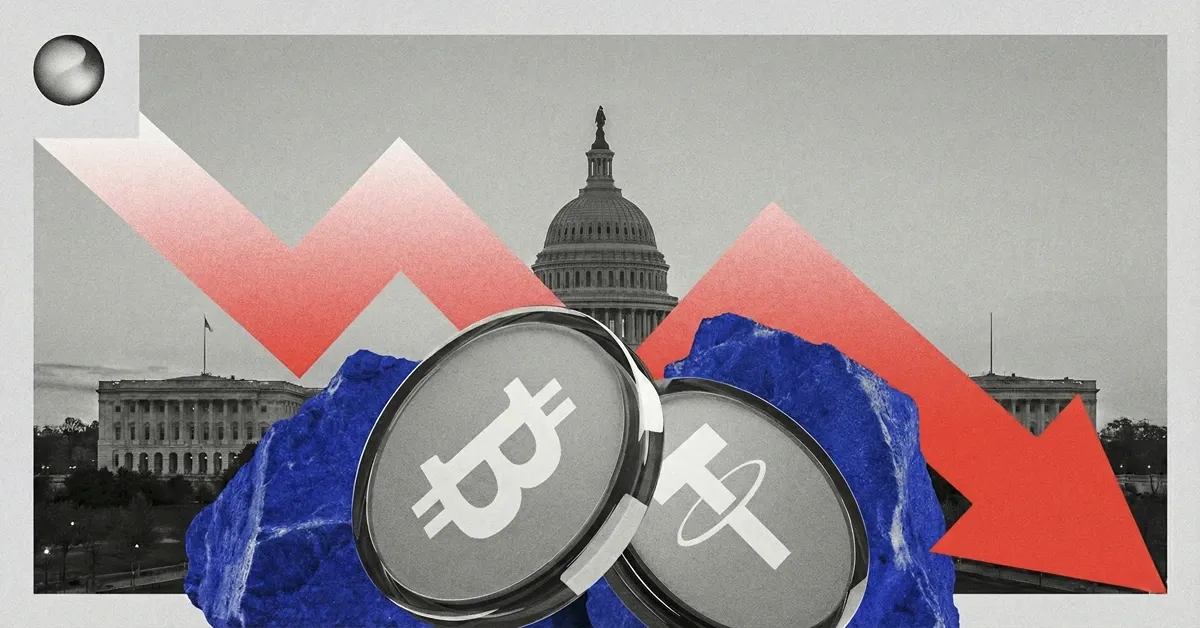
The Senate Banking Committee postponed a scheduled Jan. 15 vote on the CLARITY Act, a crypto market structure bill, as bitcoin traded around $95,900 during a down session for major tokens.
The postponed vote was not a Senate floor vote. It was a committee markup, a meeting where senators debate amendments and vote on whether to advance a bill, in this case H.R. 3633, the Digital Asset Market Clarity Act of 2025, according to the committee’s markups calendar and the event listing.
Market snapshot: Bitcoin was down about 0.5% over 24 hours to $95,892 and ether was down about 1.3% to $3,285, with BTC 24 hour volume near $62.7 billion and ETH 24 hour volume near $31.4 billion, according to CoinGecko data.
Bitcoin (BTC) price - 2-week snapshot
BTC
In announcing the markup date a week earlier, Senate Banking Chairman Tim Scott said: “After months of serious, bipartisan work, it’s time to move this forward and deliver real results for the American people,” according to the committee’s Jan. 9 statement.
The new postponement changes the near-term timeline from what the committee previously published. The committee’s markup listing for Jan. 15 now shows the session as postponed, and it was not immediately clear when the committee would try again or what changes, if any, drove the delay.
Signals matter for crypto markets because U.S. market structure bills tend to define who can list, trade, and custody tokens under federal rules. A pause at the committee stage can extend uncertainty for exchanges, DeFi front ends, and issuers that have been lobbying for clearer lines between the SEC and the CFTC, a topic we track in US Crypto Regulation 2026: SEC, CFTC, Stablecoins, Taxes.
What was canceled in Washington: the Jan. 15 CLARITY Act
The committee listing describes an executive session to consider H.R. 3633, the Digital Asset Market Clarity Act of 2025, and it marks the status as postponed, according to the event page.
Scott had announced on Jan. 9 that the panel would hold a markup on “comprehensive digital asset market structure legislation” on Jan. 15, according to the committee release.
No replacement date appeared on the committee calendar at the time of writing. The posting also did not include a reason for the postponement, beyond the status label.
Markups are also where compromise language tends to get written into text that can survive votes. When a markup slips, negotiations usually keep running off-camera, and the public often sees the real changes only when updated draft language is posted.
For readers tracking the politics, this is the same bottleneck we flagged when the market structure timeline first slipped into 2026. In December, we noted that committee schedules, not bill titles, often set the real pace for crypto regulation, in CLARITY Act timeline slips to 2026.
H.R. 3633: SEC vs CFTC lines, DeFi carveouts, and a tokenization study
H.R. 3633 is built around market structure, meaning the plumbing of how tokens are classified and how trading venues and intermediaries register. The introduced House text available on GovInfo sets definitions, assigns responsibilities, and sketches a compliance pathway meant to separate oversight between the SEC and the CFTC, according to the bill text.
The bill also tries to narrow when activity around decentralized finance turns into regulated intermediation. It lists categories of technical activity that, on their own, are not meant to trigger a registration regime, a tension that has shaped prior enforcement fights between token projects and U.S. agencies. For a plain-language walkthrough of the current draft and its DeFi fault lines, see our companion explainer on the CLARITY Act and crypto market structure.
One point that gets lost in social media framing is tokenization. The introduced House text does not set a new tokenized equities regime by itself. It directs the SEC and CFTC to study whether guidance or rules are needed to support the development of tokenized securities and derivatives products, according to Section 508 of the bill text.
That distinction matters because tokenized stocks sit at the edge of two worlds. A token can trade like crypto, but the underlying claim can look like a security. The gap between those realities is where regulation can tilt toward centralized control, even when the on-chain plumbing is peer-to-peer.
Stablecoins and banks: the draft still favors incumbents
The market structure debate is running alongside the stablecoin debate, and the overlap is where the bank politics show up. The CLARITY Act text defines a “permitted payment stablecoin” category and adds anti-fraud authority around stablecoin and digital commodity transactions, according to the bill text.
Stablecoin yield is the most sensitive pressure point in that overlap. The stablecoin law already on the books, the GENIUS Act, bans payment stablecoin issuers from paying interest or yield to holders, according to a St. Louis Fed explainer and the White House fact sheet on the bill signing. We broke down the market impact in The GENIUS Act and the Stablecoin Market.
Critics in crypto argue that when stablecoins are pushed into a tight permitted-issuer lane, and yield is pushed out of the issuer layer, the user experience tends to migrate back toward regulated intermediaries. That setup can protect consumers, but it also fits a banking model where deposits and payments stay inside supervised rails. It is the pattern we have covered in Banks Are Coming for the Stablecoin Market.
What is still unknown is whether the committee postponement is a scheduling move, a negotiation reset, or a signal that the bill text needs material changes before it can clear votes. For traders, the next check is procedural: watch the Senate Banking calendar for a new markup date and watch for updated text or a Senate-side draft that clarifies how the SEC, CFTC, and bank regulators split oversight. For market context on how Washington headlines can spill into crypto prices, see our earlier report Trump crypto market structure bill weighs on bitcoin.
Stay up to date
Get the latest crypto insights delivered to your inbox
Primary sources and further reading
| Source | Title |
|---|---|
| | Senate Banking Committee: Markups calendar (January 2026) |
| | Senate Banking Committee: Postponed executive session markup (Jan. 15, 2026) |
| | Senate Banking Committee: Chairman Scott announces market structure markup (Jan. 9, 2026) |
| | GovInfo: H.R. 3633 bill text (HTML) |
Fact-checked by: Daily Crypto Briefs Fact-Check Desk
Frequently Asked Questions
Was the CLARITY Act Senate vote canceled?
The Senate Banking Committee’s scheduled Jan. 15 markup vote was postponed, according to the committee’s calendar and event listing. A markup is a committee-stage vote, not a full Senate floor vote.
What does a Senate markup do?
A markup is a committee meeting where lawmakers debate amendments and vote on whether to advance a bill. It does not make the bill law.
What is the CLARITY Act (H.R. 3633)?
H.R. 3633 is the Digital Asset Market Clarity Act of 2025, an introduced House bill that proposes a U.S. crypto market structure framework, including definitions and a regulatory approach split across agencies. The bill text is published on GovInfo.
Why was the Jan. 15 markup postponed?
The committee’s posting shows the session as postponed, but it does not give a reason. A new date was not listed on the committee calendar at the time of writing.
When is the next CLARITY Act vote?
A new markup date was not posted on the Senate Banking Committee calendar at the time of writing, so the next committee vote timing was not disclosed.
What should crypto traders watch next?
Watch for a new markup date on the Senate Banking Committee calendar and for updated bill text or a Senate-side draft that clarifies how oversight is split across regulators.