 Daily Crypto Briefs



GOTHENBURG, Sweden, July 16, 2026
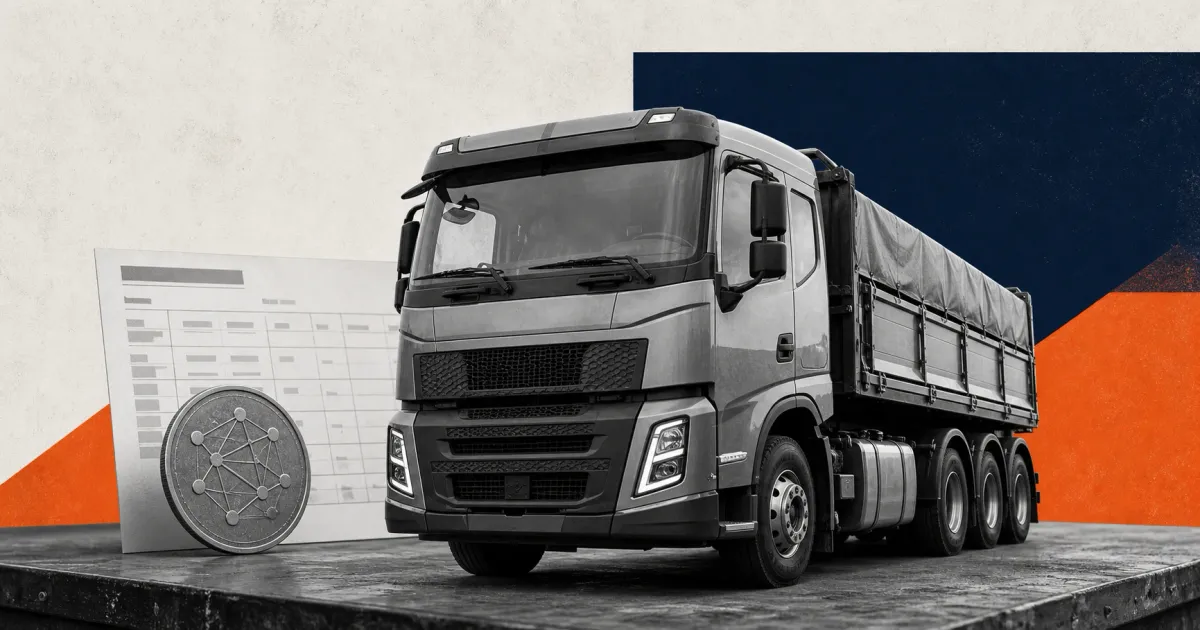
Volvo Group has explored a proprietary cryptocurrency for a closed blockchain environment connecting the truck maker with material and transport suppliers, according to a July 14 interview with a company logistics executive, but it has not announced a public token or production rollout.
Ivan Branco, Volvo Group’s head of information management, AI and analytics, described an experiment intended to simplify transactions and exchange records across a supply chain. The disclosure gives a large industrial company a fresh place in the enterprise-blockchain debate, while leaving the core commercial details undisclosed.
The scale of the potential user is clear even if the project is not. Volvo Group reported 2025 net sales of SEK 479.2 billion, an adjusted operating income of SEK 51.2 billion and 98,844 employees. The group says it serves customers in 180 markets, where cross-border supplier records and payment reconciliation can add layers of operational friction.
In the Cardano Foundation interview, Branco said Volvo had explored an enclosed environment for transactions “in between material supplier, transport supplier, and ourselves” using a proprietary cryptocurrency created for that purpose. The Foundation’s July 14 summary identifies the work as an internal exploration, not an industrialized product.
The immediate market link is limited. ADA, the Cardano network’s token, traded around $0.164 on July 16 with a market capitalization near $6.05 billion, according to CoinGecko. Its June 30 historical price was $0.144, but Volvo did not say its test ran on Cardano, involved ADA or created any public crypto exposure.

Cardano
ADAVolvo’s Supplier Token Is Not a Public Coin
The description matters more than the word cryptocurrency alone. Branco referred to a token inside an enclosed environment among specified business parties, rather than a coin offered to retail buyers, listed on an exchange or designed to trade freely.
Such a design can act as a shared settlement and information layer. A material supplier can record an order, a transport company can record movement, and the manufacturer can reconcile the linked steps against the same controlled record. Whether a token is necessary to do that depends on the final system design, which Volvo has not released.
The company has not named participating suppliers, the country or countries for the test, the underlying network, the token’s value mechanism, transaction volume, custody arrangement or compliance framework. It also has not said whether any supplier payments settled in sovereign currency, were only simulated, or moved through the proprietary token.
That makes it premature to treat the disclosure as evidence of a Volvo digital currency launch. It is instead evidence that an executive inside a major industrial group has examined a closed-network token as one option for a narrow multi-party workflow.
The Cardano Foundation published the interview, and its broader manufacturing page says blockchains can automate procurement approvals, purchase-order settlement and supplier payments. But a publication venue is not confirmation of the technology stack. Neither the interview summary nor Volvo’s public materials identify Cardano as the network used in the experiment.
This distinction has become important as regulated firms test on-chain records without adopting the open, always-accessible model associated with public crypto markets. Daily Crypto Briefs recently reported that DTCC processed production trades with tokenized assets, a securities-infrastructure test with a different legal and operational purpose from Volvo’s supplier exploration.
Traceability Gives Volvo’s Blockchain Work a Longer Timeline
Volvo Group’s interest in the technology predates the new interview. In January 2019, the company said it had partnered with the Research Institutes of Sweden, or RISE, after pre-study work in 2018 to explore a blockchain proof of concept for supply-chain use.
The initial target was the origin of cobalt used in truck batteries. Volvo said it did not buy cobalt directly, so a better chain of records could help map the supply route back to mines and support environmental, social and ethical checks.
Branco’s new comments add transaction complexity to that older traceability rationale. In the interview, he pointed to country-of-origin information for parts and vehicles as a problem when goods pass between importers, transport firms and other intermediaries. A shared immutable record may make a claim easier to audit, but it does not by itself verify that the original data was correct.
Europe’s Digital Product Passport rules provide a practical backdrop. The policy direction favors clearer information about a product’s origin, materials and sustainability characteristics, though Volvo did not say its supplier-token project is a compliance product or that it meets any particular regulation.
Manufacturers also need to solve data governance before a ledger is useful. Suppliers must agree which event is recorded, who can correct a mistake, which data stays confidential, and how a buyer or regulator can validate the evidence. Those are organizational issues as much as software issues.
The transport group is not alone in testing enterprise ledgers. Swift’s blockchain ledger initiative with 17 banks also centers on controlled institutional participation, while the network and governance choices remain as consequential as the transaction technology.
No Launch Date, Network or Supplier Rollout Has Been Disclosed
Volvo’s annual report places the experiment against a broad operating footprint: 13 brands, 17 production countries and approximately 99,000 employees at the end of 2025. That footprint can make shared supplier data valuable, but it also raises the integration threshold for a new transaction system.
Legacy procurement, transport and finance software would need to exchange consistent data with any ledger. A token record that cannot connect to invoicing, sanctions screening, customs documentation and payment controls may add another reconciliation layer rather than remove one.
The governance questions are particularly relevant for a proprietary crypto asset. The issuer needs rules for creation and redemption, access, lost credentials, dispute handling and record changes. Volvo has not disclosed whether it designed, tested or approved those controls, or whether external financial institutions were involved.
The project also should not be read as a direct adoption milestone for public Cardano. The Foundation’s role as interviewer establishes the source of the comments, but not a production partnership, ADA demand or on-chain activity. The network was not named, and no code, contract address or pilot results were published.
For comparison, an enterprise payment announcement becomes easier to assess when it identifies the participant group, network and settlement asset. Chainlink’s Project Pangea did so by naming banks and its stablecoin foreign-exchange testing scope. Volvo’s disclosure contains none of those deployment details.
Crypto sentiment was cautious while the story emerged. Alternative.me showed a reading of 22, classified as Extreme Fear, in its July 14 update.
Fear & Greed Index
July 14, 2026The next verifiable signals are specific: a Volvo production decision, a named supplier cohort, the blockchain selected, a clear settlement model and evidence of completed transactions. Until then, the disclosed work is a targeted enterprise exploration of supplier coordination, not a tradeable Volvo cryptocurrency or a confirmed Cardano deployment.
Stay up to date
Get the latest crypto insights delivered to your inbox
Primary sources and further reading
| Source | Title |
|---|---|
| | Cardano Foundation: Why Enterprises Should Be Talking About Trust, Not Tech |
| | Volvo Group: Annual Report 2025 |
| | Volvo Group and RISE explore blockchain technology |
| | Cardano Foundation: Blockchain solutions for manufacturing |
| | CoinGecko: Cardano market data |
| | Alternative.me: Crypto Fear and Greed Index |
Fact-checked by: Daily Crypto Briefs Fact-Check Desk
Related Articles


Frequently Asked Questions
Is Volvo Group launching a public cryptocurrency?
No public token launch has been announced. Volvo's executive described an internal exploration of a proprietary token for transactions in a closed environment with suppliers.
What would Volvo's proprietary crypto token do?
The exploration considered a token to simplify transactions and share records between Volvo Group, material suppliers and transport suppliers.
Is Volvo using the Cardano blockchain?
The Cardano Foundation published the interview, but Volvo Group did not identify the blockchain used in its exploration or say that a production system would use Cardano.
How large is Volvo Group?
Volvo Group reported 2025 net sales of SEK 479.2 billion and about 99,000 employees across 180 markets.
When will Volvo's supplier token launch?
Volvo Group has not announced a production launch date, participating supplier count, transaction value or token design.