 Daily Crypto Briefs



CASABLANCA, June 18, 2026
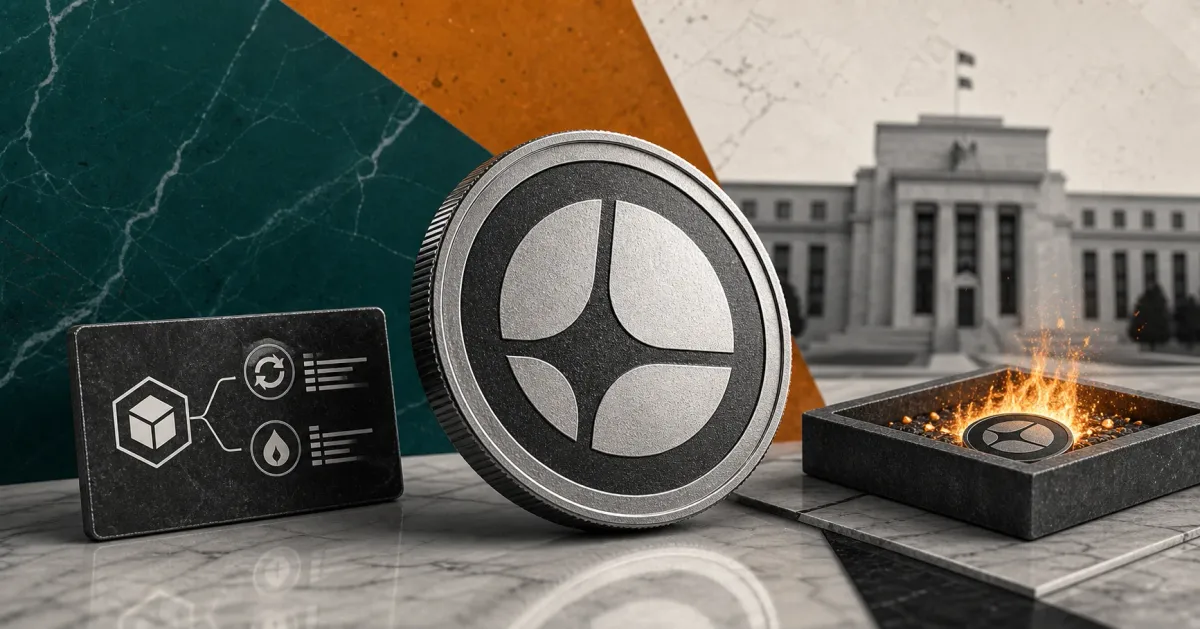
Aster’s ASTER token erased its buyback rally after the perpetuals exchange said it would route 99% of daily platform fees into automatic buybacks and matching reserve burns, leaving the token near $0.64 as a hawkish Federal Reserve backdrop pressured crypto risk assets.
The June 17 update turns Aster’s platform activity into the center of its token story. Instead of a one-time support program, the exchange is tying daily fees to open-market ASTER purchases, staking rewards and a separate burn from reserves.
Market data showed a sharp two-way move. CoinDesk reported that ASTER jumped above $0.80 after the announcement before sliding toward $0.68 as Fed-driven dollar strength hit risk assets. CoinGecko later showed ASTER at $0.6357, down 12.8% over 24 hours, with about $284.6 million in trading volume and a market value near $1.70 billion.
DefiLlama showed Aster with about $865.6 million in total value locked, $217,528 in 24-hour fees, $2.72 billion in 24-hour perpetual volume and $1.82 billion in open interest. That fee base now matters more directly because Aster said nearly all daily platform fees will be pushed into the buyback process.
Aster
ASTERIn its official update on X, Aster said the change puts the platform’s activity to work for holders and sets ASTER on a “deflationary path.” CoinDesk also cited the team as saying the new rewards are settled on-chain with “no discretionary reserve.”
The shift follows the end of an earlier linear vesting model. Aster’s tokenomics documentation says ecosystem and community allocation was originally vested over 20 months, but that linear distribution ran from October 2025 to January 2026 and has since been replaced by staking emissions.
The immediate implication is not that price support is guaranteed. It is that traders now have a cleaner way to test whether Aster’s fee generation is large enough to offset broader selling, unlock concerns and competition from larger derivatives venues.
Aster Buyback Sends 99% Of Fees To ASTER
Aster’s new mechanism has two linked pieces. First, 99% of daily platform fees are used to buy ASTER through an automatic time-weighted average price process. Second, an equal amount of ASTER is burned from reserves, with reports saying the team allocation is burned first.
The protocol has described the combined effect as 198%, made up of 99% of fees used for buybacks and a matching 99% equivalent reserve burn. The repurchased tokens are not destroyed. They are directed to Loyalty Rewards for veASTER holders, on top of a 300,000 ASTER base reward per epoch, according to reports citing the announcement.
That structure is close to a public-company buyback in one respect and different in another. The buyback creates recurring demand for the token if platform fees keep coming in, but the matching burn comes from reserves rather than the market, so the economic impact depends on actual fee volume and the credibility of the execution.
Aster also added a listing-fee hook. BeInCrypto reported that permissionless Aster Spot listings will carry a 50,000 USDT fee routed into additional ASTER buybacks and staking rewards, adding another activity-linked source to the same reward system.
The scale is large compared with normal DeFi incentive changes. CoinGecko said ASTER has a circulating supply of about 2.7 billion tokens and fully diluted valuation near $4.97 billion. DefiLlama listed total ASTER supply near 7.82 billion, while reports said burns will continue until total supply reaches 3 billion tokens.
Fed Selloff Erases The ASTER Rally
The market reaction cut both ways. ASTER initially traded like a tokenomics surprise, rising more than 10% and touching its highest level since January, according to CoinDesk. By June 18, the move had faded as the broader market moved lower.
The reversal matters because it separates project-specific demand from macro liquidity. A buyback program can create recurring spot demand, but it cannot prevent a broad risk-off move from hitting altcoins when the dollar rises, funding tightens or traders reduce exposure after a central-bank decision.
Daily Crypto Briefs has tracked the same leverage problem in broader market selloffs, including the recent Bitcoin liquidation cascade that showed how quickly derivatives positioning can turn a price move into forced selling.
Aster is especially exposed to that psychology because it is itself a perpetuals venue. CoinGecko’s Aster futures exchange page showed about $2.87 billion in 24-hour futures volume and $1.74 billion in open interest, with BTC/USDT as the most active pair.
That makes the token a double read on sentiment. Traders are watching ASTER as a buyback token, but the underlying exchange earns fees from leveraged trading activity, which can shrink if markets turn defensive and users cut risk.
Perp DEX Tokenomics Face A Volume Test
Aster is not alone in linking token value to exchange activity. Hyperliquid has made fee recycling and buybacks a central part of its market story, and Daily Crypto Briefs covered how those economics became part of the case for a listed Hyperliquid staking ETF.
The comparison raises the bar for Aster. A tokenomics update can improve alignment, but a perpetual DEX still has to defend volume, liquidity, execution quality and trader trust against rivals with deeper books or more established brands.
The Aster website says the exchange supports trading across BNB Chain, Arbitrum, Ethereum and Solana from a single account, and describes an Aster Chain design with 50 millisecond block times, zero gas and privacy-focused trading features. Those claims give the protocol a product story beyond the token burn, but the market will judge the numbers first.
Retail users should also separate venue growth from leverage risk. A successful exchange can still be a difficult place for casual traders, which is why Daily Crypto Briefs’ futures guide warns that most people should avoid crypto futures leverage when volatility and liquidation risk are elevated.
Sentiment remains fragile across the wider market. Alternative.me’s Crypto Fear and Greed Index printed 15, or Extreme Fear, on June 18, keeping the backdrop difficult for altcoin rallies that need sustained risk appetite.
Fear & Greed Index
June 18, 2026What remains unknown is the actual daily buyback pace once the system runs through multiple fee cycles, the size and timing of the first bi-weekly burn, and whether ASTER holders treat the June 17 update as durable value capture or a sell-the-news event. The next checks are the public buyback wallet, DefiLlama fee data, futures open interest and whether ASTER can stabilize after the initial macro-driven reversal.
Stay up to date
Get the latest crypto insights delivered to your inbox
Primary sources and further reading
| Source | Title |
|---|---|
| | Aster on X: Tokenomics update |
| | Aster docs: Tokenomics |
| | DefiLlama: Aster TVL, fees and volume |
| | CoinGecko: Aster price and market data |
| | CoinGecko: Aster futures exchange data |
| | CoinDesk: Aster buyback rally fades |
| | Alternative.me: Crypto Fear and Greed Index |
Fact-checked by: Daily Crypto Briefs Fact-Check Desk
Related Articles

Frequently Asked Questions
What did Aster change in its tokenomics?
Aster said it will use 99% of daily platform fees for automatic ASTER buybacks and burn an equal amount of ASTER from reserves, creating what the project described as a 198% buyback-and-burn effect.
Did ASTER keep its rally after the buyback news?
No. CoinDesk reported ASTER jumped above 80 cents after the announcement, then fell back near 68 cents as broader crypto markets weakened after the Federal Reserve decision. CoinGecko later showed the token near 64 cents.
How low is Aster trying to cut total supply?
Reports citing Aster's announcement said reserve burns will continue until total supply falls toward 3 billion ASTER tokens, down from an original 8 billion supply.
What should traders watch next for Aster?
The main checks are daily platform fees, perpetual futures volume, buyback wallet activity, bi-weekly burn transactions, and whether ASTER can hold demand in a weak risk market.