 Daily Crypto Briefs




CASABLANCA, August 10, 2026
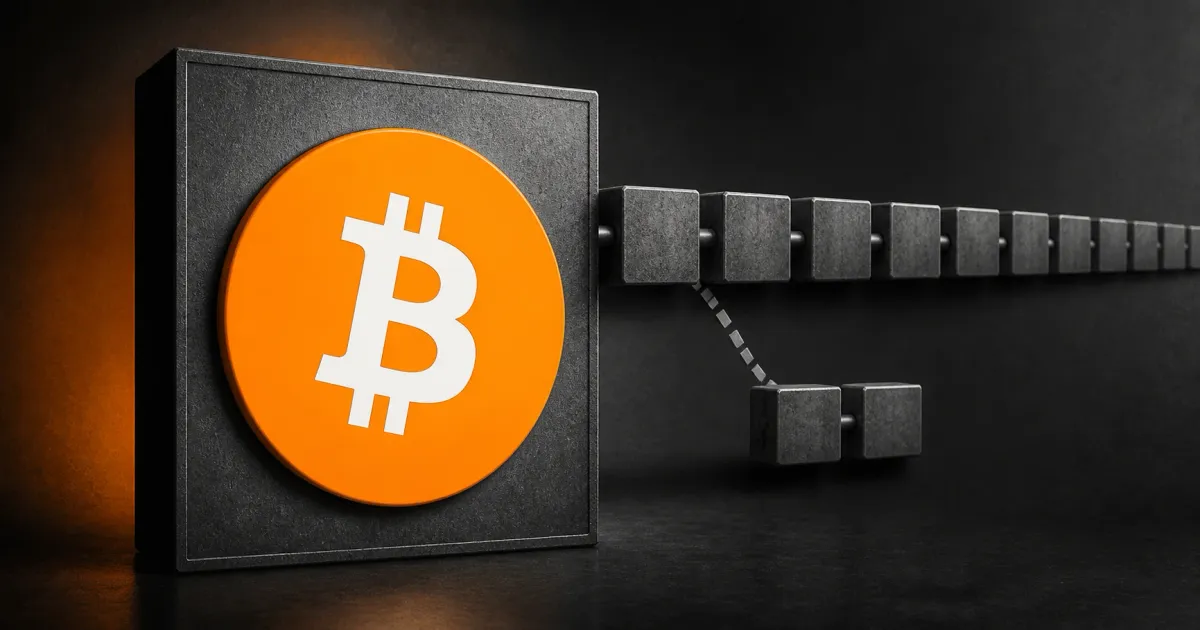
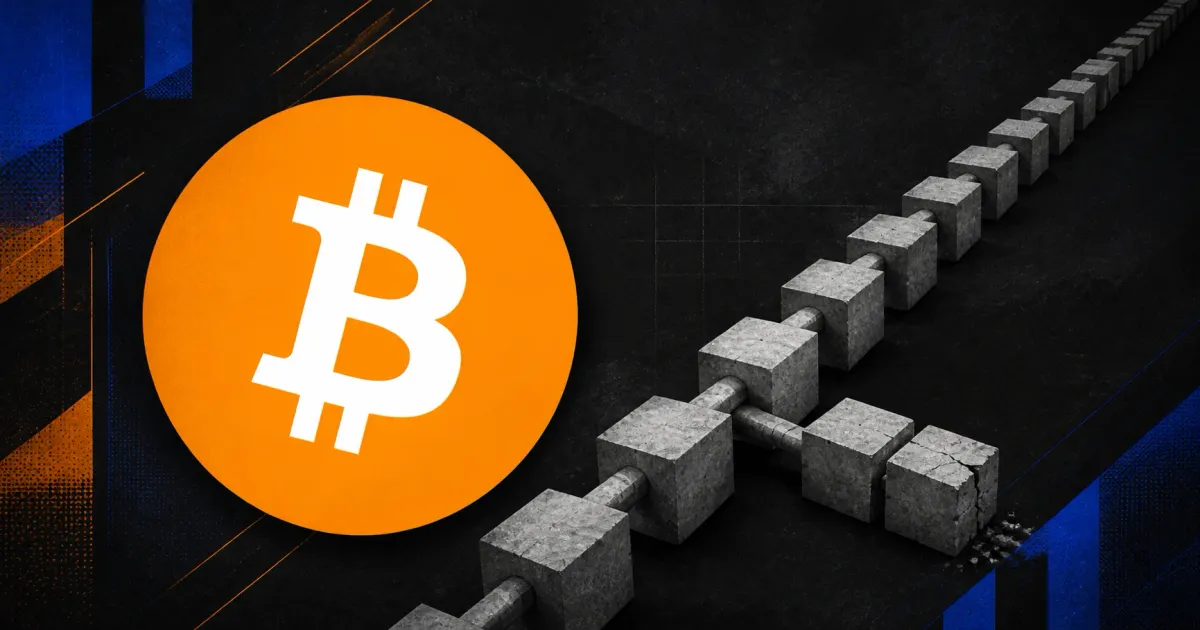
Bitcoin’s BIP-110-enforcing node remained at block 961,633 as a standard Bitcoin node reached 961,905 on Monday, and the live monitor’s 274-block standard-branch record showed no BIP-110 bit-4 signals, extending a divergence that was 113 blocks long a day earlier.
The observed standard branch has now crossed 250 blocks without a signal, while the BIP-110 node has not advanced beyond its one-block extension from the enforcement height. Bitcoin traded at about $63,920, down 2.10% over 24 hours, with a $1.28 trillion market capitalization and $19.91 billion in volume, according to Kraken’s Bitcoin price page.
At 18:33 UTC, the BIP110 Situation Monitor reported the enforcing node at 961,633 and the standard node at 961,905. Its live signaling record counted 274 blocks from height 961,632 through the observed tip and recorded zero signals for the proposal’s version bit 4; mempool.space’s block record independently identified the standard-chain tip at 961,905.
The BIP-110 specification calls for a temporary soft fork that would restrict selected data-carrying constructions in new Bitcoin outputs. It sets bit 4 for signaling and a threshold of 1,109 of 2,016 blocks, or 55%, for lock-in.

Bitcoin
BTCBIP-110 Enforcing Node Holds at Block 961,633
The new reading is a material escalation from our August 9 report on the two-block BIP-110 stall. At that check, the standard branch was 113 blocks long; the monitor now shows 161 additional blocks and a 274-block branch measured from the mandatory-signaling height.
The two node paths are not equivalent measures. The BIP-110 node’s tip is 272 heights below the standard tip, while the monitor labels the standard branch 274 blocks long because it counts from its divergence measurement point. Both figures describe the same thin enforcing path and longer standard history.
This does not establish two equally used Bitcoin networks. The monitor shows one node refusing the standard branch under BIP-110 rules, while the standard node accepts it. It does not provide a complete hashrate measurement, exchange-support figure or a measure of economic activity on the short branch.
The distinction is especially important after the earlier 100-block non-signaling update. A BIP document can describe a proposed rule, but it does not by itself cause standard nodes to reject a block.
Zero BIP-110 Signals Across the 274-Block Window
The monitor’s live data marked every one of the 274 scanned standard-branch blocks as non-signaling. It attributed blocks in the window to several pools, including Foundry USA, F2Pool, AntPool and OCEAN, but the count is a header observation rather than a statement of every miner’s policy or every Bitcoin user’s preference.
The BIP document says the proposal uses a modified BIP9-style deployment. It names 963,648 as a no-later-than lock-in height and 965,664 as its proposed active height, while retaining the 55% threshold. Those terms are deployment conditions, not a result that the current tally has met.
Bitcoin’s difficulty adjusts every 2,016 blocks. A branch with little hash power can take far longer to produce blocks than the standard chain while both continue to be observable, which is consistent with a BIP-110 node remaining at 961,633 as the standard tip keeps advancing.
The earlier mandatory-signaling coverage documented the window’s start. The new data supplies a clearer outcome so far: no standard-chain signal has appeared in the first 274 observed blocks, and the enforcing node remains stalled.
Bitcoin Users Still Face a Narrow Custody Question
No public evidence reviewed for this report showed a general Bitcoin payment outage, failed ordinary transfers on the standard chain or a broad exchange instruction for customers to move BTC. The longer standard branch is the chain tracked by the monitor’s standard node and by the cited block explorer.
The narrower concern is for anyone attempting to treat the short history as a separately supported asset. Where two histories share prior transactions and lack replay protection, a transaction prepared for one path can, in some circumstances, be valid on the other. Wallet, exchange and custodian policies for this specific split were not immediately disclosed.
The Crypto Fear and Greed Index was 30, categorized as Fear, on August 10. That sentiment measure does not assess the safety of a particular wallet or validate a chain, but it frames the market backdrop for a governance episode playing out alongside a softer BTC session.
Fear & Greed Index
August 10, 2026The next facts to watch are whether the enforcing branch finds another block, whether a standard-chain header begins carrying bit 4, and whether major wallets, exchanges or mining pools issue operating guidance. For now, the verified change is narrow but substantial: 274 observed standard-branch blocks without a BIP-110 signal, up from 113 in the prior report, while the enforcing node remains at 961,633.
Stay up to date
Get the latest crypto insights delivered to your inbox
Primary sources and further reading
| Source | Title |
|---|---|
| | Bitcoin BIPs: BIP-110 Reduced Data Temporary Softfork |
| | BIP110 Situation Monitor: Live |
| | mempool.space: Bitcoin block 961,905 |
| | Kraken: Bitcoin price |
| | Alternative.me: Crypto Fear and Greed Index |
Fact-checked by: Daily Crypto Briefs Fact-Check Desk
Related Articles

Frequently Asked Questions
Did Bitcoin split because of BIP-110?
A BIP-110-enforcing node and a standard Bitcoin node were following different histories in the live monitor. As of August 10, the enforcing node was at 961,633 while the standard node was at 961,905. That does not show a broadly supported replacement network or a general Bitcoin payment outage.
Did BIP-110 activate on Bitcoin?
No evidence reviewed for this report showed activation on the standard chain. The monitor's live signal record showed zero bit-4 signals in the 274 standard-branch blocks it counted from the mandatory-signaling height through the observed tip.
Do Bitcoin holders need to move BTC because of BIP-110?
No public evidence reviewed for this report showed failed ordinary Bitcoin transfers or a general instruction to move BTC. Users should be cautious about treating a thin minority history as a separately supported asset without understanding replay and custody risks.
What is the next BIP-110 checkpoint?
The BIP-110 document names block 963,648 as its no-later-than lock-in height and 965,664 as its proposed activation height. Those are proposal parameters, not confirmation that lock-in or activation will occur.