 Daily Crypto Briefs




CASABLANCA, Aug. 13, 2026
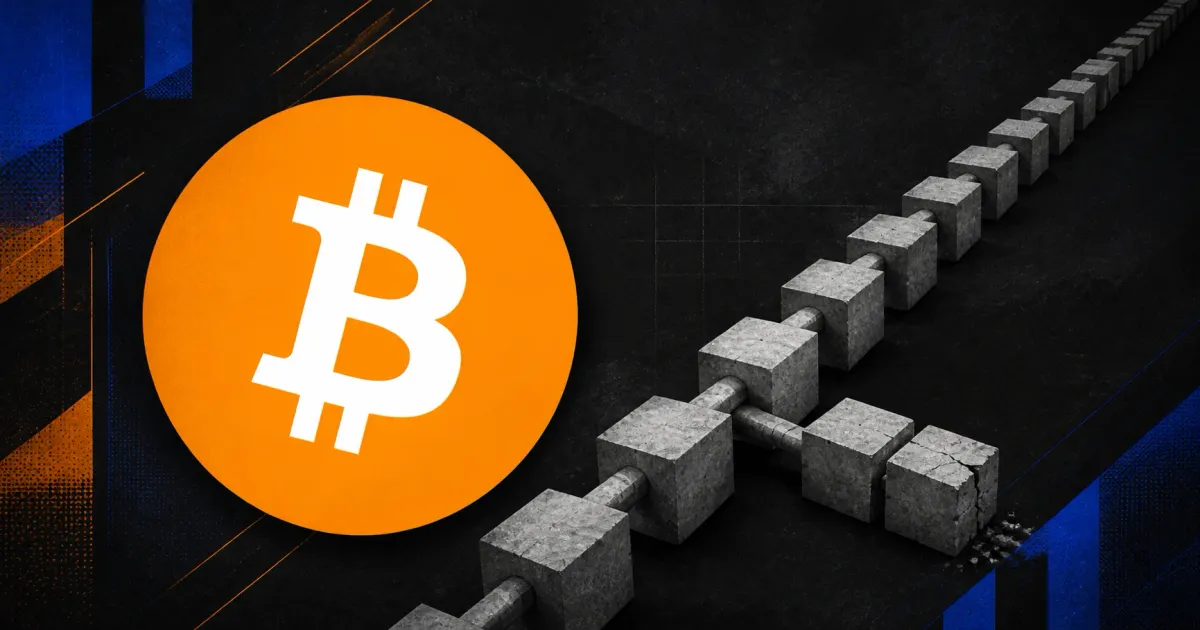
Bitcoin’s BIP-110 monitor showed the rejected standard branch extending to 665 blocks with zero observed bit-4 signals on Thursday, while its enforcing node remained at block 961,635 and the standard Bitcoin node reached 962,296, widening the monitored divergence beyond the 650-block mark.
The result is a material escalation from Daily Crypto Briefs’ 509-block update on Aug. 12. The regular-chain branch added 156 blocks, or about 31%, while the enforcing node did not add a block, increasing the gap between the two node heights from 505 to 661.
At 15:12 Casablanca time, the BIP110 Situation Monitor reported the tips and called the standard path a valid rejected fork. mempool.space’s block record for 962,296 matched the regular node’s reported tip hash, providing a separate public record for the standard-chain side of the reading.
The monitor also recorded 665 consecutive non-signaling block headers in its mandatory-signaling window. Its pool breakdown included 150 Foundry USA blocks, 139 AntPool blocks and 109 F2Pool blocks, each with zero recorded signals in that snapshot. Those figures describe the monitor’s block attribution and signaling scan, not public endorsements or policy statements by the pools.
The BIP-110 specification proposes a temporary soft fork that limits certain new data-carrying output constructions and deploys through version bit 4. The decisive fact in the latest reading is that the enforcing node continues to reject the longer standard history while none of the 665 scanned standard-chain headers carried that bit.
The expanding branch makes the test more visible without resolving the underlying consensus question. It shows a rule-enforcing node and a regular node making different chain choices, but it does not show broad economic support, a general Bitcoin payment disruption or a change in ordinary holders’ balances.
BIP-110 Monitor Counts 665 Rejected Standard-Chain Blocks
The 665-block figure is the length of the regular Bitcoin history from the BIP-110 fork point as classified by the enforcing node. It is not identical to the 661-height difference between the node tips because the BIP-110 node had already produced three blocks after the mandatory-signaling height before the paths diverged.
That distinction is important for reading the headline. A node can reject a longer history under its own rules while the standard network continues to extend the chain it recognizes. The monitor’s status was “diverged,” not a determination that either history has become the universally accepted Bitcoin chain.
The 665 figure nevertheless supplies a fresh update beyond the previous report. The prior snapshot found the standard node at 962,140 and the enforcing node at 961,635, with a 509-block rejected branch. Thursday’s standard tip was 156 blocks higher, while the enforcing side was unchanged.
The rate imbalance is sharper than the raw headline number. The standard branch mined 156 blocks during the interval in which the enforcing node mined none. That observation is limited to these two monitored nodes and should not be converted into a network-wide hashrate estimate, because the monitor does not publish enough information to make that calculation.
The BIP-110 proposal itself sets a no-later-than lock-in height of 963,648 and a proposed activation height of 965,664. As Daily Crypto Briefs explained during the BIP-110 activation countdown, those numbers are conditions in a proposal, not an indication that the standard Bitcoin chain has locked in the rule.
Zero Bit-4 Signals Keep the BIP-110 Question Open
The all-zero signaling record is the clearest short-term datapoint. A missing bit 4 in a block header shows that the mined block did not carry that signaling bit. It does not reveal every miner’s view, every pool’s internal configuration, or the preferences of nodes and businesses that did not mine the block.
Across the full scan, the monitor attributed blocks to 16 listed groups, including OCEAN, BTC.com, ViaBTC, SpiderPool, Luxor, MARA Pool, Binance Pool, Braiins Pool and NiceHash, as well as an Unknown category. It displayed zero signals for every listed group at the time of the snapshot.
This differs from a formal governance vote. Bitcoin’s consensus changes are implemented through software, miners’ block production, nodes’ validation rules and market infrastructure, not a single public ballot. The monitor provides a narrow but useful view of the block-header component of that process.
It also helps separate two claims that can be conflated online. The first is factual: this BIP-110-enforcing node rejects a 665-block standard history. The second, much broader claim would be that BIP-110 has won general Bitcoin consensus. The sources reviewed support the first claim and do not establish the second.
Bitcoin’s earlier 274-block BIP-110 report showed how quickly a visible fork metric can grow without proving commercial uptake. The larger number now warrants a follow-up because it has crossed a new headline threshold, but the same caution remains necessary.
Bitcoin Services Show No Broad Migration Signal
No public evidence reviewed for this report showed a general instruction from major exchanges, custodians, wallet providers or payment processors to move normal BTC balances. The standard-chain block at the reported tip remained independently visible on the block explorer, and the BIP-110 monitor did not identify a broad outage.
That leaves the episode primarily as an observed network-rule divergence. A service that chose to support a minority history would need to assess chain selection, custody, deposits, withdrawals and replay controls. None of those large service-level moves were disclosed in the sources reviewed for the 665-block reading.
The dispute should also not be confused with Bitcoin’s separate work on protecting old coins from a future quantum threat. The quantum-wallet rescue debate concerns a different problem and does not create a current instruction to migrate BTC because of BIP-110.
For miners and node operators, the next verifiable changes are straightforward: a new block on the enforcing history, a bit-4 signal on the standard chain, or public operating guidance from a major pool or service. Until then, the hard-news update is limited to what the monitor and block explorer show: a 665-block rejected standard branch, a 661-height node gap and zero recorded signals, not a completed Bitcoin-wide activation.
Stay up to date
Get the latest crypto insights delivered to your inbox
Primary sources and further reading
| Source | Title |
|---|---|
| | Bitcoin BIPs: BIP-110 Reduced Data Temporary Softfork |
| | BIP110 Situation Monitor: Live |
| | mempool.space: Bitcoin block 962,296 |
Fact-checked by: Daily Crypto Briefs Fact-Check Desk
Related Articles




Frequently Asked Questions
What did the BIP-110 monitor show on Aug. 13?
At the time checked, it showed its regular Bitcoin node at block 962,296 and its BIP-110-enforcing node at 961,635. It labeled the regular node's path a 665-block rejected branch under the enforcing node's rules.
Did any blocks signal BIP-110?
No. The monitor's scanned 665-block signaling string contained zero bit-4 signals at the time checked. That is evidence about block headers in that window, not a vote or a statement from every miner or node operator.
Does the 665-block BIP-110 branch mean Bitcoin has a broad network split?
No. The reading shows two monitored nodes following different histories. It does not by itself establish broad miner, exchange, wallet, custodian or payment-service support for the shorter BIP-110 history.
Do Bitcoin holders need to move BTC because of BIP-110?
No public evidence reviewed for this report showed a general instruction to move normal Bitcoin balances, a broad payment outage or broad service suspensions on the standard chain.