 Daily Crypto Briefs





CASABLANCA, Aug. 12, 2026
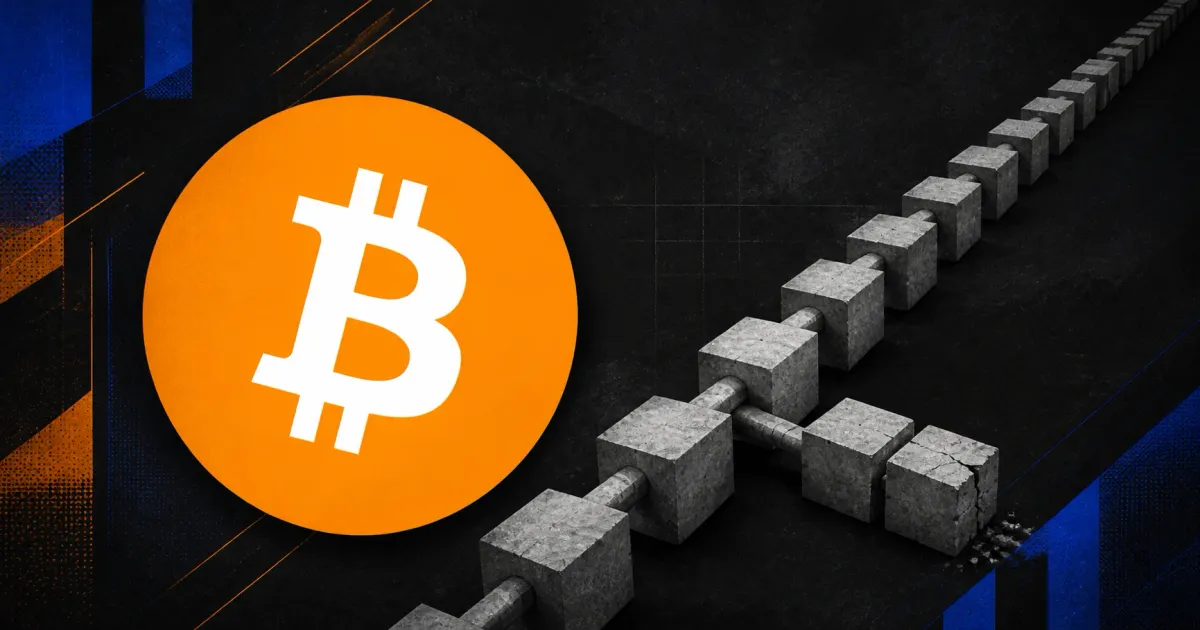
Bitcoin’s BIP-110 monitor counted a 509-block rejected standard branch with zero bit-4 signals on Wednesday, while its enforcing node advanced two blocks to height 961,635 and the standard chain reached 962,140, a fresh escalation in the contested soft-fork experiment.
The monitored gap has now crossed 500 blocks, moving past Daily Crypto Briefs’ 421-block update from late Tuesday. The standard branch added 88 blocks, or about 21%, while the BIP-110 node added two blocks but remained 505 heights behind the standard node.
At 11:33 UTC, the BIP110 Situation Monitor reported both node tips and classified the standard path as a valid rejected fork under the enforcing node’s rules. mempool.space’s record for block 962,140 independently matched the standard-chain tip hash in the monitor.
Bitcoin traded near $64,108 when the data were checked, according to Kraken. Its daily range was about $63,479 to $64,148, after a volatile stretch in which the token had fallen from a late-July high near $66,500.
The BIP-110 specification calls for a temporary soft fork that would restrict certain new data-carrying output constructions. Its deployment uses version bit 4, which the monitor showed absent across all 509 scanned blocks in the standard branch’s mandatory-signaling window.
The latest reading adds an important qualification to the earlier picture. The BIP-110 node is no longer frozen at its prior height, but two additional blocks on that history do not close a 505-height gap or demonstrate broad mining, exchange or economic support.

Bitcoin
BTCBIP-110 Monitor Shows a 509-Block Rejected Branch
The monitor’s terminology needs care. Its 509-block figure measures the standard-chain branch from its BIP-110 fork point, while the difference between node heights was 505 because the enforcing node had mined three blocks after the mandatory-signaling height.
That is a changed technical state, not proof that the minority history is gaining network-wide traction. The monitor still showed the standard node far ahead, and it did not provide a hashrate estimate, a measure of economic activity or evidence that major services are using the BIP-110 path.
The earlier 274-block report described an enforcing node that had stopped after one branch block. The current reading is distinct because the rejected standard history cleared a new 500-block threshold and the enforcing node itself found two more blocks.
No public evidence reviewed for this article showed a general Bitcoin payment outage, failed ordinary transactions on the standard chain or a broad instruction from exchanges, custodians or wallet providers to move BTC. Assertions that BIP-110 is already a Bitcoin-wide consensus rule would go beyond the live-node and block-header evidence.
Two New BIP-110 Blocks Do Not Close the Gap
The BIP-110 node moved from block 961,633 in the previous report to 961,635, while the standard node reached 962,140. That means the monitored minority history added two blocks as the standard history added 88.
The proposal assigns block 963,648 as its no-later-than lock-in height and 965,664 as its proposed activation height. Those are conditions written into a proposal, not results that the standard Bitcoin chain has satisfied.
The zero-signal result remains the clearer short-term indicator. The monitor’s scanned signaling record was a string of 509 non-signaling blocks, making no claim that every miner or node has made a formal public statement. A header’s missing bit 4 shows what was mined, not every participant’s policy view.
This difference also separates a visible fork from a market emergency. A node that enforces a disputed rule can reject the longer standard history, while the standard network continues to process blocks. The monitored data alone cannot determine whether the short history has material commercial use.
Bitcoin Users Still Have No Broad Migration Signal
For ordinary holders, the verification points remain practical: the standard tip was independently visible on the block explorer, and no broad operational disruption was found in the sources reviewed. Services considering support for a minority history would need their own replay, custody and chain-selection controls, but none were disclosed in connection with this monitor reading.
The episode is separate from Bitcoin’s longer-term quantum-readiness work. BIP-110 addresses proposed limits on certain new output constructions; it is not a confirmed emergency migration for existing Bitcoin holders.
Crypto sentiment remained guarded. The Crypto Fear and Greed Index read 27, categorized as Fear, for Aug. 12. The measure does not establish which chain is valid or predict the BIP-110 outcome, but it captures the cautious market setting around the dispute.
Fear & Greed Index
Aug. 12, 2026The next useful checks are whether the BIP-110 history can add blocks more quickly, whether any standard-chain header starts carrying bit 4, and whether a major mining pool, exchange, wallet or custodian publishes specific operating guidance. For now, the verified update is a 509-block rejected standard branch, a two-block advance on the enforcing node and no observed bit-4 signaling, not a completed network-wide activation.
Stay up to date
Get the latest crypto insights delivered to your inbox
Primary sources and further reading
| Source | Title |
|---|---|
| | Bitcoin BIPs: BIP-110 Reduced Data Temporary Softfork |
| | BIP110 Situation Monitor: Live |
| | mempool.space: Bitcoin block 962,140 |
| | Kraken: Bitcoin price |
| | Alternative.me: Crypto Fear and Greed Index |
Fact-checked by: Daily Crypto Briefs Fact-Check Desk
Related Articles




Frequently Asked Questions
Did Bitcoin split into two broadly usable networks because of BIP-110?
The monitor showed an enforcing BIP-110 node and a standard node following different histories. It did not establish two broadly supported Bitcoin networks, a general payment outage or broad exchange support for the shorter BIP-110 history.
What changed after the 421-block BIP-110 update?
The monitor's rejected standard branch increased by 88 blocks to 509, crossing the 500-block threshold. Its BIP-110-enforcing node also advanced two blocks, from 961,633 to 961,635, but remained far behind the standard node.
Did any standard-chain blocks signal BIP-110?
No. The BIP-110 monitor's scanned signaling string showed zero bit-4 signals through standard-chain block 962,140 when this article was checked.
Do Bitcoin holders need to move BTC because of this divergence?
No public evidence reviewed for this report showed a general instruction to move normal Bitcoin balances, failed ordinary transactions on the standard chain or broad service suspensions.