 Daily Crypto Briefs


NEW YORK, June 17, 2026
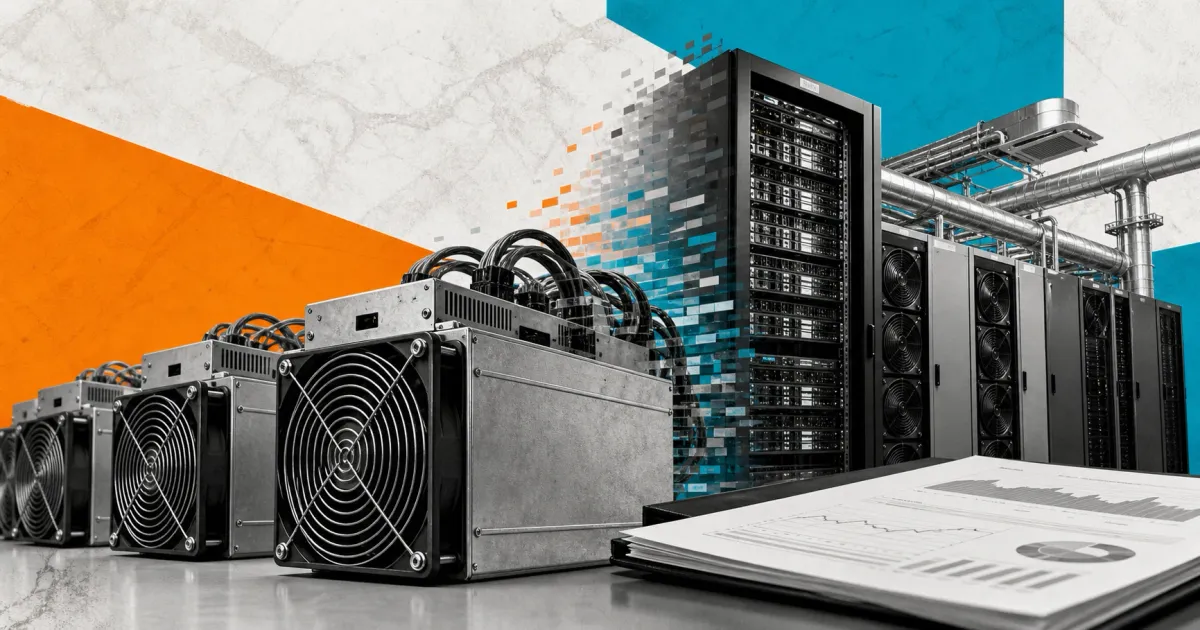
Bitcoin miners trying to reinvent themselves as AI data-center operators face a roughly $50 billion near-term funding gap, VanEck said, putting construction timelines and balance sheets in focus as bitcoin traded near $64,900.
The June 16 report from VanEck looks at miners that have spent the past year selling investors on artificial intelligence and high-performance computing, or HPC, as a second business line. The basic pitch is that miners already have power sites and operating teams, while AI companies need scarce data-center capacity.
The market backdrop is less forgiving than the story was during the first wave of AI lease announcements. CoinGecko data checked by Daily Crypto Briefs showed bitcoin near $64,890 on June 17, down about 15.7% from May 19, with roughly $25.4 billion in 24-hour volume and a market value near $1.3 trillion.
VanEck said the issue is no longer whether miners can sign AI contracts. In the report, the firm wrote that “Execution, not signing” is becoming the next premium, and said the group has delivered only about 25% of leased AI and HPC capacity so far.
That shifts the debate from a crypto growth story to a construction and financing story. If miners cannot raise capital, secure tenants, build on time and keep electricity costs under control, the AI pivot can turn from a valuation boost into a balance-sheet stress test.

Bitcoin
BTCVanEck Puts Delivery Over AI Deals
VanEck’s framework starts with a practical observation: the market is still using rough proxies to value Bitcoin miners because many AI projects are pre-revenue. The firm said gross energized power is the cleanest current lens, since it separates miners with real power assets from companies still mostly selling a pipeline.
That distinction matters because miners are no longer judged only on hash rate or BTC production. The firms with contracted AI or HPC capacity can trade differently from miners that remain more tied to bitcoin’s spot price and network economics.
VanEck said companies with little or no contracted AI capacity trade around 2 to 6 times gross energized power, while names with leases in hand can command more than 10 times. The report cited MARA and CleanSpark as examples still closely tied to bitcoin, while Cipher Mining, Hut 8 and TeraWulf were framed as names with more AI lease credit.
The same theme has been visible in crypto policy coverage. Daily Crypto Briefs previously covered the Mined in America Act, where mining was framed as energy infrastructure and industrial policy. VanEck’s report shows Wall Street applying a similar infrastructure lens, but through valuation and capital access rather than legislation.
Funding Gap Turns On Power And Tenants
The headline number is the funding shortfall. VanEck estimated that near-term capital spending needs across the peer group substantially exceed current cash balances, creating a combined gap of about $50 billion.
The longer-term figure is larger. VanEck put total long-term capital needs near $221 billion if all currently visible sites and development plans move ahead. The firm said the near-term window covers sites expected to start construction over about 12 to 18 months, while the larger figure captures projects over several years.
For miners, that makes financing strategy part of the investment case. Some companies can lean on bitcoin treasuries or BTC-backed credit lines. Others may need more equity, debt, joint ventures or customer prepayments.
The report singled out different sources of strain. HIVE’s gap was tied mainly to AI Gigafactory ambitions, IREN’s to GPU deployment at Sweetwater, and Riot’s to large developments at Corsicana and Rockdale. VanEck said WULF and Cipher looked better funded relative to their needs.
Tenant quality is another dividing line. A site leased to an investment-grade hyperscaler on a long-term structure can support a lower cost of capital than a shorter deal with a smaller GPU cloud customer. That is why AI hype alone is not enough; the counterparty, contract duration and construction risk all feed directly into valuation.
Miner Stocks Face A Construction Test
The report lands after a volatile period for miners and bitcoin itself. A weaker BTC tape reduces the cushion for companies that still rely on mining cash flow, and it can make BTC treasury monetization less attractive just as AI projects require heavy spending.
Operationally, miners also have to keep the original network business running. The January winter-storm hashrate shock showed how quickly weather, power prices and grid stress can affect production. AI data centers face a different business model, but they are still exposed to the same power and cooling realities.
The strategic upside is clear enough. AI demand is forcing hyperscalers and GPU cloud providers to look for power wherever it can be delivered quickly. Miners with energized land, substations and experience running high-load facilities have something scarce.
The harder question is whether they can become reliable data-center landlords without diluting shareholders or missing construction milestones. VanEck said missed milestones could lead to structural de-ratings, which means the market may stop rewarding announcements and start punishing delays.
The crypto link is also evolving. The site has tracked AI agents moving on-chain, but this story sits at the physical layer: chips, power, leases and concrete. It is less about autonomous wallets and more about whether crypto-native infrastructure operators can survive a capital-intensive AI land grab.
Sentiment remains defensive. Alternative.me’s Crypto Fear and Greed Index printed 22, or Extreme Fear, on June 17, as traders weighed weak spot prices against institutional infrastructure headlines.
Fear & Greed Index
June 17, 2026What remains unknown is how much of the $50 billion gap will be funded through equity, debt, bitcoin-backed borrowing, asset sales or customer partnerships. The next checkpoints are second-half 2026 lease announcements, construction updates and any miner disclosures showing that AI revenue is moving from investor deck to operating cash flow.
Stay up to date
Get the latest crypto insights delivered to your inbox
Primary sources and further reading
| Source | Title |
|---|---|
| | VanEck: A Framework for Valuing Bitcoin Miners as AI Infrastructure |
| | CoinGecko: Bitcoin historical data |
| | Alternative.me: Crypto Fear and Greed Index |
Fact-checked by: Daily Crypto Briefs Fact-Check Desk
Related Articles


Frequently Asked Questions
What did VanEck say about Bitcoin miners and AI?
VanEck said Bitcoin miners pivoting to AI infrastructure face a roughly 50B near-term funding gap and long-term capital needs near 221B if current development plans continue.
Why are Bitcoin miners moving into AI data centers?
Miners already control large power sites, grid connections and data-center style operations. AI and high-performance computing customers can pay more for scarce power capacity than traditional Bitcoin mining can in some markets.
How much AI capacity have miners delivered?
VanEck estimated that the peer group has delivered only about 25% of leased AI and high-performance computing capacity, leaving most of the promised buildout still ahead.
Does the VanEck report recommend buying miner stocks?
No. VanEck described the work as research commentary for informational and educational purposes, not a recommendation to buy or sell any security.
Why does Bitcoin's price matter for the AI pivot?
Several miners still depend on Bitcoin mining cash flow and BTC treasuries. A weaker BTC price can make funding large AI data-center projects harder or more dilutive.