 Daily Crypto Briefs
WASHINGTON, April 11, 2026
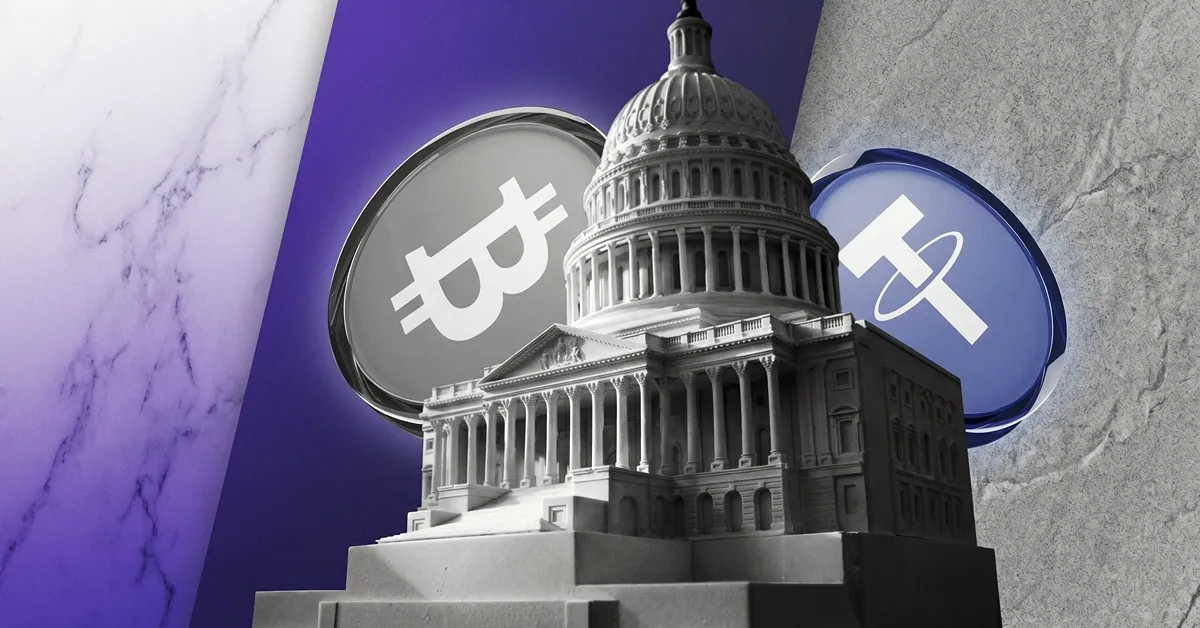
The CLARITY Act is edging back toward a Senate Banking vote after its 294-134 House passage, renewed compromise work on stablecoin rewards, and a fresh Treasury push for crypto rules, while bitcoin traded near $73,518 and Polymarket kept passage odds broadly flat in the mid-60s on April 11.
The House has already done its part and the Senate now appears to be back in negotiation-to-procedure mode rather than collapse mode. The bill would split oversight between the SEC and CFTC and give Washington a more durable framework for keeping digital-asset activity inside the United States.
Prediction markets still are not chasing the story. Even with the latest Senate optimism, the market has not really reacted yet and has remained around 66%, with the page showing 67% when checked on April 11 and total volume near $524,237.
Clarity Act signed into law in 2026? Live

Market snapshot: bitcoin traded near $73,518, up about 0.34% over 24 hours with roughly $25.0 billion in 24-hour volume and a market capitalization near $1.47 trillion. The broader crypto market stood near $2.58 trillion and bitcoin dominance was about 57.2%, while the two-week move from roughly $66,321 on March 29 showed price improving faster than policy certainty.
Bitcoin (BTC) - 2-week snapshot
BTCWhen Chairman Tim Scott postponed the January markup, he said “everyone remains at the table working in good faith”. That still looks like the cleanest description of the bill’s status today: not dead, not done, but still being bargained over.
The House cleared H.R. 3633 last July, and Congress.gov still lists the latest formal action as the bill being received in the Senate and referred to Banking on Sept. 18, 2025. Yet Senator Bill Hagerty said on April 6, according to Cointelegraph, that lawmakers expected to bring the measure into committee in the next work period and move it out in April, even though the committee’s public markup calendar still showed no replacement date when checked on April 11.
That gap between formal procedure and public signaling is why traders keep treating the CLARITY Act as a live adoption story rather than settled law. If the Senate turns compromise text into committee action, the United States moves closer to a rulebook that can keep tokenized finance, stablecoins, and exchange infrastructure onshore instead of pushing them abroad.
CLARITY Act compromise narrows the Senate path
The central negotiation now appears narrower than it did a month ago. The reported landing zone, consistent with our earlier write-up on the latest stablecoin deal, appears designed to stop passive yield paid just for parking dollar tokens while preserving some payment, loyalty, or activity-based rewards. The final Senate text was still not public, so the exact carve-outs were not immediately clear.
That framework matches how Senate Banking Republicans described the bill in a Jan. 13 fact sheet: a clearer SEC-CFTC split, developer protections for software and peer-to-peer activity, and tougher tools against money laundering, terrorist financing, and sanctions evasion. Supporters see that package as the version most likely to let crypto adoption scale inside a U.S. legal perimeter rather than through offshore workarounds.
Treasury’s posture has also shifted in a way that helps the Senate case. Cointelegraph reported on April 9 that Treasury Secretary Scott Bessent had urged Congress to move without delay, arguing that U.S. leadership in digital assets and tokenized assets is at stake. Read alongside Treasury’s new cybersecurity information-sharing initiative for the digital asset industry, the message is that Washington increasingly treats crypto infrastructure as part of the financial system, not a side market.
Coinbase still shadows the CLARITY Act deal
That hopeful adoption case still runs into the same political obstacle: Coinbase’s incentives. The exchange has spent months fighting over stablecoin-reward language, the same pressure point behind our Patrick Witt warning and the backlash tracked in our sabotage coverage.
Recent reporting said Coinbase representatives were still raising concerns with lawmakers about the newest compromise. That does not prove the company wants the bill to fail, but it does support the inference that Coinbase has repeatedly tried to shape the final deal around the part of the market it monetizes best.
That is hard to separate from Coinbase’s trust-charter push. A federally wrapped custody and payments strategy gets more valuable if the company can also defend the economics of keeping customer dollar balances on-platform. The sabotage narrative may be too strong as a legal accusation, but the incentive conflict is real and still central to the Senate talks.
Bitcoin and sentiment still trade like the vote is unfinished
That restraint is visible across the tape. Polymarket showed 67% when checked on April 11, but the contract has mostly sat around 66% and has not materially repriced the latest Senate optimism. Bitcoin has recovered sharply over two weeks, yet the Fear and Greed Index still printed 15, or Extreme Fear, which suggests traders remain cautious until a real committee date appears.
Food for thought: Treasury’s April 9 cybersecurity initiative for the digital-asset industry landed just as Reuters reported that Scott Bessent and Jerome Powell had convened major bank CEOs over the cyber risks posed by Anthropic’s Mythos model. If AI is shifting from a productivity story to a trust and fragility story for finance, CLARITY starts to look less like a niche crypto bill and more like legal groundwork for auditable, cryptographic market rails.
That is the hopeful adoption read on this whole episode. A bill that splits SEC and CFTC authority and gives banks, exchanges, and fintechs a clearer path to build could widen institutional participation even if the final stablecoin terms are imperfect.
Fear & Greed Index
What remains unknown is straightforward but consequential: when Senate Banking posts a markup, whether the compromise text keeps both bank and crypto factions inside the tent, and whether the floor calendar leaves enough room before midterm politics harden. Until those dates are public, the CLARITY Act is closest not to certainty, but to the point where rhetoric finally has to become procedure.
Stay up to date
Get the latest crypto insights delivered to your inbox
Primary sources and further reading
| Source | Title |
|---|---|
| | U.S. House Clerk: Roll call 199 on H.R. 3633 |
| | Congress.gov: H.R. 3633 all actions |
| | Senate Banking Committee: Scott statement on market structure markup |
| | Senate Banking Committee: The Facts: The CLARITY Act |
| | Senate Banking Committee: Markups calendar |
| | Polymarket: Clarity Act signed into law in 2026? |
| | Cointelegraph: US Senate Banking panel member confirms April timeline for crypto market structure |
| | Cointelegraph: Bessent ramps up pressure on Congress to pass CLARITY Act |
| | Cointelegraph: Coinbase opposes latest crypto bill stablecoin compromise report |
| | U.S. Treasury: Cybersecurity information sharing initiative for the digital asset industry |
| | Alternative.me: Crypto Fear & Greed Index |
Fact-checked by: Daily Crypto Briefs Fact-Check Desk
Frequently Asked Questions
Is the CLARITY Act law yet?
No. The House passed H.R. 3633 in July 2025, but Congress.gov still shows the bill as having been received in the Senate and referred to the Banking Committee, not enacted.
Why are CLARITY Act odds still only in the mid-60s on Polymarket?
Because traders still do not have a posted Senate markup date or a public final compromise text, even though recent Senate and Treasury signals have become more supportive.
What is the main compromise issue in the Senate talks?
Stablecoin rewards remain the core fault line. Recent reporting suggests negotiators are trying to curb passive yield while preserving some activity-based incentives, but the final Senate language has not been published.
Why does Coinbase keep appearing in the CLARITY Act story?
Critics argue Coinbase has repeatedly pushed back on drafts that threaten stablecoin economics important to its business, which is why accusations that it slowed the bill keep resurfacing.
What does a Fear and Greed Index reading of 15 mean?
A reading of 15 is labeled Extreme Fear, showing crypto sentiment remains cautious even as the policy backdrop improves.