 Daily Crypto Briefs
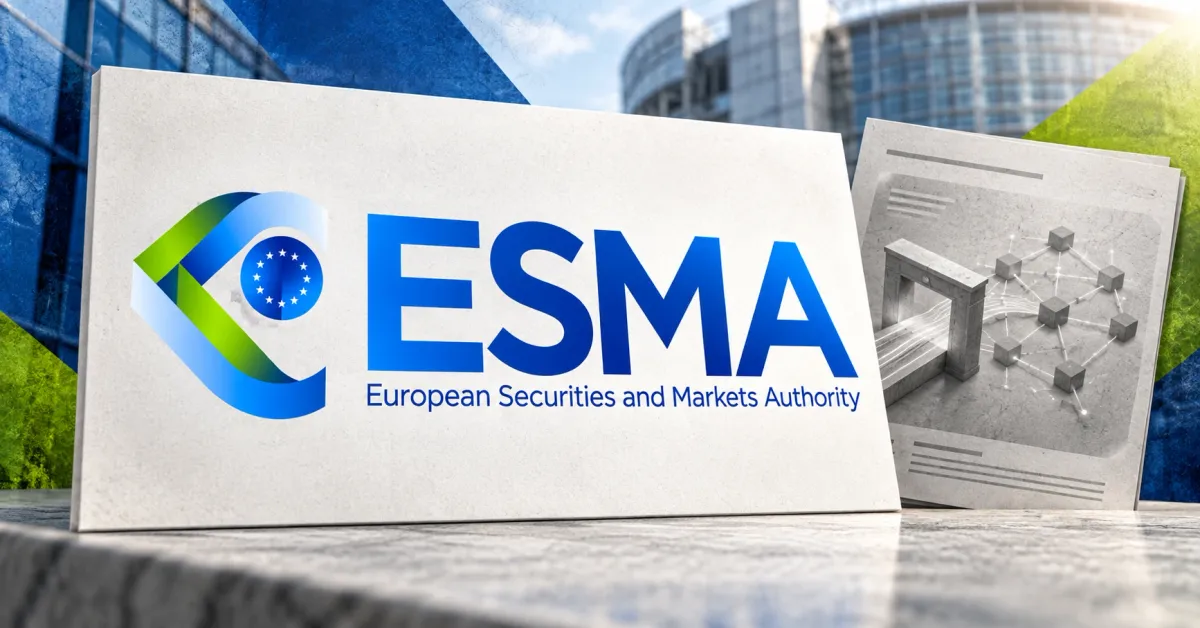




PARIS, September 30, 2026
EU securities regulator ESMA proposed September 30 that crypto firms routing customers into decentralized finance become a distinct regulated service under MiCA, a potential change to how exchanges and other intermediaries offer DeFi access across the bloc.
The European Securities and Markets Authority’s 16-page response asks the European Commission to amend the Markets in Crypto-Assets Regulation after its first implementation phase. It also seeks stronger rules for promotions, staking, lending and services tied to noncompliant stablecoins. None of the recommendations changed the law on publication.
Ether, the asset used by many DeFi applications, finished September 29 near $2,678, according to Investing.com’s daily historical table, compared with about $2,418 on August 30. Its September 29 range was roughly $2,653 to $2,745. Those figures give wider market context, not a measured price reaction to ESMA’s paper.
ESMA said some authorized crypto firms already give clients interfaces to decentralized exchanges, lending protocols and staking arrangements. In its response, it described a proposed “gatekeeper” service for firms that provide such access or route transactions to smart contracts on a client’s behalf.
The paper follows the end of MiCA’s transitional period on July 1. It addresses a different question from the recent ECB proposal to revise stablecoin reserve rules: whether an identifiable business sits between a customer and a supposedly decentralized service.

Ethereum
ETHSampled daily USD prices from Investing.com. Ether’s price is general market context; this chart does not measure the proposed rule’s effect.
ESMA’s DeFi gateway proposal targets intermediaries
The central distinction is who controls the customer’s route into a protocol. ESMA’s full response describes a licensed crypto-asset service provider, or CASP, that supplies an interface, selects protocols or routes client transactions. Those activities could create conflicts if a firm steers users toward a service that benefits the firm.
For that proposed service, ESMA suggests disclosures about protocol risks, explanations of routing and protocol selection, conflict management, due diligence and cybersecurity safeguards. The obligations would be proportional to the firm’s control over the underlying protocol.
The response explicitly says open-source development, self-custody, automated smart contracts and permissionless infrastructure should not automatically amount to regulated intermediation. That qualification is significant: a software developer and a licensed exchange that curates a yield product can have different roles even when both touch the same protocol.
ESMA also wants a narrower legal definition of what qualifies as “fully decentralised” under MiCA. It warns that an identifiable operator can use DeFi language to avoid obligations, a practice it calls decentralization washing. It offers either a definition in the regulation or technical guidelines to reduce differing interpretations among EU supervisors.
The proposal does not identify a named exchange or protocol that must apply for a new license now. Whether a future rule covers a particular interface would turn on the final legal text and the business’s actual function.
MiCA review reaches influencers, staking and fees
ESMA’s September 30 announcement also calls for stricter crypto marketing standards, particularly when influencers or other third parties promote assets. The underlying paper says current high-level provisions can leave national authorities without a clear tool against some recommendations or predictions that are misleading without fitting existing market-abuse rules.
The regulator asks the Commission to consider banning or limiting certain problematic techniques and exploring disclosures of conflicts or earlier recommendations. It does not impose a blanket influencer ban, name particular accounts or say which practices a future law would prohibit.
For staking, ESMA distinguishes the technical act of helping secure a proof-of-stake chain from a marketed investment service. It raises concerns about slashing, lockups, asset segregation and reliance on infrastructure outside the EU. Suggested disclosures would give customers clearer information about rewards and possible losses.
Its lending and borrowing recommendations similarly focus on terms users can compare: collateral, liquidation triggers, custody arrangements and the consequences of a provider’s failure. These are proposals for customer-facing obligations, not a conclusion that every on-chain loan already falls within MiCA.
ESMA also points to exchanges that advertise zero commission while recovering the cost through a wide spread. It wants full transaction-cost information for execution and exchange services, so customers can see the price paid rather than relying on a headline fee.
The shift from initial authorization to supervision is already visible in the withdrawal arrangements of a platform leaving the EU market. ESMA’s new response broadens that discussion from whether a firm may operate to what a licensed firm must disclose when it sends users into higher-risk services.
Stablecoin services face a clearer MiCA boundary
ESMA separately recommends an explicit ban on licensed crypto firms providing MiCA-regulated services involving asset-referenced or e-money tokens that fail the regulation’s requirements. The paper says the present link between unauthorized issuance and exchange or other services leaves room for inconsistent national interpretations.
That proposal concerns what an authorized intermediary may offer. It does not itself determine whether any named stablecoin is compliant, or reverse the USDT access restrictions reported by Revolut users. Those product decisions depend on the applicable rules and each provider’s implementation.
The regulator also seeks binding ESMA opinions on whether complex tokens fall under MiCA or financial-instrument rules. It says its current classification opinions are nonbinding and issued only after a national authority asks, leaving room for the same kind of token to receive different treatment in different countries.
For now, the Commission’s MiCA review consultation remains open until September 30 at 23:59 CEST. The Commission says responses will inform a report that may be accompanied by a legislative proposal. It has not disclosed a final text or an implementation date for ESMA’s suggested DeFi category.
Fear & Greed Index
September 30, 2026Alternative.me’s index showed 71, or Greed, when checked September 30. It tracks broad bitcoin-market sentiment, not support for the MiCA recommendations.
Stay up to date
Get the latest crypto insights delivered to your inbox
Primary sources and further reading
| Source | Title |
|---|---|
| | ESMA: September 30 MiCA review response |
| | ESMA: MiCA review response announcement |
| | European Commission: MiCA review consultation |
| | Investing.com: Ethereum historical prices |
| | Alternative.me: Crypto Fear and Greed Index |
Fact-checked by: Daily Crypto Briefs Fact-Check Desk
Related Articles




Frequently Asked Questions
Did the EU pass new MiCA rules for DeFi on September 30?
No. ESMA submitted recommendations to the European Commission's MiCA review. The Commission has not adopted or enacted a new DeFi gateway service category.
What is a DeFi gateway under ESMA's proposal?
It is a regulated crypto firm that provides a client interface to a DeFi protocol or routes client transactions to smart contracts, acting as an intermediary between users and decentralised services.
Would open-source developers and self-custody wallets automatically need a MiCA license?
ESMA says open-source development, self-custody and permissionless infrastructure should not automatically count as regulated intermediation. Its proposed obligations target a crypto service provider's role and control.
Is ESMA banning crypto influencers?
No. ESMA asks the Commission to consider banning or limiting certain problematic marketing practices and to examine conflicts-of-interest disclosures. No new influencer ban took effect with the response.
What happens to noncompliant stablecoins?
ESMA proposes an explicit MiCA amendment preventing licensed crypto service providers from offering licensable services involving asset-referenced or e-money tokens that do not meet MiCA requirements. It remains a proposal.