 Daily Crypto Briefs


WASHINGTON, May 14, 2026
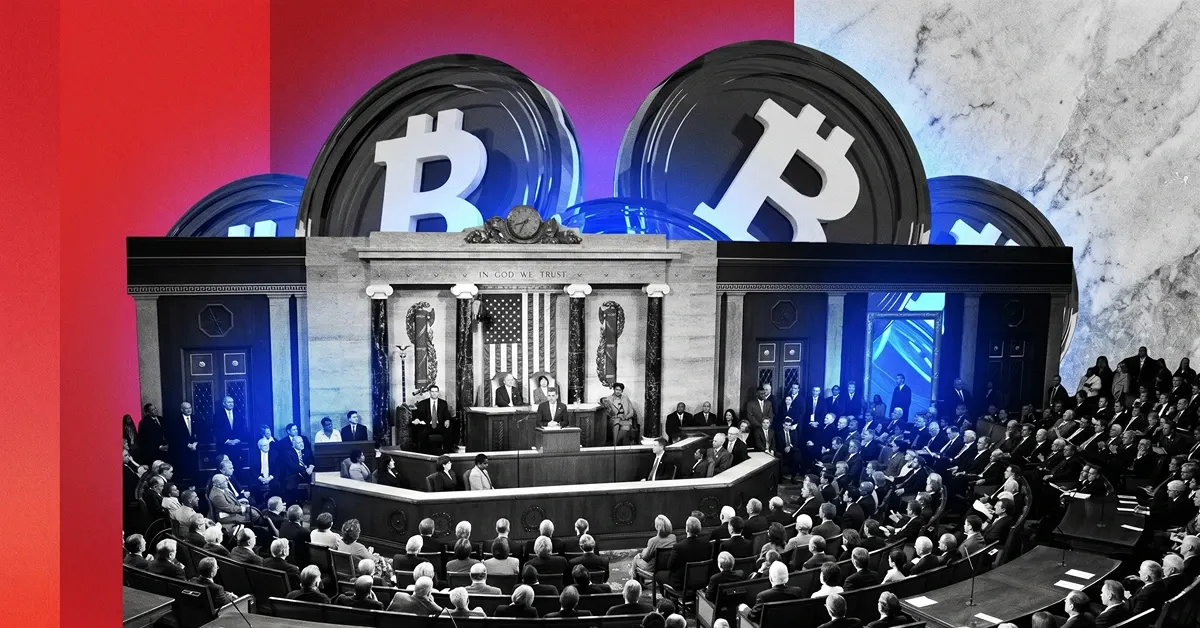
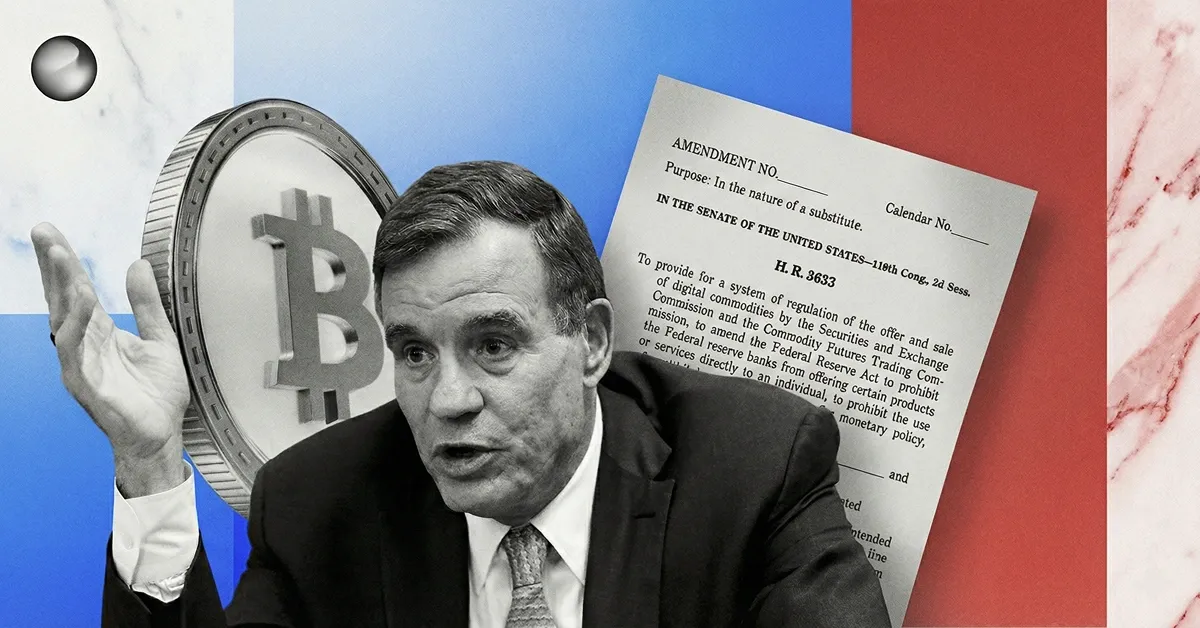
The Senate Banking Committee advanced the Digital Asset Market Clarity Act in a 15-9 bipartisan vote Thursday, sending the crypto market structure bill toward the full Senate as bitcoin briefly reclaimed $82,000 and Polymarket odds of a 2026 signing jumped from 59% to 70%.
Will the CLARITY Act be signed into law in 2026? Live

The vote does not make the CLARITY Act law yet, but it moves the 309-page market structure package out of Senate Banking after months of bank pressure, Coinbase disputes, DeFi amendments and ethics fights, giving Web3 a clearer mainstream path because Washington is no longer debating whether crypto exists at scale, but whether U.S. law can catch up before more activity moves around it.
Market snapshot: CoinGecko data checked by Daily Crypto Briefs showed bitcoin near $81,324, up about 2.1% over 24 hours, with roughly $44.8 billion in daily volume. Ether traded near $2,294, up about 1.4%, while Polymarket repriced the CLARITY contract to 70% after the committee result.
Senate Banking Chairman Tim Scott said in the committee’s May 12 text release that lawmakers had strengthened the bill after months of negotiations and added, “Now it is time to move forward.” The committee’s executive session listing showed H.R. 3633 was on the May 14 agenda.
CLARITY Act clears Senate Banking
The committee vote was bipartisan, but narrow enough to show the floor fight is not solved. Bitcoin Magazine reported that the final committee margin was 15-9, with all 13 Republicans joined by Democratic Sens. Ruben Gallego of Arizona and Angela Alsobrooks of Maryland.
That puts the bill past the same committee chokepoint that previously delayed market structure legislation, including the canceled Senate vote that kept H.R. 3633 stuck in January.
The House had already passed its version on July 17, 2025 in a 294-134 vote, so the Senate move gives crypto its strongest market structure path yet. The industry has waited years for legal definitions around token issuance, exchange registration, custody, DeFi interfaces and the line between securities and commodities.
Coinbase CEO Brian Armstrong called the vote a “big opportunity” to move America’s financial system forward, according to U.Today. Ripple CEO Brad Garlinghouse also backed the push before the markup, saying U.S. crypto users deserve clear rules and protections, according to Bitcoin.com News.
The more important point is not that crypto finally received political permission. Bitcoin settlement, stablecoin payments, DeFi liquidity and tokenized markets have already been operating globally. The pressure is flowing toward Congress because politicians need a credible framework for an economy that blockchains, and increasingly AI agents using those rails, are already building.
SEC CFTC split moves closer
The Senate text released by the committee is a 309-page amendment in the nature of a substitute, according to the official bill PDF. It keeps H.R. 3633 as the vehicle and lays out titles covering securities innovation, illicit finance, DeFi, banking, tokenization, software developers and customer property.
The core regulatory trade is familiar: the SEC keeps securities oversight, while the CFTC gets a clearer lane for digital commodity spot markets once networks meet the bill’s conditions. The official text also adds titles on illicit finance, DeFi obligations, stablecoin yield, tokenization, software developers and customer property.
Clearer rules can reduce the cost of launching compliant exchanges, custody products and payment rails, but the technology’s demand case is already showing up outside U.S. politics. Japan’s push toward tokenized government bond collateral is a useful comparison: major institutions are testing blockchain because settlement speed and 24/7 collateral movement solve actual market problems.
The stablecoin-yield fight remains the sharpest proof that incumbent finance sees the threat. Banks pushed hard to narrow rewards language, a fight Daily Crypto Briefs tracked when banks leaned on Tillis and when Trump accused banks of blocking crypto yields. The committee result suggests banks slowed the bill, but did not stop it.
Coinbase’s role also changed from blocker to backer. Earlier this year, critics argued the exchange helped stall the bill over rewards and market-structure language, a dispute we covered in the Coinbase blame cycle. Armstrong’s support after the committee vote shows that the industry is willing to accept imperfect text if it preserves enough room for tokenization, DeFi and user rewards tied to real activity.
Senate floor is the next test
The next stage is harder than a committee vote. Galaxy Research wrote before the markup that passage still requires committee approval, a 60-vote Senate floor push, reconciliation with the Senate Agriculture text, reconciliation with the House-passed version, and a presidential signature before the calendar tightens.
That path explains why the Polymarket move to 70% is bullish but not final. A committee win gives the bill oxygen. It does not remove the need for Democratic floor support, and the final Senate text can still change as leadership tries to protect the coalition that moved the bill out of committee.
Democrats including Sen. Elizabeth Warren have argued the bill is too friendly to crypto companies and too weak on national-security and conflict-of-interest safeguards. That pressure overlaps with the Trump family crypto questions Daily Crypto Briefs examined in the ethics fight around CLARITY and in our report on Trump’s crypto windfall.
Those conflicts should not be dismissed. A serious crypto law should not become a private toll booth for officeholders. But the adoption story is bigger than one administration: clear regulation has always mattered for mainstream access, and real-world utility keeps winning even when politicians turn the rulebook into a bargaining chip.
Risk sentiment still looked cautious rather than euphoric. The Crypto Fear and Greed Index printed 34 on May 14, a Fear reading that fits a market responding to a policy catalyst while still waiting for floor votes, final language and macro confirmation.
Fear & Greed Index
May 14, 2026What remains unknown is whether Senate leaders can hold the 15-9 committee coalition, add enough floor votes, and reconcile the Banking, Agriculture and House versions without reopening the stablecoin-yield and ethics fights. The signal from Thursday is still clear: crypto is not waiting for Congress to invent demand, but Congress may finally be close to admitting that demand belongs inside a U.S. rulebook.
Stay up to date
Get the latest crypto insights delivered to your inbox
Primary sources and further reading
| Source | Title |
|---|---|
| | Senate Banking Committee: Market structure bill text release |
| | Senate Banking Committee: May 14 executive session |
| | Senate Banking Committee: CLARITY Act 309-page text |
| | Bitcoin Magazine: Senate Banking advances CLARITY Act 15-9 |
| | Galaxy Research: CLARITY Act Senate Banking markup analysis |
| | Polymarket: CLARITY Act signed into law in 2026? |
| | Alternative.me: Crypto Fear and Greed Index |
Fact-checked by: Daily Crypto Briefs Fact-Check Desk
Related Articles


Frequently Asked Questions
Did the CLARITY Act pass the Senate?
No. The Senate Banking Committee advanced the CLARITY Act in a 15-9 vote on May 14, 2026. It still needs further Senate action, reconciliation with other versions, and presidential approval.
What does the CLARITY Act do?
The bill would create a federal crypto market structure framework, split oversight between the SEC and CFTC, set rules for digital asset intermediaries, and address stablecoin rewards, DeFi, tokenization, and customer protections.
Why did Polymarket odds jump after the CLARITY Act vote?
The committee vote removed a major procedural obstacle, so traders repriced the chance of the CLARITY Act being signed into law in 2026 from 59% to 70% after the news.
Who supported the CLARITY Act in committee?
All 13 Republicans on the Senate Banking Committee supported the bill, joined by Democratic Sens. Ruben Gallego and Angela Alsobrooks, according to Bitcoin Magazine.
What should crypto investors watch next?
Watch the full Senate floor process, any changes to stablecoin-yield and ethics language, reconciliation with the Senate Agriculture and House versions, and whether the bill can get 60 votes.