 Daily Crypto Briefs





October 2, 2026
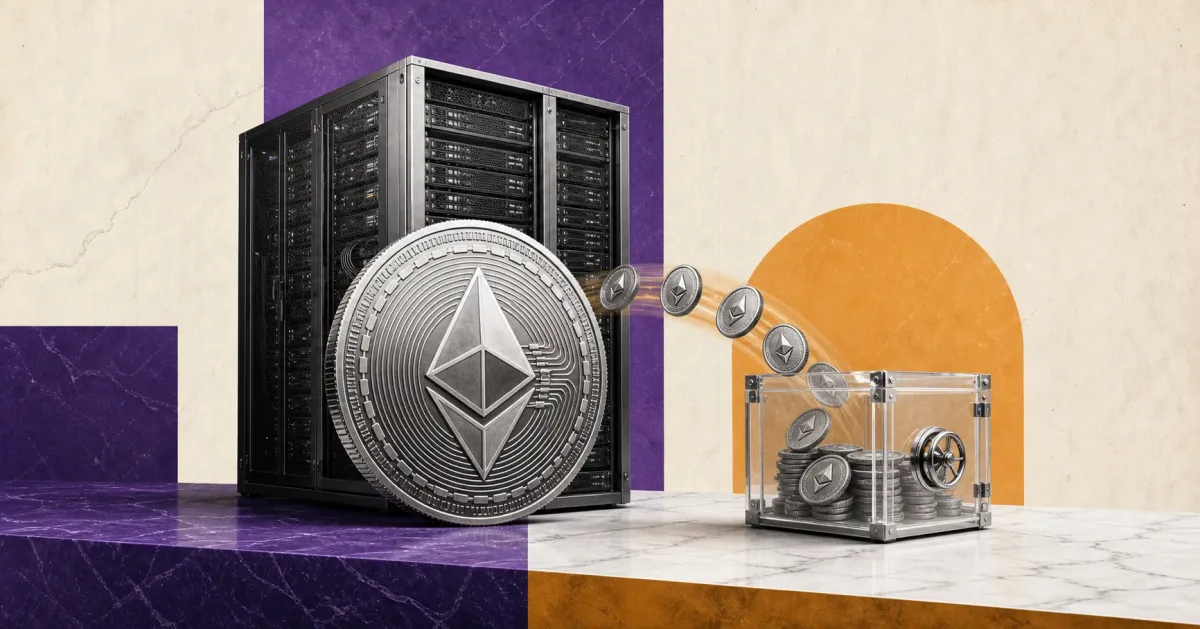
The authors of Ethereum’s staking-reward burn proposal withdrew it from consideration for the Hegotá upgrade on October 1, moving a plan with a 60.25 million ETH threshold into a separate policy debate as staking providers assess its effect on validator income.
EIP-8363, called Tapered Issuance Burn, would deduct and destroy part of validators’ protocol rewards as total stake rises. The withdrawal changes the proposal’s path toward adoption; it does not alter the rewards Ethereum currently pays.
Ether closed October 1 at $2,706.39, up 0.76% for the session and about 13.1% from September 2, according to Investing.com’s historical table. These are broader market figures, not evidence that the governance decision caused ETH’s movement.
Co-author Jérôme de Tychey said industry participants and protocol contributors had persuaded the authors that selecting features for a fork was the wrong setting to decide issuance policy, according to his October 1 announcement.
The decision follows the Ethereum Foundation Protocol cluster’s September 7 refusal to endorse the proposal for Hegotá. It also separates this monetary-policy dispute from the Glamsterdam capacity work, which concerns how much activity the network can process.
The practical distinction is between changing Ethereum’s security budget and changing its technical capacity. Stakers can assess the current economics without treating a withdrawn draft as an imminent deduction, while ETH holders still face an unresolved debate over future issuance.

Ethereum
ETHSource: Investing.com, sampled daily closing prices over one month. Dates identify trading sessions; October 2’s unfinished session is excluded.
EIP-8363 would burn consensus rewards as stake rises
The published EIP-8363 specification remained labeled Draft when checked on October 2. That document status is separate from the authors’ decision to withdraw it from Hegotá consideration.
Its proposed mechanism charges validators deductions tied to assigned duties, including voting on blocks, proposing blocks and participating in committees. The deducted ETH would be destroyed rather than redirected to another validator or organization.
The draft sets a saturation balance of 60.25 million ETH, intended to approximate half the supply. At that level, the burn offsets the idealized consensus rewards for performing duties. This would remove an issuance incentive for further stake growth, rather than impose a hard ceiling on deposits.
It also proposes an 18-month transition to soften the initial reduction. Neither the threshold nor that transition has been activated by the withdrawal announcement.
Consensus rewards are only part of validator economics. Ethereum’s proof-of-stake documentation distinguishes rewards for network duties from transaction tips, which go to validators while base fees are burned. A proposed consensus-reward offset should therefore not be described as eliminating every source of validator income.
The existing reward calculation already depends on active stake and validator performance. More aggregate stake lowers the reward per unit of stake even as total issuance increases. Removing EIP-8363 from an upgrade does not fix future yields at today’s level.
Liquid-staking customers also receive rewards through a separate product layer. Ethereum’s pooled-staking guide explains that receipt tokens can distribute rewards through a rising token balance or a rising redemption value, net of provider fees. A displayed pool yield is therefore different from the protocol’s underlying reward calculation.
The withdrawal does not create a new redemption entitlement or bypass a provider’s liquidity constraints. The same guide notes that redeeming a staking token can depend on available unstaked ETH and the validator exit queue. An issuance proposal, a pool’s advertised return and access to the underlying deposit should be assessed separately.
Nor is this the same as the earlier validator revenue-redirection idea. That discussion sought funding for public goods. EIP-8363 would destroy deductions, changing issuance rather than selecting recipients for redistributed revenue.
Lido and Ethereum Foundation question the policy process
In its September 7 assessment, the Foundation’s Protocol cluster declined the proposal for inclusion while saying its position was not a judgment on the design’s merits. The group said issuance affects holders, stakers and the network’s long-term security budget, requiring wider participation.
That statement did not enact a monetary policy. It was a contributor group’s published view during upgrade planning, followed this week by the authors’ own withdrawal.
An August 14 response from Lido contributors raised a related concern: reduced rewards might push higher-cost independent operators out while large custodians continue staking for business reasons beyond direct yield. The contributors acknowledged Lido DAO’s economic interest and said they were not speaking for the DAO.
Their objection challenges an assumption that less aggregate stake automatically produces a more resilient validator set. They called for modeling who would remain, where ETH would be held and how lending and liquid-staking markets would respond.
Those are stakeholder arguments, not demonstrated outcomes of a live experiment. The proposal was not activated, so there is no observed post-change exit wave or measured loss of validator diversity to report.
Lido’s separate validator consolidation program illustrates another distinction: reducing the number of validator accounts can change network workload without proving that control of the underlying stake is less concentrated.
For an issuance review, stake volume, account count and operator diversity answer different questions. A clear process would need to explain which outcome it aims to improve and how a lower reward changes the incentives of each type of participant.
Ethereum issuance review moves toward Devcon and EthCC
The authors’ outline starts with an issuance forum at Devcon in November. Workshops would follow, with a tentative Columbia cryptoeconomics forum in January and an EthCC discussion in April. The timetable is a proposed review process, not a commitment to deploy a replacement EIP.
Ethereum’s governance guide describes protocol decisions as an off-chain process involving authors, developers, node operators, validators, application users and ETH holders. Forum participation is therefore one input into an upgrade decision, rather than an automatic token-holder vote that changes the code.
The next substantive evidence would be an agreed problem statement, a documented response to objections and a feasible specification. Another discussion date alone would not establish a new reward curve or a mainnet activation schedule.
Fear & Greed Index
Oct. 2, 2026Source: Alternative.me. The October 2 reading was 72, or Greed, down from 74 the previous day. It measures broader crypto sentiment and is not an Ethereum staking metric.
As of 13:06 UTC on October 2, the withdrawal materials did not establish a final replacement design or activation date. The next signal is whether the proposed forums produce a policy with enough technical and stakeholder support to return to upgrade consideration.
Stay up to date
Get the latest crypto insights delivered to your inbox
Primary sources and further reading
| Source | Title |
|---|---|
| | Jérôme de Tychey: October 1 withdrawal and issuance-process plan |
| | Ethereum Improvement Proposals: EIP-8363 draft specification |
| | Ethereum Foundation Protocol cluster: September 7 Hegotá tier list |
| | Lido contributors: August 14 issuance-policy response |
Fact-checked by: Daily Crypto Briefs Fact-Check Desk
Related Articles



Frequently Asked Questions
Did Ethereum cancel the staking reward burn?
EIP-8363's authors withdrew it from consideration for Hegotá on October 1, 2026. They still support reviewing issuance policy through a separate ecosystem process. The burn was a proposal, not a live rule.
Does the EIP-8363 withdrawal change ETH staking rewards today?
No. Withdrawing a proposed protocol change does not update Ethereum's live reward calculation or guarantee a fixed staking return.
What was EIP-8363's 60.25 million ETH threshold?
The draft specifies a saturation balance of 60.25 million ETH, intended to approximate half the supply. At that balance its burn would offset idealized consensus issuance rewards. It is not a cap on deposits or on all validator income.
Is EIP-8363 formally marked Withdrawn?
The published specification remained labeled Draft when checked on October 2. Withdrawal from Hegotá consideration and the document's formal EIP status are different things.
When will Ethereum's issuance policy be reviewed next?
The authors proposed a November Devcon forum, subsequent workshops, a tentative January Columbia forum and an April EthCC discussion. These are process goals, not a confirmed activation date.