 Daily Crypto Briefs




PARIS, June 22, 2026
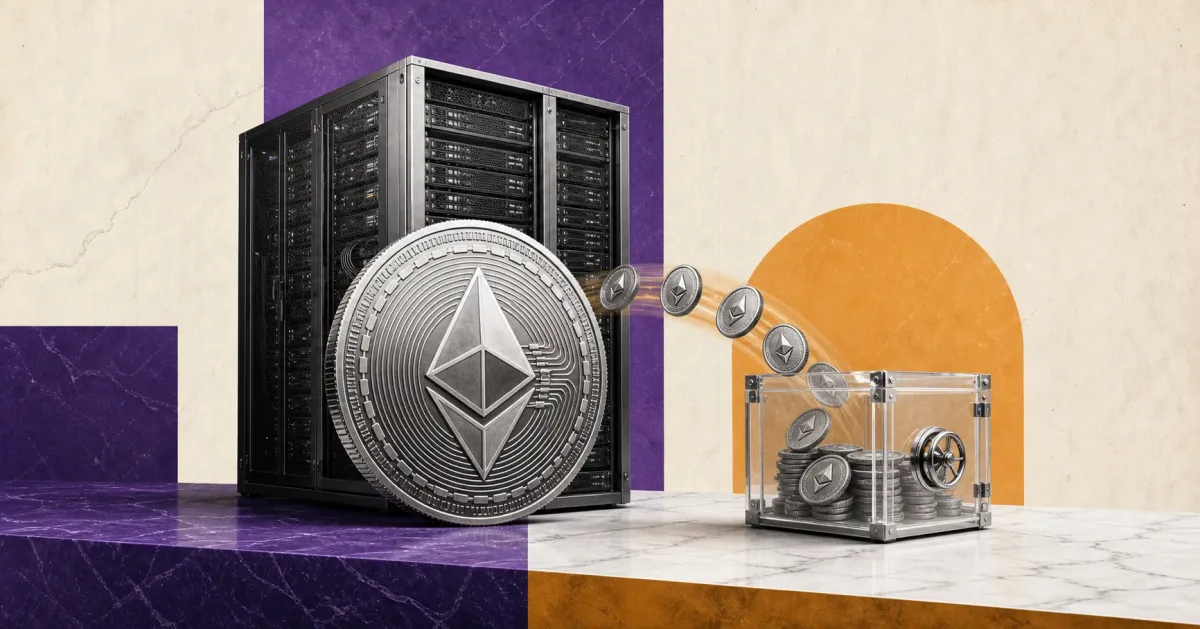
An Ethereum governance proposal would let validators redirect up to 10% of staking rewards to public goods, a mechanism its author estimates could raise 50,000 to 70,000 ETH a year, worth roughly $87 million to $122 million at Monday’s price.
Kleros co-founder Clément Lesaege posted the “Validator Redirected Revenue” design to the Ethereum Research forum on June 21. The plan is not an adopted network rule, an Ethereum Improvement Proposal or an Ethereum Foundation announcement.
In plain terms, the draft asks validators to vote on two questions: what share of revenue should be redirected, from zero to a maximum of 10%, and which registered organizations should receive it. The resulting rate and allocations would be enforced by Ethereum’s protocol if the idea advanced through research, specification and a future network upgrade.
Market data showed ether near $1,740 on June 22, with a market value of about $210 billion and roughly $23 billion in 24-hour trading volume. ETH was down about 15.7% from its May 23 daily reading near $2,064, leaving staking economics and ecosystem spending under closer scrutiny.

Ethereum
ETHLesaege said the design would create a “consensus aligned” funding source and estimated that a 10% rate could generate 50,000 to 70,000 ETH annually. Those figures are the author’s projections, not audited network forecasts, and depend on how much issuance and transaction-fee revenue the final mechanism would cover.
Ethereum Validators Would Set the Rate
The Ethereum Research proposal caps the share of staking rewards available for redirection at 10%. Validators would signal whether the rate should move up, down or remain unchanged, starting from the current zero setting.
The draft says the contribution would activate only after 51% of validators signal a rate above zero. At that point, the selected contribution would become mandatory for all validators. Recipient preferences would be aggregated into a splitter contract, with a new candidate allocation considered every 128 blocks, or roughly every five minutes.
The distinction between an optional validator vote and a mandatory protocol diversion is central to the debate. Once Ethereum adopted a rule and calculated a network-wide result, individual validators would not simply attach voluntary donation transactions. The protocol would redirect the selected share according to consensus rules.
That is why the shorthand “validator tax” is attracting attention. The label captures the economic effect at the maximum setting, but it can obscure that the present document is a research proposal with a zero-rate option, no finalized specification and no deployment date.
Ethereum’s staking documentation says validators earn rewards for proposing and attesting to blocks and can lose ETH for dishonest or unavailable behavior. The new idea would add a funding decision to that operational role, turning validators into voters on ecosystem spending as well as network security.
A 70,000 ETH Pool Raises Control Questions
The upper estimate is large enough to change how Ethereum funds research, client development, security work and other shared infrastructure. Lesaege based it on roughly 35 million to 40 million staked ETH, a 1.91% reward rate and about 700,000 ETH in annual validator rewards. At Monday’s ETH price, 50,000 ETH was worth about $87 million and 70,000 ETH was worth about $122 million.
Ethereum has traditionally relied on foundation grants, private organizations and voluntary funding rather than a standing protocol treasury. Daily Crypto Briefs previously covered how the Ethereum Foundation moved staked treasury assets, showing how closely traders already watch the ecosystem’s funding and liquidity decisions.
The design could reduce dependence on periodic treasury sales, but it would move a politically sensitive choice into validator governance. Large liquid-staking providers, exchanges and institutional operators control more voting weight than solo stakers, creating a risk that funding follows concentrated stake rather than broad user preferences.
Forum participant Micah Zoltu warned that allocation systems tend to become centrally selected, recreate free riding or introduce an exploitable game, and said that problem should be solved before the rest of the design advances. Lesaege responded that large validator cartels are difficult to coordinate and could lose delegated stake if users reject their choices.
The exchange shows the unresolved issue: validators can express economic preferences, but they are not the same population as Ethereum users, application developers or token holders who do not stake. A protocol-funded pool would need credible safeguards against capture, conflicts of interest and low-information voting.
The governance question arrives as Ethereum expands beyond simple staking. The network is also planning a post-quantum validator key registry and supporting financial products that attempt to pass staking rewards through fund structures. Each change raises the cost of treating validator operations as a purely technical function.
No EIP or Fork Date Exists
The proposal remains at the discussion stage. It does not specify a final beneficiary registry, voting interface, conflict policy, slashing treatment, client implementation or method for determining whether redirected revenue includes issuance, priority fees, maximal extractable value or some combination.
No formal EIP number or target hard fork had been published as of June 22. Advancing the idea would require a detailed specification, security and incentive analysis, client-team support, testing and broad agreement across Ethereum’s development process.
Market sentiment also remains defensive. The Crypto Fear and Greed Index stood at 20 on June 22, an Extreme Fear reading, while ETH remained below its late-May level.
Fear & Greed Index
June 22, 2026The next useful signals are whether Lesaege or another contributor converts the forum post into an EIP, whether staking providers disclose a position, and whether client developers consider validator-directed funding appropriate for consensus.
Until then, the 50,000 to 70,000 ETH figure is best read as the scale of a possible funding system, not revenue Ethereum has approved, collected or committed.
Stay up to date
Get the latest crypto insights delivered to your inbox
Primary sources and further reading
| Source | Title |
|---|---|
| | Ethereum Research: Validator Redirected Revenue |
| | Ethereum.org: Staking |
| | CoinGecko: Ethereum |
| | Alternative.me: Crypto Fear and Greed Index |
Fact-checked by: Daily Crypto Briefs Fact-Check Desk
Related Articles





Frequently Asked Questions
What is the proposed Ethereum validator tax?
It is an informal proposal to let validators vote to redirect between 0% and 10% of protocol revenue to registered public-goods organizations. It is not an adopted Ethereum tax or active network rule.
How much ETH could the proposal raise?
Author Clément Lesaege estimated 50,000 to 70,000 ETH per year if validators broadly chose the proposed 10% maximum. Actual funding would depend on participation, issuance, fee revenue and the final design.
Would Ethereum stakers lose 10% of their rewards?
Only if a future implementation were adopted and the validator-selected rate reached 10%. The proposal allows rates from zero to 10%, and no binding implementation exists.
Who would receive the redirected ETH?
The draft suggests registered organizations could submit funding proposals, with validators voting on recipients. No final registry, eligibility standard or beneficiary list has been published.
Has the Ethereum validator revenue proposal become an EIP?
No formal Ethereum Improvement Proposal or fork target had been published at the time of writing. The idea remains an Ethereum Research discussion.