 Daily Crypto Briefs




NEW YORK, July 2, 2026
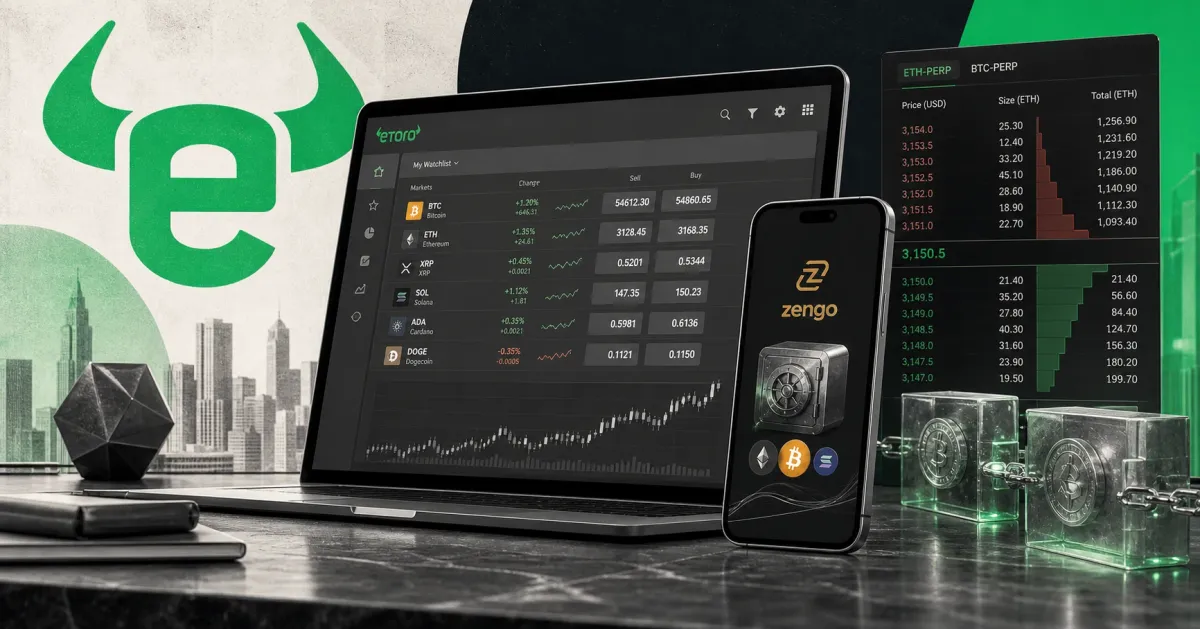
eToro led a reported $12.5 million investment in Extended, an onchain perpetual futures exchange, linking the broker’s newly acquired Zengo wallet to DeFi derivatives as Ethereum rose to about $1,694.65.
The deal gives eToro a strategic position in a crypto-native derivatives venue built by former Revolut employees. Extended said the investment also begins a partnership with Zengo, the self-custody wallet eToro acquired last year, but the companies did not disclose a product launch date or regional availability.
Market data showed the timing clearly. CoinGecko data put Ethereum near $1,694.65, up about 4.3% over 24 hours, with a market value near $204.5 billion and about $12.7 billion in daily volume, while bitcoin traded near $61,456.
In its July 2 announcement on X, Extended said eToro is now a strategic investor and described the partnership as a push to expand access to global financial markets through onchain infrastructure.
The investment follows eToro’s 2025 acquisition of Zengo, which the broker framed as a way to add self-custody crypto capabilities. It also follows a wider brokerage rush into onchain markets, from Robinhood’s own-chain stock-token rollout to U.S. exchanges testing regulated crypto derivatives.
The practical implication is distribution. Extended already has an active onchain perps product, but eToro and Zengo could put that format closer to mainstream brokerage and wallet users. The open question is whether that access becomes durable liquidity or another route for casual traders into leveraged products they may not fully understand.

Ethereum
ETHeToro Extends Zengo Into Perps
eToro’s strategic logic is straightforward: own the wallet relationship, then add more onchain products around it. Zengo gives eToro a self-custody consumer surface, while Extended gives it exposure to a derivatives venue built for perpetual futures rather than spot swaps.
That is different from simply listing more coins inside a brokerage app. Perpetual futures are the dominant speculative format in global crypto derivatives because they do not expire and use funding payments to stay close to spot prices. The format is liquid, always on and risky.
CoinDesk reported the round at $12.5 million, with eToro leading and backers including GSR, Collider Ventures and StarkWare. Extended’s own materials describe the venue as a self-custody exchange with more than 100 markets and API access for advanced traders.
eToro brings a much larger user funnel. In its selected May 2026 business metrics, the broker reported $20.1 billion of assets under administration and 4.23 million funded accounts, up 17% from a year earlier.
That scale gives the story stronger SERP value than a typical DeFi funding round. A public broker is not only backing an onchain derivatives startup. It is potentially connecting a self-custody wallet, brokerage distribution and crypto leverage into one product path.
Extended Brings 100 Markets Onchain
Extended says its exchange supports more than 100 markets and has processed more than $245 billion in cumulative volume across more than 1.3 million traders. Those figures are platform-reported, not audited public financials, but they show why eToro would look at the venue as more than an early-stage experiment.
The product is built around perpetual futures, the same instrument U.S. venues have been trying to bring into more regulated settings. Daily Crypto Briefs recently covered Kraken’s push to bring CFTC-regulated perps onshore through Bitnomial, while Kalshi’s bitcoin contract opened a separate regulated U.S. perp lane.
Extended sits in a different lane. It is onchain, wallet-native and tied to the DeFi trader audience, not a traditional futures commission merchant model. That can make access faster and more composable, but it also shifts more responsibility to users and front-end controls.
The Zengo link is the bridge between those worlds. Zengo markets itself around wallet security and self-custody usability, while eToro markets itself as a broad investment platform. An Extended integration could give wallet users access to perps without first moving assets to a centralized derivatives exchange.
The companies have not said whether Zengo users will trade directly inside the wallet, be routed to Extended, or face separate onboarding and jurisdiction checks. They also have not disclosed the fee split, collateral assets, leverage limits or compliance framework for any integrated product.
Wallet Perps Raise Leverage Risk
The investment lands while crypto sentiment remains defensive.
Fear & Greed Index
July 2, 2026That context matters because perps are built for leverage. A trader can be directionally right over a week and still be liquidated during a fast intraday move if collateral falls below maintenance requirements or funding costs accumulate.
Daily Crypto Briefs’ guide on why most people should not trade crypto futures makes the same distinction: regulated access, better interfaces and broker backing do not change liquidation math. They mostly change how easy it is to reach the product.
For eToro, the opportunity is to capture a higher-value part of crypto trading at a time when brokers are racing to become all-in-one venues for stocks, tokens, wallets and derivatives. For Extended, the opportunity is distribution through a brand that already sits in front of millions of funded accounts.
The risk is product-market fit running ahead of user understanding. Wallet users may understand spot custody, but perps add funding rates, margin calls, price-index mechanics and liquidation engines that behave differently from holding coins.
The next useful signal is product integration, not the round itself. Watch whether eToro and Zengo expose Extended to retail wallet users, whether access is limited to sophisticated traders, what jurisdictions are supported, and whether Extended’s reported volume grows after the partnership moves from announcement to product.
Stay up to date
Get the latest crypto insights delivered to your inbox
Primary sources and further reading
| Source | Title |
|---|---|
| | Extended: eToro strategic investment and Zengo partnership |
| | Extended Exchange |
| | Extended Docs |
| | eToro: acquisition of Zengo |
| | eToro: selected May 2026 business metrics |
| | CoinDesk: eToro invests in Extended |
| | CoinGecko: Ethereum price |
| | Alternative.me: Crypto Fear and Greed Index |
Fact-checked by: Daily Crypto Briefs Fact-Check Desk
Related Articles



Frequently Asked Questions
What did eToro do with Extended?
eToro became a strategic investor in Extended, and CoinDesk reported that it led a $12.5 million investment round in the onchain perpetual futures exchange.
Why does Zengo matter to the eToro and Extended deal?
Extended said the investment begins a partnership with Zengo, the self-custody crypto wallet eToro acquired in 2025, which could give Extended access to wallet-based distribution.
What is Extended?
Extended is an onchain derivatives platform focused on perpetual futures, with support for more than 100 markets and self-custody style trading infrastructure.
Are onchain perps safer because eToro is involved?
No. A broker-backed investment can improve distribution and credibility, but perpetual futures still carry funding, margin and liquidation risk.
What is still unknown about the partnership?
The companies have not disclosed when a Zengo integration will launch, which jurisdictions will get access, what fees will apply or how much volume the partnership could drive.