 Daily Crypto Briefs
NEW YORK, March 31, 2026
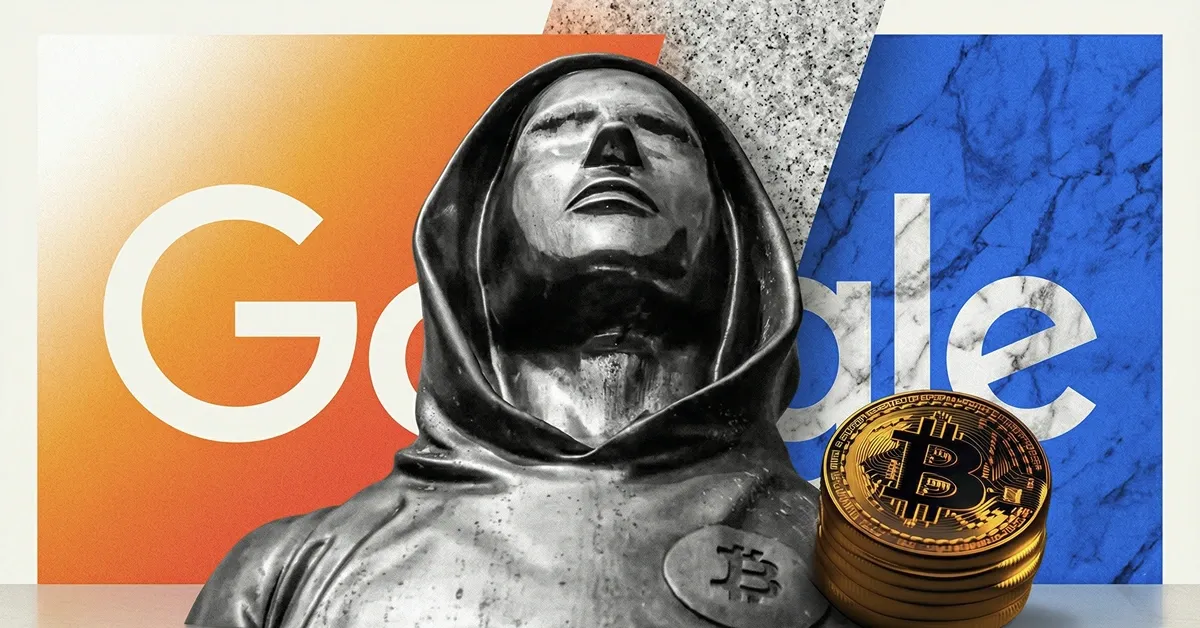
Google Quantum AI published a new whitepaper on March 31 saying future quantum computers could break the secp256k1 cryptography used in Bitcoin and Ethereum with far fewer resources than earlier estimates, as the market around Satoshi Nakamoto’s bitcoin held at a noticeably higher risk premium.
Odds of Satoshi moving any of his Bitcoins went from 4.5% at the start of 2026 to a peak of 11.8%, then spent much of the quarter around 8% before reacting to the news on March 31. Traders are assigning a materially higher risk premium to dormant Satoshi-era bitcoin than they were at the beginning of the year, even if the new Google paper did not trigger a straight vertical repricing yet.
Will Satoshi move any Bitcoin in 2026? Live

Google is arguing that the quantum barrier to attacking old exposed-key crypto addresses has fallen faster than many investors expected, which sharpens the urgency around migration work such as our earlier look at Bitcoin’s draft quantum fix without proving that a live attack is possible today.
Market snapshot: Market trackers showed bitcoin near $67,951 late on March 31, up about 1.9% over 24 hours but still down about 9.2% from $74,858 on March 17. Twenty four hour volume was roughly $58.7 billion, bitcoin’s market capitalization stood near $1.36 trillion, and BTC dominance was about 56.2% of the roughly $2.42 trillion crypto market.
Bitcoin (BTC) - 2-week snapshot
BTCGoogle quantum paper cuts the Bitcoin attack budget
In its research note, Google said future machines may break crypto with “fewer qubits and gates than previously realized.” The accompanying whitepaper says Shor’s algorithm against secp256k1 can run with either less than 1,200 logical qubits and 90 million Toffoli gates or less than 1,450 logical qubits and 70 million Toffoli gates, and that the circuits were validated through a zero-knowledge proof rather than a full public release.
The paper no longer frames the threat as a distant abstraction. It models a fast-clock quantum attacker deriving a key in about nine minutes, short enough to compete with Bitcoin’s average block interval, and says that setup could give an on-spend attack roughly a 41% success rate against public mempool transactions.
Google also said a machine capable of doing this does not exist today. Even so, the company is clearly trying to move the discussion away from whether the threat is real and toward how quickly vulnerable systems can migrate before the hardware catches up.
Satoshi’s 1 million BTC is the hook, but the blast radius is wider
In the whitepaper’s Bitcoin section, Google says old Pay-to-Pubkey outputs alone still account for a little more than 1.7 million BTC, and those legacy patterns are why Satoshi Nakamoto’s estimated 1 million BTC keep resurfacing whenever quantum timelines tighten.
The paper is not really about one wallet, or even only about Bitcoin. It explicitly targets the same secp256k1 signature system used in Ethereum, and it also notes that elliptic-curve cryptography sits underneath TLS and HTTPS web traffic, SSH administrative access, firmware and software signing, end to end encrypted messaging, and other parts of modern digital infrastructure.
If quantum progress keeps compressing the timeline, the crypto industry has a governance problem, but banks, cloud providers, software vendors, and governments have a migration problem too. Bitcoin just has the disadvantage of needing rough social consensus rather than a centralized maintenance window.
Bitcoin’s post-quantum clock now points toward 2029
On March 25, Google said in a separate company post that it is setting a post-quantum cryptography migration timeline to 2029, a date the company tied to recent progress in quantum hardware, error correction, and resource estimates. In that sense, the whitepaper works like a countdown marker for crypto, not just a research update.
That timing makes Bitcoin’s unfinished response harder to ignore. BIP-360, a draft Bitcoin Improvement Proposal, would introduce a new output type meant to reduce long-exposure quantum risk, but it is still far from activation and does not settle the harder politics around dormant coins, abandoned addresses, or how quickly exchanges and wallets could push users into safer formats.
What remains unclear is which mitigation path can actually gather broad support before quantum hardware becomes materially dangerous, and Google did not disclose any live deployment timetable for such hardware. The next signals to watch are whether Bitcoin developers converge around a migration path, whether exchanges and custodians begin preparing users for post-quantum address changes, and whether future quantum papers keep shrinking the attack budget from here.
Stay up to date
Get the latest crypto insights delivered to your inbox
Primary sources and further reading
| Source | Title |
|---|---|
| | Google Research: Safeguarding cryptocurrency by disclosing quantum vulnerabilities responsibly |
| | Google Quantum AI whitepaper PDF: Securing Elliptic Curve Cryptocurrencies against Quantum Vulnerabilities |
| | Google blog: Quantum frontiers may be closer than they appear |
| | Bitcoin Improvement Proposals: BIP-360 |
| | Polymarket: Will Satoshi move any Bitcoin in 2026? |
| | CoinMarketCap: Bitcoin |
Fact-checked by: Daily Crypto Briefs Fact-Check Desk
Frequently Asked Questions
What did Google Quantum AI publish about Bitcoin?
Google Quantum AI published a March 30, 2026 whitepaper saying secp256k1, the elliptic-curve cryptography used in Bitcoin and Ethereum signatures, may require far fewer logical and physical qubits to break than earlier estimates suggested.
Does the Google quantum paper mean Bitcoin can be hacked today?
No. Google explicitly said such a cryptographically relevant quantum computer does not exist today. The paper is important because it shortens the estimated path and increases pressure to migrate toward post-quantum protections before the hardware arrives.
Why are Satoshi Nakamoto's coins part of the story?
Satoshi's estimated 1 million BTC are often discussed in quantum-security debates because older bitcoin outputs can expose public keys more directly than newer address formats, making dormant early-era coins a focal point in migration and policy debates.
Why does this matter beyond Bitcoin and Ethereum?
The same family of elliptic-curve cryptography is used well beyond crypto, including in HTTPS, SSH, software signing, and authentication systems, so the paper has implications for digital security more broadly.
What is Bitcoin's current post-quantum path?
Bitcoin does not have a finalized post-quantum migration path yet. One draft idea, BIP-360, would add a new output type designed to reduce long-exposure quantum risk, but it is still only a proposal and not active consensus rules.