 Daily Crypto Briefs

HONG KONG, April 16 2025 –
I watched OM slip from the mid‑5 billion** in market value vanished, and the tape showed why: tens of millions of tokens hit exchanges just before the fall, and the bid was propped up by recycled OTC cash that ran out when liquidity dried. In CoffeeZilla’s follow-up interview, CEO JP Mullin confirmed parts of the loop while promising fixes that holders have heard before.
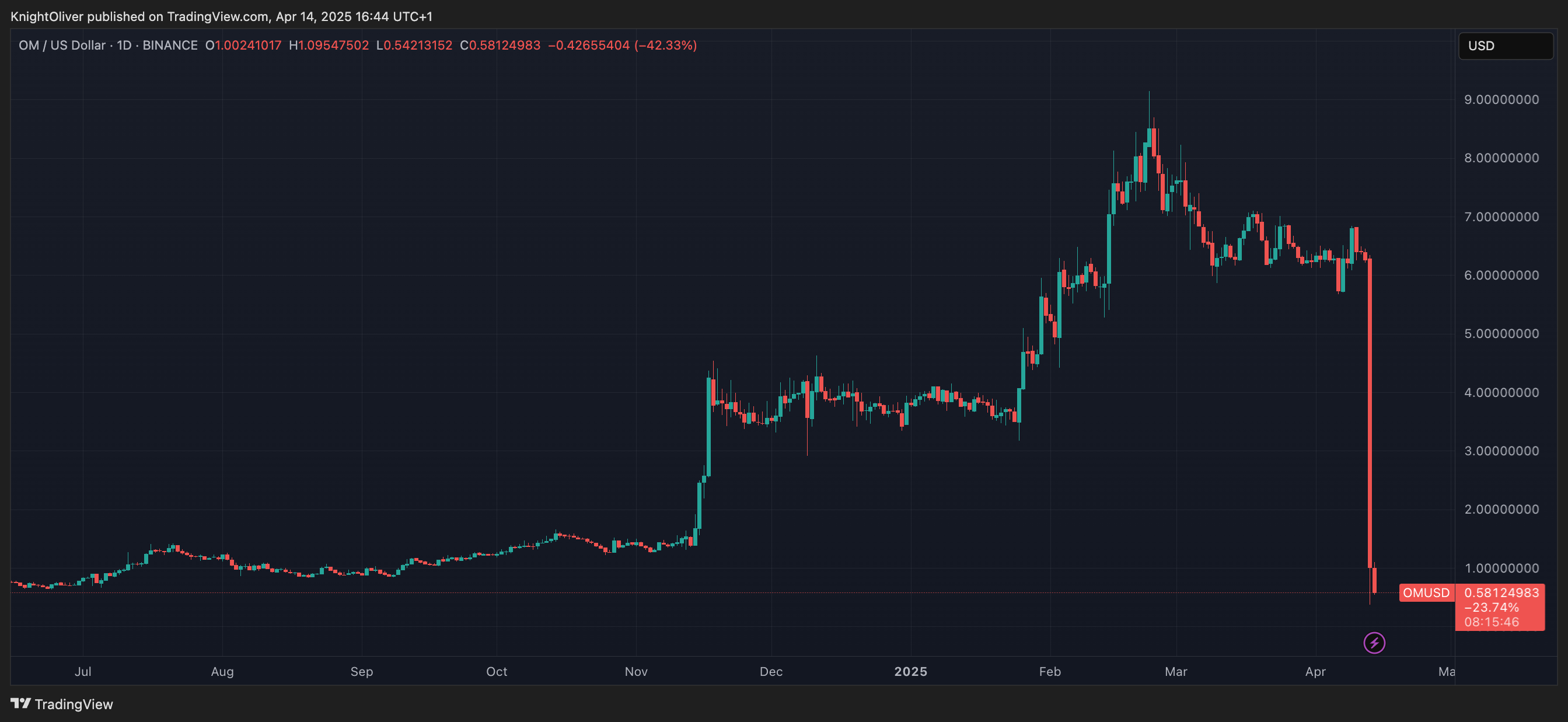
How the crash unfolded
- OM fell from about 0.50 in under an hour during thin Asian trading. Mantra’s own “Statement of Events” blames forced liquidations after large holders used OM as collateral.
- Exchange flows tell the setup: CoinDesk traced 43.6 million OM (about $227M) sent to Binance and OKX in the three days before the sell-off. With that much supply primed, bids collapsed fast. OKX’s founder Star Xu called it “a major scandal” for the industry.
- Market cap loss ran over $5B in roughly four hours, a speed that rivaled Terra’s 2022 unwind.
The OTC loop that primed the fall
- Through 2024, Mantra raised an estimated 10M of that cash went to market makers to buy OM back on exchanges—a circular “support” bid funded by private sales.
- When those bids were pulled or overwhelmed, the market had to absorb real supply without a safety net. That’s why the chart fell like a stone once the big transfers hit.
- Some investors, like Laser Digital, publicly denied dumping and shared wallet addresses. But reports cite two Laser-tagged wallets in that 43.6M token batch, keeping skepticism alive.
- The team now pitches another buyback-and-burn plan, echoing the same playbook that failed days earlier (CoinDesk/Cointelegraph/Decrypt coverage).
CoffeeZilla vs. Mantra: what changed in the interview
- CoffeeZilla pressed Mullin about a broker “Mr P” offering a 45M-token deal before the crash. Mullin denied direct ties but admitted Mantra used OTC-plus-buyback loops “to support price.”
- He claimed the team controls only ~1% of unlocked supply and used no leverage. On-chain data still shows OM’s float was concentrated enough that forced sales hit like a hammer.
- Mullin conceded that every dollar injected “has a positive impact on price,” effectively confirming the circular bid and the distorted depth.
What to watch next
- Disclosures: Will Mantra publish full OTC agreements, market-maker mandates, and the identities behind the 43.6M-token transfer?
- Liquidity: Order-book depth remains thin; even modest unlocks could trigger more forced sales if fresh “support” bids aren’t real.
- Burn plan specifics: A draft “comprehensive burn” exists, but there’s no timeline or audit of team wallets to prove supply cuts.
- Custody and audits: Confidence hinges on third-party verification of treasury wallets and exchange cooperation to flag repeat large transfers.
Until those details go public, OM trades under the same opaque setup that let a single hour wipe out billions. If you’re holding or trading it, watch flows and disclosures—not just headlines.
Stay up to date
Get the latest crypto insights delivered to your inbox
Primary sources and further reading
| Source | Title |
|---|---|
| | Mantra Statement of Events |
| | CoinDesk — Burn‑Program Story |
| | Voidzilla Interview |
| | Cointelegraph — Post‑Crash Analysis |
| | Decrypt — CEO Pledges Token Burn |
| | CoinMarketCap — RWA Roundup |
Fact-checked by: Daily Crypto Briefs Fact-Check Desk