 Daily Crypto Briefs



LONDON, July 30, 2026
Moonbeam says GLMR holders have until July 31 to move their tokens from the Polkadot-based Moonbeam network to Base on a 1:1 basis, with GLMR trading near $0.007784 as the chain approaches the end of its transition period.
The deadline is a practical custody event, not a routine token listing. Moonbeam has told self-custody users to clear staking, lending, liquidity and other application positions before bridging their free GLMR balance, warning that assets left in onchain protocols may become inaccessible when the network winds down.
CoinGecko listed GLMR at about $0.007784 when checked, up 2.0% over 24 hours but down 12.2% over seven days. The provider showed a market capitalization near $9.37 million, 24-hour volume around $3.01 million and a 24-hour range of $0.007386 to $0.007870. Those figures show a thin, volatile market backdrop; they do not establish that the migration deadline caused the moves.
Moonbeam’s official strategic update says, “All existing GLMR holders must bridge their tokens” to Base before July 31. The team describes the destination asset as a Base ERC-20 token and says the token conversion is one GLMR for one GLMR.
The project announced the plan on July 3 as a shift away from its Polkadot parachain toward an AI-agent communication and settlement protocol on Base. The cutoff is now the immediate story: Moonbeam says the existing network continues through the transition period, while its migration page gives holders a direct action point before support changes.
Moonbeam
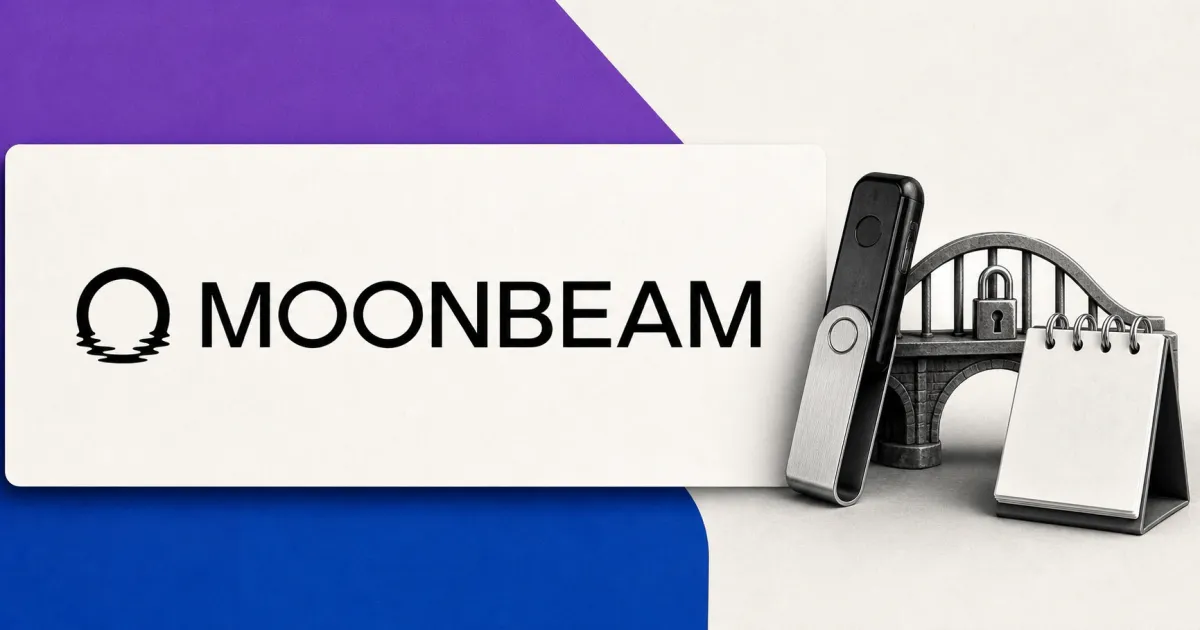
GLMRMoonbeam GLMR bridge closes July 31
Moonbeam’s instructions are specific about the path: holders with GLMR in a self-custody wallet should use the project’s migration portal, rather than treating an arbitrary cross-chain route as a substitute. The official page identifies the new Base contract and says the move is 1:1.
The deadline does not mean every holder follows the same workflow. Moonbeam says customers with GLMR held on centralized exchanges do not need to act for now, because the project intends to coordinate with exchange partners. Those users should still rely on an exchange’s own confirmed notice rather than on a wallet-holder tutorial or a social-media link.
For a wallet holder, the central distinction is between the asset and the old network environment. A Base ERC-20 can use the network’s familiar Ethereum-compatible tooling, but it is not the original parachain asset. Daily Crypto Briefs examined a related infrastructure change in Base’s B20 token-standard proposal, where the focus was also on moving regulated or structured asset functions into a new onchain format.
Moonbeam has not published a network-wide total for GLMR already migrated, a final tally of unclaimed balances, or a time of day for the July 31 cutoff in the materials reviewed. Holders should not infer a grace period from the statement that the chain will operate through the transition period.
GLMR holders must clear Moonbeam DeFi positions
The bridge can move a wallet’s available GLMR. It cannot automatically unwind assets that have been committed to a staking contract, supplied to a lending market, deposited into a liquidity pool, locked in governance or otherwise controlled by an application.
Moonbeam tells users to withdraw those positions before bridging, then move their assets as they choose. The warning is important because a wallet can show a token balance while a separate smart contract holds the funds that actually need attention.
This sequence does not guarantee that a withdrawal will settle instantly or that every third-party application has the same operational deadline. Users should confirm the status of each position, any unbonding period, transaction fees and the destination address through the application’s official channels. They should also be alert to phishing: a deadline-driven migration is a common setting for counterfeit bridge pages and unsolicited support messages.
The operational risk resembles the one facing developers when an infrastructure provider ends an old service. In our report on the Chainlink Automation v2.1 sunset, contracts could remain deployed even if the system that triggers a configured task changes. Here, the issue is different but equally concrete: a wallet migration does not by itself retrieve assets parked inside a Moonbeam application.
Moonbeam’s statement says the original GLMR is moved through the migration process and a corresponding token is issued on Base. It does not describe the change as a cash redemption, promise a particular exchange market, or say that all Moonbeam applications will reappear on Base.
GLMR market is near its July low
GLMR’s market data adds a second reason to separate operational facts from trading claims. CoinGecko showed the token’s recent low at $0.007386 on July 29 and an all-time high of $19.50 in January 2022. A deadline can affect where a token is held or traded, but it does not provide a reliable price forecast.
The migration is also a narrower change than an automatic expansion of Base usage. Moonbeam’s stated aim is to build infrastructure for AI agents to communicate, negotiate and settle tasks onchain. That direction overlaps with a wider market trend we covered when AI agents accounted for more onchain activity, but the new protocol’s design, adoption and timing have not been fully disclosed.
Broader sentiment remained cautious. The Crypto Fear & Greed Index read 28, or Fear, on July 30. The Bitcoin-focused measure is not a gauge of Moonbeam’s migration readiness, but it frames a period in which holders may be tempted to make hurried operational decisions.
Fear & Greed Index
July 30, 2026The next hard checkpoint is July 31. The information to watch is whether Moonbeam publishes a precise cutoff time, how exchanges communicate their support, and whether applications with old-network balances give users additional withdrawal guidance. Until then, the verified instruction is clear: users holding GLMR directly should review all positions before relying on the official 1:1 migration route.
Stay up to date
Get the latest crypto insights delivered to your inbox
Primary sources and further reading
| Source | Title |
|---|---|
| | Moonbeam Foundation: strategic update and GLMR migration instructions |
| | Moonbeam migration portal |
| | Moonbeam brand guidelines |
| | CoinGecko: Moonbeam market data |
| | Alternative.me: Crypto Fear & Greed Index |
Fact-checked by: Daily Crypto Briefs Fact-Check Desk
Related Articles


Frequently Asked Questions
What is the Moonbeam GLMR migration deadline?
Moonbeam says holders must move GLMR from the Moonbeam parachain to Base before July 31, 2026. The official process converts one GLMR into one Base ERC-20 GLMR.
Do GLMR holders need to withdraw staked or deposited tokens first?
Yes. Moonbeam says users should withdraw funds from staking, lending, liquidity and other Moonbeam protocols before bridging. The migration flow is for a wallet's free GLMR balance, and the team warns that assets left in protocols may become inaccessible after the chain winds down.
What should GLMR holders on centralized exchanges do?
Moonbeam says exchange customers do not need to take action for now and should watch their exchange's direct communications. Holders should not assume that every venue follows the same timetable or procedure.
Does the GLMR move create a new token supply?
Moonbeam describes the conversion as 1:1. Its migration materials say GLMR on the old network is moved through the official process while a corresponding Base ERC-20 GLMR is issued, rather than presenting the move as an additional token allocation.