 Daily Crypto Briefs




SAN FRANCISCO, July 23, 2026
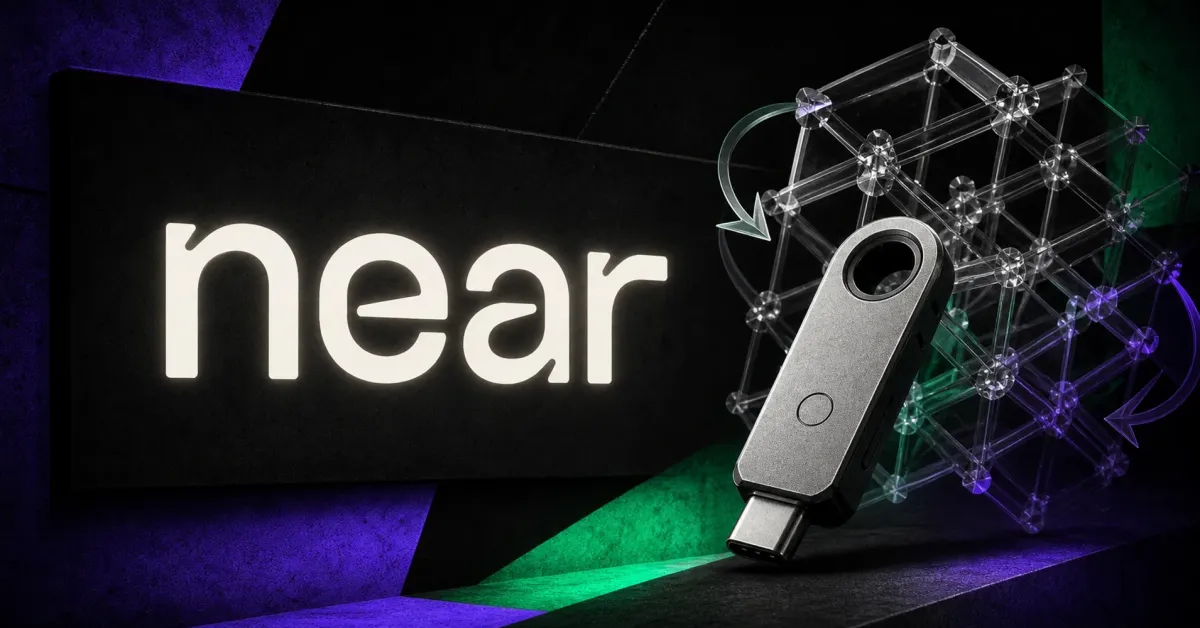
NEAR Protocol has brought quantum-safe signing to mainnet through its 2.13 upgrade, adding NIST-standardized ML-DSA keys as NEAR traded near $1.94 with a market value of roughly $2.57 billion, in one of the first production moves by a major layer-1 toward post-quantum account security.
The release gives NEAR users an additional access-key scheme rather than forcing an immediate chain-wide migration. It also activates dynamic resharding, allowing the network to split busy shards automatically when predefined state-size limits are reached.
Market data showed NEAR closed at $1.98 on July 20, the day of the announcement, then near $1.94 on July 21. CoinGecko recorded $117.5 million in July 20 trading volume, followed by $183.1 million on July 21, while the token’s market capitalization moved between about $2.49 billion and $2.57 billion over those sessions.
In the NEAR-issued announcement, co-founder Illia Polosukhin said the upgrade gives the network automatic scaling as demand grows while laying a cryptographic foundation for agents transacting onchain. The claim is narrower than saying quantum computers pose an immediate threat: it describes an available migration path before such a threat is practical.
NEAR’s step arrives after quantum risk moved from a distant research concern to an active protocol-design issue. Bitcoin developers are still debating how to rescue or migrate exposed addresses, as Daily Crypto Briefs reported in its review of Bitcoin’s proposed quantum-wallet paths, while NEAR is making a new key type available inside its existing account model.

NEAR Protocol
NEARNEAR 2.13 Adds ML-DSA Key Rotation
ML-DSA is a digital-signature standard published by the U.S. National Institute of Standards and Technology as FIPS 204. Its purpose is to offer a signature design intended to resist attacks from sufficiently capable quantum computers, unlike the elliptic-curve schemes that secure many current blockchains.
NEAR’s 2.13 release notes say ML-DSA-65 is now a third transaction-signature and access-key scheme, alongside ed25519 and secp256k1. The implementation stores a hash of the larger public key on-chain and prices the heavier verification work with an additional 100 gigagas charge at transaction conversion.
The practical distinction is the account design. A NEAR account name is controlled by access keys, so a user can add an ML-DSA key and revoke an older key without changing the named account or moving every asset and application permission. That does not prove every wallet or contract is ready, but it reduces one migration hurdle that is harder for systems where an address is permanently bound to a public key.
The upgrade therefore does not make every NEAR balance quantum-safe by default. Users and wallet providers still need to adopt the key type, and the timeline for a cryptographically relevant quantum computer remains uncertain. What is now concrete is the protocol support and a route to use it.
Dynamic Resharding Removes a Scaling Vote
The second change is as operational as the first is cryptographic. NEAR’s sharded network previously needed a full protocol upgrade to introduce a new, hard-coded shard layout, a process involving validator coordination, voting and staged deployment.
Dynamic resharding changes that rule. The official technical description says a shard can split deterministically at an epoch boundary when its state reaches the specified threshold. The release notes confirm the capability is stabilized in 2.13 rather than left as a proposal.
That has a direct bearing on NEAR’s effort to serve applications and cross-chain activity whose demand can be uneven. Automatic splitting does not guarantee usage, lower fees or token demand, but it removes one manual governance step from a future capacity expansion.
It also fits the broader push to prepare blockchain infrastructure for autonomous software. Daily Crypto Briefs has previously examined how AI agents are already contributing to on-chain activity; the key question for NEAR is whether developers bring that traffic to its account and intent layers after the upgrade.
NEAR Price Stays Below Its Mid-July Level
The market response was restrained. NEAR’s July 20 close of $1.98 was about 3.7% above its $1.91 close the day before, but it remained below the $2.07 close recorded on July 15. The next day, it closed near $1.94, according to CoinGecko’s historical table.
That leaves the upgrade as a technology event rather than evidence of a sustained token revaluation. Price can reflect broad crypto risk, liquidity and positioning as well as product changes, and the available trading sessions are too few to assign the move to the upgrade alone.
Broader sentiment was cautious. The Crypto Fear & Greed Index read 31, classified as Fear, on July 23.
Fear & Greed Index
July 23, 2026The next checks are adoption rather than another headline: wallet support for ML-DSA, the number of accounts that rotate keys, the first automatic shard splits and whether applications use the added capacity. NEAR has now supplied the protocol mechanism; the scale and timing of migration remain undisclosed.
Stay up to date
Get the latest crypto insights delivered to your inbox
Primary sources and further reading
| Source | Title |
|---|---|
| | NEAR Protocol: Quantum-Safe Signing and Dynamic Resharding |
| | NEAR nearcore 2.13.0 release notes |
| | NIST FIPS 204: Module-Lattice-Based Digital Signature Standard |
| | NEAR: Introducing Dynamic Resharding |
| | CoinGecko: NEAR Protocol historical data |
| | Alternative.me: Crypto Fear and Greed Index |
Fact-checked by: Daily Crypto Briefs Fact-Check Desk
Related Articles


Frequently Asked Questions
What did NEAR Protocol's 2.13 upgrade add?
Version 2.13 added ML-DSA, a NIST-standardized post-quantum signature scheme, as an access-key option and activated dynamic resharding. The changes let accounts rotate keys and let the network split busy shards automatically at epoch boundaries.
Is NEAR now fully quantum-safe?
The upgrade makes a quantum-safe signing option available on NEAR mainnet. It does not force every account to migrate immediately, and its security benefit depends on users, wallets and applications adopting the new key type.
Why is NEAR's account model relevant to quantum-safe migration?
NEAR accounts use human-readable names controlled by rotatable access keys. That lets an account add or replace a key without needing to move assets to a newly derived address, which can simplify migration compared with address-bound designs.
What is dynamic resharding on NEAR?
Dynamic resharding lets NEAR split a shard automatically when it reaches a defined state-size threshold. Before version 2.13, introducing a new shard layout required a dedicated protocol upgrade and validator coordination.