 Daily Crypto Briefs
SAN JOSE, March 17, 2026
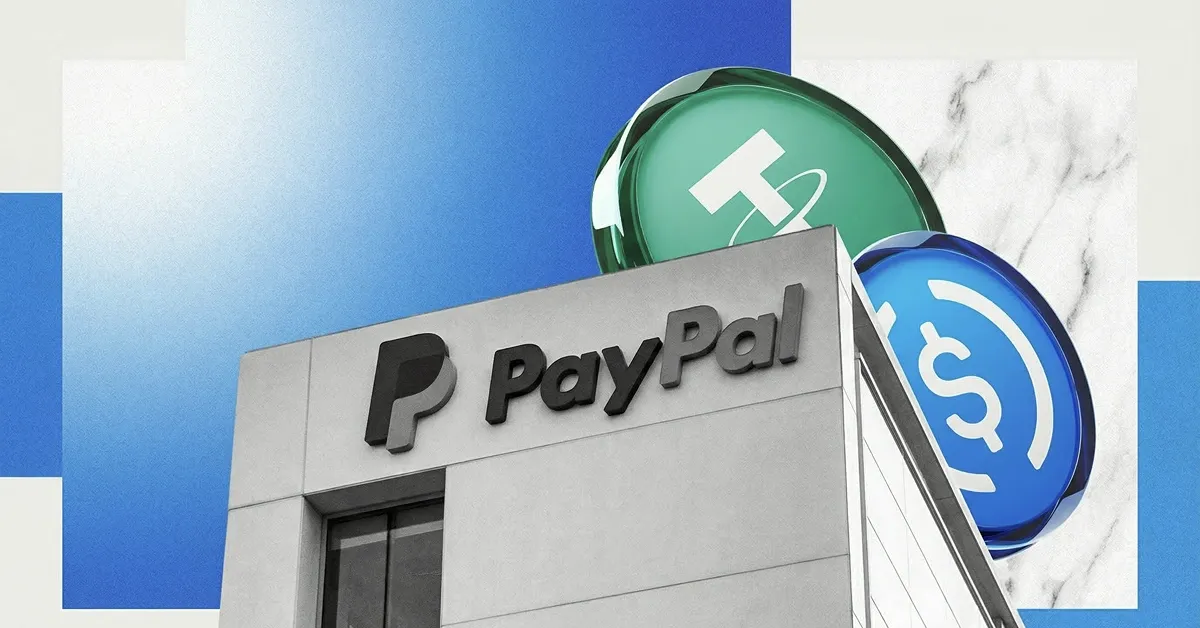
PayPal is expanding stablecoin access across more international payment rails through PayPal World, Coinbase, and Xoom, a fresh move that gives PYUSD wider global reach as big finance and consumer apps race to own digital-dollar flows.
PYUSD is a dollar wrapper. It can move money faster and more cheaply, but it is still built to stay at $1. Bitcoin is the scarce asset, the one with upside, and the one that tends to absorb more attention every time a new distribution rail makes crypto feel more normal to the average user. Bitcoin may still be undervalued relative to how fast these new payment rails are pushing crypto into the mainstream. Odds of Bitcoin hitting $80K by end of March are now at 39% and growing by the day.
Will Bitcoin go over $80K by end of March? Live

Market Snapshot: Bitcoin traded at about $73,749.67 early March 17, up roughly 0.75% on the session, after trading between about $72,795.69 and $74,283.08. That is why traders care less about the stablecoin itself than about whether payment giants, banks, and wallet apps are quietly building the next on-ramp into Bitcoin demand.
PayPal Chief Executive Alex Chriss said the Coinbase expansion was about “putting PYUSD at the center” of new payment use cases, a concise signal that the company is trying to turn its stablecoin into infrastructure rather than a side feature.
This news comes as Mastercard acquired stablecoin firm BVNK for up to $1.8 billion, including $300 million in earnouts, extending its push into digital-asset infrastructure just as payment networks try to get closer to wallets, settlement, and onchain money movement. It also lands shortly after the U.S. rollout of the MetaMask Mastercard card.
PayPal World expands PYUSD’s distribution story
The latest signal came from PayPal’s World announcement, which linked PayPal and Venmo with wallet networks tied to Latin America, India, and China. Layer that on top of PYUSD distribution through Coinbase and Xoom’s cross-border expansion, and the market now has a much bigger stablecoin access story to trade.
PayPal is stacking distribution fast. PayPal World is built to let users send money across large wallet ecosystems without needing a traditional PayPal account, starting with rails tied to India, China, and Latin America.
That launch sits on top of earlier PYUSD steps. In April 2025, PayPal said Coinbase would enable fee-free PYUSD purchases and 1:1 redemption to dollars. PayPal’s own help documentation also says eligible U.S. users can transfer PYUSD to external blockchain wallet addresses, which means the stablecoin is no longer confined to a closed app loop.
On Nov. 19, 2024, PayPal said Xoom would use PYUSD to reduce cross-border costs, and said Xoom serves customers in approximately 160 countries. That helps explain why the 70-country framing caught on so quickly. The footprint is clearly getting larger, even if PayPal has not published a neat market-by-market PYUSD list.
For the regulatory backdrop, the key context is the new U.S. stablecoin rulebook. The more compliant stablecoins look, the easier it becomes for large payment firms to market them as settlement rails rather than as fringe crypto products.
Why Bitcoin matters more than PayPal stablecoins
The blunt reaction from many crypto traders is simple: who cares about PayPal stablecoins if the scarce asset is still Bitcoin. That reaction is not irrational. Stablecoins are useful, but they are designed to stay at $1.
What PayPal, banks, and wallet apps are really fighting over is the interface where users hold digital cash, move it cross-border, and eventually buy risk assets. That is why the fight over stablecoin rails matters even to people who never plan to hold PYUSD. The company that owns the cash rail gets the first look at flows, balances, and conversion.
Bitcoin is still the asset that absorbs more of the market’s attention when access broadens. We have already seen the same pattern in large U.S. banks adding bitcoin access. Payment apps are moving toward tokenized dollars because they want users to stay inside their networks. Investors care about Bitcoin because it is the asset those networks may eventually funnel demand toward.
That is also where the X Money news fits. TechCrunch reported that X partnered with Visa for the planned X Money wallet, another sign that the fight is moving beyond exchanges and into mainstream consumer finance apps. Traditional payments and crypto rails are converging inside the same product race.
PayPal has not fully disclosed when all PayPal World stablecoin features go live, how broadly they will launch market by market, or whether PYUSD becomes a default settlement asset across those partner ecosystems.
Stay up to date
Get the latest crypto insights delivered to your inbox
Primary sources and further reading
| Source | Title |
|---|---|
| | PayPal Investor Relations: Introducing PayPal World |
| | PayPal Newsroom: PayPal and Coinbase expand partnership |
| | PayPal Help: How do I transfer my crypto? |
| | PayPal Help: What is PayPal USD (PYUSD) |
| | PayPal Newsroom: Xoom adds PYUSD for cross-border payments |
| | TechCrunch: X announces a partnership with Visa for X Money's wallet |
Fact-checked by: Daily Crypto Briefs Fact-Check Desk
Frequently Asked Questions
Did PayPal officially roll out PYUSD in 70 countries?
PayPal did not disclose a simple 70-country PYUSD rollout in the cited official releases. What PayPal officially announced was PayPal World, a wallet-interoperability platform, plus earlier PYUSD distribution moves through Coinbase, external wallets, and Xoom.
What is PayPal World?
PayPal World is PayPal's cross-border interoperability platform linking PayPal and Venmo with payment systems and digital wallets such as Mercado Pago, NPCI International Payments, and Tenpay Global.
Why would Bitcoin matter more to traders than PayPal stablecoins?
Stablecoins are mostly payment and settlement rails, while Bitcoin is the scarce asset many investors want exposure to when access gets easier through banks, wallets, and large consumer apps.
What does the 10 year Bitcoin chart suggest about the next decade?
The chart suggests the debate is shifting from whether Bitcoin survives to how deeply it gets embedded into mainstream financial distribution. The next decade may depend more on access and market plumbing than on basic legitimacy.