 Daily Crypto Briefs




SEOUL, July 6, 2026
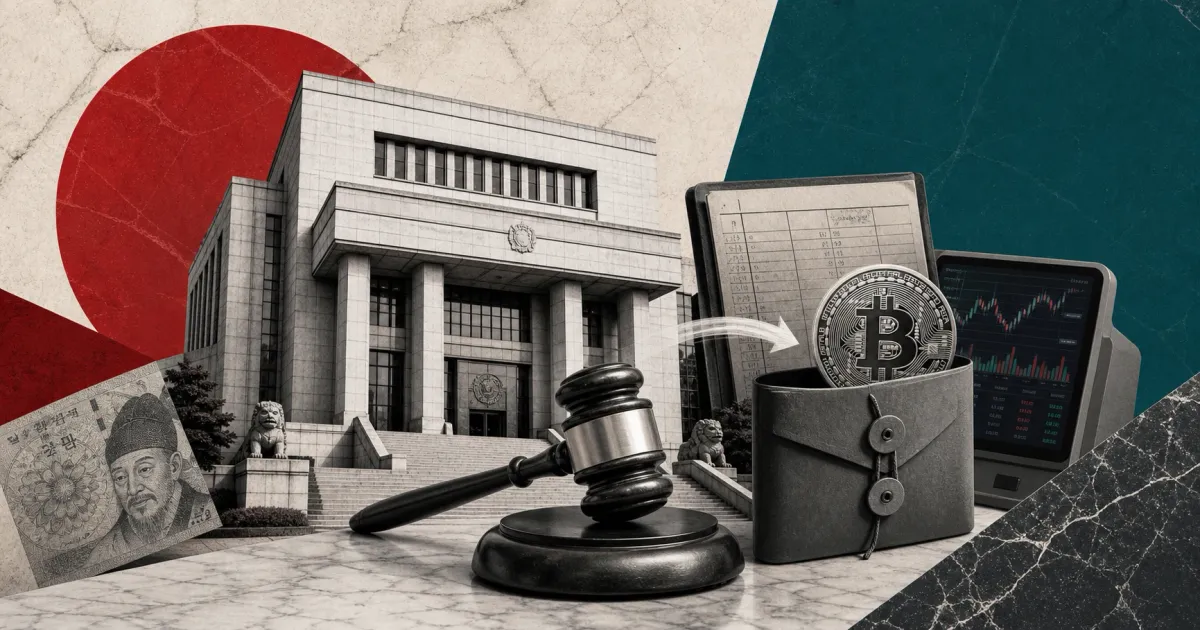
South Korea’s Supreme Court is moving to formalize how civil courts can freeze, seize and sell crypto assets, with proposed Civil Execution Rules that could bring exchange-held wallets within creditor reach as soon as October 1.
The proposal would create a standard court process for virtual assets in civil enforcement cases, according to July 6 reports. The key shift is not whether crypto has value. It is whether creditors and courts get a defined playbook for stopping transfers, forcing disclosures and liquidating assets through exchanges.
Market snapshot: CoinGecko’s Bitcoin page showed BTC near $63,748, up 1.5% over 24 hours, with a market value near $1.278 trillion and roughly $37.3 billion in 24-hour volume when checked by Daily Crypto Briefs on July 6. South Korea’s rule proposal landed as Bitcoin traded above its late-June lows, giving legal-enforcement news a wider audience beyond distressed-market coverage.

Bitcoin
BTCCryptoBriefing reported that the amendments are open for public comment until August 11, 2026, with an expected effective date of October 1, 2026. The outlet said the proposal would let courts seize digital assets held on exchanges, block debtor disposal and third-party transfers, and facilitate sales through virtual asset operators.
CoinLaw reported that the National Court Administration published Notice 2026-160 and that the draft would add Articles 175-2 through 175-13 to cover seizure, freeze, transfer and liquidation procedures. CoinLaw also said creditors could use provisional seizure and disposal-barring injunctions before a final judgment.
That timing is the practical headline. A final judgment can already be hard to collect if a debtor moves assets quickly. Crypto makes that problem sharper because exchange balances can become self-custody funds, cross-border transfers or smaller tokens within minutes.
The proposal fits a broader Korean policy turn. Daily Crypto Briefs recently covered South Korea ending its corporate crypto trading ban for qualified entities, while another Korea story focused on proposed limits around dollar-pegged stablecoins for corporates. The court proposal is a different arm of the same normalization process: crypto is being folded into ordinary financial law.
Civil Crypto Seizure Gets A Deadline
The proposed rules would move virtual assets from improvised enforcement into a dedicated civil procedure. That matters because civil enforcement is about collecting private claims, not only criminal proceeds or regulatory penalties.
CryptoBriefing said the proposal builds on a January 2026 Supreme Court decision that recognized Bitcoin held on domestic exchanges as property eligible for seizure in criminal investigations. The latest draft would extend clearer mechanics to civil litigation, where creditors need a way to collect from debtors who hold assets on exchanges.
South Korea’s legal system has been moving in this direction for years. An official Judicial Policy Research Institute search page for its 2022 report on civil execution of virtual assets said the Supreme Court had recognized Bitcoin’s property value and that litigation and execution applications involving virtual assets were steadily increasing.
The research summary also described virtual assets as difficult to fit into older enforcement rules because they are intangible, decentralized and can move without a central authority. That is the gap the current proposal tries to close.
The deadline gives exchanges, lawyers and creditors a concrete window. Comments run through August 11, then the rule is expected to take effect on October 1 if finalized without delay.
Exchanges Become Court Enforcement Hubs
The draft puts virtual asset service providers at the center of civil collection. Courts can reach assets held directly by a debtor, but the cleaner enforcement path is often the debtor’s right to demand transfer from an exchange or custodian.
ATLaw’s South Korea enforcement explainer describes that structure in existing practice: the creditor targets the debtor’s withdrawal claim against the exchange, and the exchange plus its partner bank can be named as third-party debtors. The new rules would make that logic more standardized.
CoinLaw said exchanges could be required to disclose whether a debtor has a transfer claim, what type and quantity of assets are held, and whether competing or priority claims exist. That would make the exchange account more like a bank account for civil enforcement purposes, even though the asset is a token rather than cash.
Liquidation is also part of the proposal. Reports said courts could route sales through enforcement officers, ask exchanges to execute sales, or convert thinly traded tokens into a major cryptocurrency such as Bitcoin before final cash liquidation.
That conversion path is important for market structure. A court trying to sell an illiquid token can move price sharply. Converting to a major crypto first could reduce execution friction, but it also raises questions about slippage, price timing and who bears the risk between seizure and sale.
The same exchange-centered logic is visible outside Korea. The UK’s recent decision to open a 10% crypto ETN door for funds showed how regulated access often depends on intermediaries that can hold records, enforce limits and report positions. Korea’s court proposal applies that logic to debt collection.
Wallet Freezes Move Before Judgment
The most urgent part for crypto holders is pre-judgment preservation. CoinLaw said the draft’s provisional seizure and disposal-barring measures would let creditors try to freeze wallets while litigation is still pending.
That does not mean every wallet can be frozen on demand. Courts still need an order, and the exact burden for creditors will depend on the final text and Korean civil procedure. But the direction is clear: exchange-held crypto can become reachable earlier in a dispute, not only after a final collection fight.
Self-custody remains more complicated. If a debtor controls private keys outside an exchange, a court can order compliance, but the technical ability to move assets still depends on access to the keys. That distinction is why exchanges sit at the center of the draft.
For Korean users, the custody choice now has a legal dimension. Assets on a regulated exchange may be easier to trade, report and recover, but they may also be easier for courts to freeze. Assets in self-custody reduce intermediary control, but they can create separate legal exposure if a debtor ignores court orders.
The proposal is not an anti-crypto ban. It treats virtual assets as property that can satisfy civil claims, similar to other assets with economic value. The policy question is whether the final rules balance creditor recovery with due process, exchange workload and market impact.
Sentiment remains cautious. Alternative.me showed the Crypto Fear and Greed Index at 27, or Fear, on July 6.
Fear & Greed Index
July 6, 2026The next checks are the August 11 comment deadline, any published exchange responses, and whether the final October rule keeps the draft’s pre-judgment freeze and Bitcoin-conversion mechanics. Until then, the confirmed signal is that South Korea is pushing crypto further into the machinery of ordinary civil enforcement.
Stay up to date
Get the latest crypto insights delivered to your inbox
Primary sources and further reading
| Source | Title |
|---|---|
| | CryptoBriefing: South Korean Supreme Court proposes crypto asset seizure procedures |
| | CoinLaw: South Korea Court Proposes Crypto Seizure Rules |
| | Judicial Policy Research Institute: civil execution of virtual assets |
| | ATLaw: crypto asset seizure and exchange enforcement in South Korea |
| | CoinGecko: Bitcoin market data |
| | Alternative.me: Crypto Fear and Greed Index |
Fact-checked by: Daily Crypto Briefs Fact-Check Desk
Related Articles


Frequently Asked Questions
What did South Korea propose for crypto seizures?
South Korea's Supreme Court proposed amendments to the Civil Execution Rules that would standardize how courts freeze, seize, transfer and liquidate virtual assets in civil enforcement cases.
When would South Korea's crypto seizure rules take effect?
CryptoBriefing reported that the proposal is open for public comment until August 11, 2026, with an expected effective date of October 1, 2026.
Can South Korean courts freeze crypto before a final judgment?
CoinLaw said the draft includes provisional seizure and disposal-barring measures, giving creditors a route to stop assets from moving while litigation is still pending.
Do the rules apply only to Bitcoin?
No. The proposal covers virtual assets broadly. Reports said thinly traded tokens could be converted into a major cryptocurrency such as Bitcoin before final sale.
Why do exchanges matter in the proposal?
Exchange-held assets are easier for courts to reach because a debtor has a transfer claim against the exchange, and the exchange can be ordered to disclose, freeze, transfer or sell assets.