 Daily Crypto Briefs
BALTIMORE, March 16, 2026
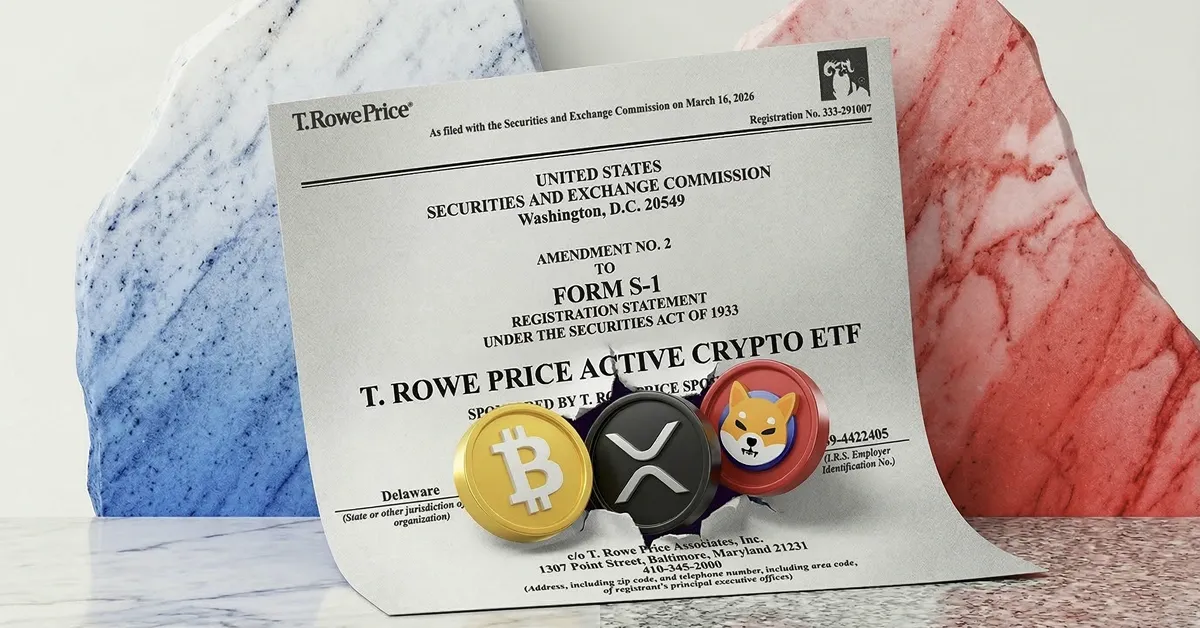
T. Rowe Price filed Amendment No. 2 for its Active Crypto ETF on March 16, keeping a broad eligible-asset list that includes bitcoin, ether, XRP, litecoin, SHIB, and more, as bitcoin traded near $73,800 and crypto markets tried to recover from a two-week slide.
The filing shows one of the more established names in asset management still pushing toward a multi-asset crypto wrapper, not just a single-coin fund. In plain English, this is an active ETF proposal, which means the sponsor can choose among eligible tokens instead of simply mirroring one fixed asset.
Market Snapshot: Data showed bitcoin at about $73,788, up roughly 3.2% over 24 hours, with about $48.3 billion in 24-hour volume. Ether traded near $2,303, up about 9.9%, while XRP changed hands near $1.51, up about 6.7%. The broader crypto market cap stood near $2.60 trillion and bitcoin’s share was about 56.7%.
Bitcoin (BTC) - 14-day snapshot
BTCThe mood in crypto remained cautious even with the bounce. The Fear and Greed Index was at 23, still in the “Extreme Fear,” zone on March 16.
Fear & Greed Index
T. Rowe Price Active Crypto ETF keeps a broad eligible basket
According to the March 16 amendment, the fund’s eligible list spans bitcoin, ether, SOL, XRP, ADA, AVAX, litecoin, DOT, dogecoin, HBAR, bitcoin cash, chainlink, XLM, SHIB, and SUI. The filing also says bitcoin and ether “are expected to represent more than 50% of the Fund’s holdings.”
We’re covering this because some social posts framed the latest filing as if XRP, litecoin, and SHIB had just been added. SEC records show otherwise. The initial S-1 filed on October 22, 2025 already listed XRP, litecoin, and SHIB among the eligible assets, while the February 11 amendment already reflected a broader roster that included SUI.
So the cleaner read is not that T. Rowe Price suddenly discovered altcoins in March. It is that the firm is still moving the product through the SEC process and preserving room for a wide crypto allocation strategy inside one listed vehicle.
The setup differs from Morgan Stanley’s separate bitcoin, ether, and solana ETF filings, which split exposure across standalone trusts. T. Rowe Price is instead trying to package selection, sizing, and future adjustments inside a single active wrapper.
Bitcoin and ether still anchor the T. Rowe Price crypto ETF
Even with the broader eligible list, the filing still points readers back to the majors. The prospectus discusses bitcoin and ether in more detail and frames them as the likely core of the portfolio, which makes the product look less like a memecoin bet and more like a portfolio-allocation vehicle with room for satellite positions.
That is a notable shift in product design. A single-asset ETF asks whether investors want regulated access to one token. A multi-asset active ETF asks whether they want someone else to build the crypto basket for them inside brokerage rails they already understand.
The filing also leaves open another layer of complexity. It says the fund’s crypto assets may later be used for staking or related processes that generate additional earnings, but it also says the fund, sponsor, and custodian will not engage in staking until fuller disclosures are provided to shareholders. That keeps an extra lever on the table without making it a live feature yet.
That broader wrapper logic lines up with the mainstream-distribution trend seen when Vanguard reopened access to third-party crypto ETFs. The product story is no longer only about whether crypto can get an ETF. It is about how many kinds of crypto exposure can be folded into the ETF format.
What the T. Rowe Price filing means for crypto ETF demand
The bigger implication is that Wall Street appears to be moving from single-coin access toward menu-style crypto products. If that continues, firms will be competing less on whether they offer bitcoin exposure at all and more on how they package diversification, rebalancing, custody, and possibly staking inside one ticker.
That can widen the audience. Some investors will not build their own basket across five or ten tokens, but they may buy one active product if it sits next to stocks and bond ETFs in the same account. The same distribution logic is already showing up in big-bank bitcoin product rollouts, where familiar financial brands are increasingly acting as the wrapper around crypto exposure.
Important launch details are still missing. It was not immediately clear what the day-one weights would be, how quickly the fund could rotate between eligible assets, what final fee it would charge, or when the SEC would declare the registration statement effective. The cover page also uses “TKNZ,” while other ticker fields in the filing text still appear incomplete, which suggests some public-facing product details are not fully settled.
For now, the next things to watch are procedural rather than dramatic: another amendment, an effectiveness notice, clearer fee and ticker disclosures, and any filing update that shows which assets actually make the cut at launch. In a market still sitting in extreme fear, the filing does not prove immediate demand, but it does show the old question has changed. The debate is no longer whether major asset managers will try crypto wrappers. It is how broad those wrappers will become.
Stay up to date
Get the latest crypto insights delivered to your inbox
Primary sources and further reading
| Source | Title |
|---|---|
| | SEC filing index - T. Rowe Price Active Crypto ETF Amendment No. 2 |
| | SEC filing index - T. Rowe Price Active Crypto ETF Amendment No. 1 |
| | SEC filing index - T. Rowe Price Active Crypto ETF initial S-1 |
| | CoinGecko - Bitcoin price |
| | CoinGecko - Global crypto charts |
| | Alternative.me - Crypto Fear and Greed Index |
Fact-checked by: Daily Crypto Briefs Fact-Check Desk
Frequently Asked Questions
What did T. Rowe Price file on March 16, 2026?
T. Rowe Price filed Amendment No. 2 to the registration statement for its Active Crypto ETF, according to SEC records.
Does the T. Rowe Price crypto ETF only cover bitcoin and ether?
No. The filing's eligible-asset list also includes solana, XRP, cardano, avalanche, litecoin, polkadot, dogecoin, HBAR, bitcoin cash, chainlink, XLM, SHIB, and SUI, while saying bitcoin and ether are expected to account for more than half of holdings.
Did Amendment No. 2 add XRP, litecoin, and SHIB for the first time?
Not based on the SEC timeline. Those assets already appeared in the original October 22, 2025 S-1, so the March 16 amendment is better read as a continuation of the filing process rather than a first-time basket expansion.
What does an active crypto ETF mean in plain English?
It means the sponsor can choose among eligible assets and adjust exposure inside the product, instead of tracking one fixed coin or a static index.
Has the T. Rowe Price Active Crypto ETF launched yet?
No launch date was disclosed in the filing, and SEC effectiveness details were not immediately clear.
What should investors watch next?
Watch for another SEC amendment or effectiveness notice, final ticker and fee disclosures, clearer day-one portfolio weights, and any explanation of whether staking or in-kind creations will be used later.