 Daily Crypto Briefs


CASABLANCA, June 10, 2026
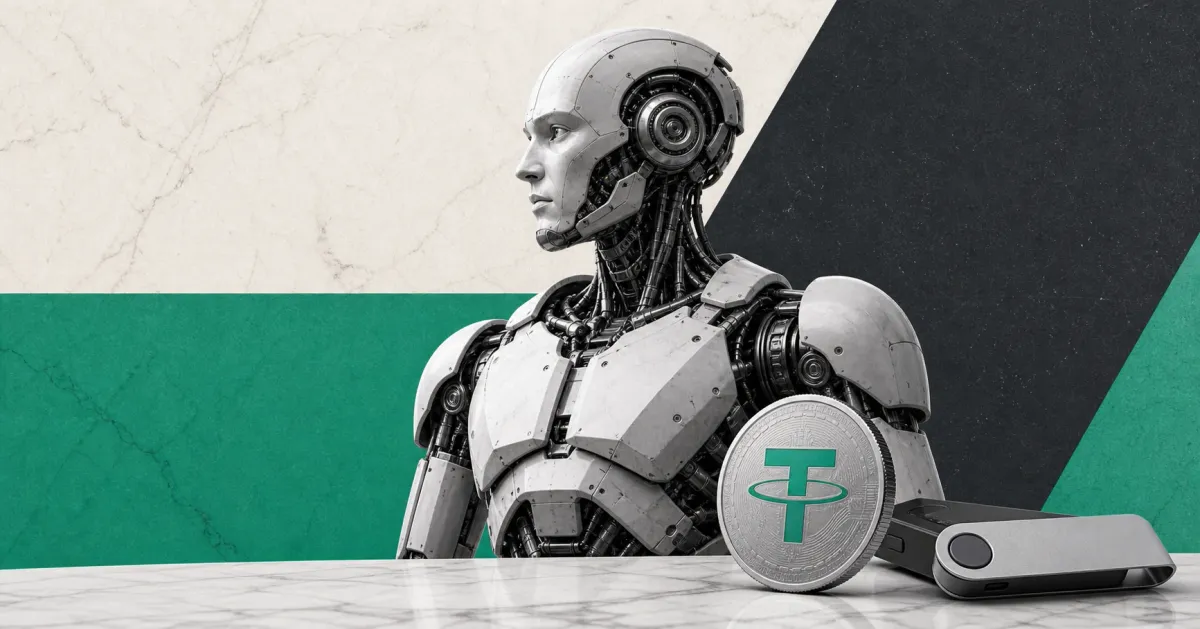
Tether Investments said it is leading NEURA Robotics’ Series C financing of up to $1.4 billion, a robotics and physical AI round that puts the USDT issuer’s wallet infrastructure into the race to make machines transact.
The announcement moves Tether beyond stablecoin reserves and Bitcoin accumulation into a more direct bet on autonomous hardware. The company said NEURA’s robot platforms are expected to integrate Tether’s Wallet Development Kit, known as WDK, and collaborate on QVAC, Tether’s local AI runtime.
Market snapshot: CoinGecko data checked by Daily Crypto Briefs showed Tether with a market capitalization near $186.78 billion and about $47.69 billion in 24-hour volume, while Bitcoin traded near $61,722. The broader crypto market was about $2.2 trillion, down 1.08% over 24 hours, with bitcoin dominance near 56.2%.

Bitcoin
BTCTether CEO Paolo Ardoino said autonomous machines need to “process information locally, make decisions, and transact without relying on centralized intermediaries,” according to the Tether announcement.
The deal follows a year in which crypto companies have been trying to turn software payments into usable infrastructure for AI agents, not just another token narrative. Daily Crypto Briefs has covered that shift through x402 payment rails and the broader rise of AI-driven on-chain activity.
The immediate implication is that Tether is trying to put stablecoin-era financial plumbing closer to physical devices. If robots can receive payments, account for work and trigger transactions inside defined limits, wallet infrastructure becomes part of industrial automation rather than only crypto exchange activity.
Tether Puts WDK Inside Robots
Tether said NEURA’s robotic platforms are expected to integrate WDK, its open-source toolkit for self-custodial wallets. The stated goal is to let machines receive payment for completed tasks and execute transactions within predefined operating parameters.
That wording is important because Tether did not say robots will freely spend without controls. The framework described by the company is closer to limited economic autonomy, where a machine can settle work, pay another system or account for an outcome under rules set by humans or enterprise software.
For crypto readers, the difference is practical. Agent payments on the web usually mean an API call, a browser task or a data request. A robot payment flow could sit inside manufacturing, logistics, services or maintenance, where the machine is doing physical work and the settlement layer records value around that work.
Tether also said NEURA will collaborate on testing and deploying QVAC in the Neuraverse, NEURA’s software ecosystem. QVAC is designed to run AI models locally on devices rather than depending entirely on remote cloud infrastructure, which Tether says can reduce latency and improve resilience in industrial environments.
The company did not disclose the exact amount Tether invested, the valuation of NEURA, the expected timing for WDK deployment or whether USDT will be the default settlement asset. Those details will decide whether the announcement becomes a production payments story or remains a strategic infrastructure bet.
NEURA Round Pulls In Nvidia and Amazon
NEURA said the financing brings together Tether, Qualcomm Technologies, Amazon, Nvidia, imec.xpand, Bosch, Schaeffler, the European Investment Bank, Lingotto Horizon, InterAlpen Partners and others, according to the Business Wire release republished by Morningstar.
The company framed the round as the largest capital raise by a full-stack robotics company. It said the money will support global deployment of cognitive robots and humanoids, expansion of the Neuraverse platform, rollout of NEURA Gyms and scaling of manufacturing infrastructure.
NEURA also said its existing orderbook and strategic deployment pipeline exceed $1 billion. That gives the story a commercial metric beyond the headline fundraising number, though the company did not break out booked orders versus pipeline, customer concentration or delivery schedules.
The investor list gives Tether a different kind of validation than most crypto partnerships. This is not a small crypto-native application promising future utility. It is a robotics company backed by semiconductor, cloud, industrial and European public finance names that already touch the supply chain needed to build and deploy machines.
The comparison to earlier machine-payment coverage is useful. Coinbase and Cloudflare have been pushing internet-native payment standards for agents, while Tether is trying to attach wallets to devices that move through the physical economy. Our practical guide to making money with x402 focused on charging software for web resources; this NEURA deal points to machines paying and getting paid outside the browser.
Machine Payments Move Past APIs
Tether’s core business still starts with USDT, the dominant dollar stablecoin used across exchanges, payments apps and on-chain settlement. But the NEURA investment shows how the company wants to turn that financial base into a wider technology stack covering AI, energy, data, education and industrial systems.
That move carries risk. Robotics is capital-intensive, production delays are common and enterprise deployments can take longer than investor announcements imply. It was not immediately clear when NEURA robots will process real wallet payments, what compliance layer will govern machine-initiated transactions or how a business will audit robots that can trigger economic actions.
The market backdrop is also fragile.
Fear & Greed Index
June 10, 2026The Crypto Fear and Greed Index printed 9 on June 10, a reading Alternative.me labels Extreme Fear. That matters because speculative AI and robotics narratives can move quickly in weak markets, while production infrastructure usually moves on slower enterprise timelines.
Still, the thesis is becoming more concrete. Stablecoins already move money between exchanges, wallets, merchants and payout platforms. If WDK works inside NEURA robots, the next version of that plumbing could include machines that earn, pay, reconcile and coordinate without asking a human to approve every small transaction.
The next checkpoints are narrow and verifiable: whether NEURA discloses the first WDK-enabled robot deployment, whether Tether identifies the settlement assets, whether enterprise customers use the wallet layer in production and whether QVAC can prove local AI performance in live industrial settings.
Until then, the strongest read is not that robots are suddenly buying crypto. It is that one of the largest stablecoin issuers is trying to make crypto wallets part of the machine economy before that economy has settled on its financial rails.
Stay up to date
Get the latest crypto insights delivered to your inbox
Primary sources and further reading
| Source | Title |
|---|---|
| | Tether: Tether to lead NEURA Robotics Series C financing |
| | Morningstar: NEURA Robotics announces record Series C |
| | Yahoo Finance: Tether, Nvidia and Amazon back NEURA |
| | CoinGecko: Tether price and market data |
| | CoinGecko: Bitcoin price |
| | Alternative.me: Crypto Fear and Greed Index |
Fact-checked by: Daily Crypto Briefs Fact-Check Desk
Related Articles


Frequently Asked Questions
What did Tether announce with NEURA Robotics?
Tether Investments said it is leading NEURA Robotics' Series C financing of up to $1.4 billion and plans to deploy its wallet and AI runtime technology into NEURA's robotics ecosystem.
Which Tether technologies are involved?
Tether named its Wallet Development Kit, or WDK, for self-custodial wallet functionality and QVAC, its local AI runtime for edge devices.
Why does this matter for crypto?
The deal moves the machine-payment thesis from web APIs and AI agents toward physical robots that may be able to receive payments and execute transactions within preset operating limits.
Who else backed the NEURA Robotics round?
NEURA said the investor group includes Tether, Qualcomm Technologies, Amazon, Nvidia, imec.xpand, Bosch, Schaeffler, the European Investment Bank, Lingotto Horizon, InterAlpen Partners and others.
Did Tether disclose the exact amount it invested?
No. Tether said it is the lead investor in the up-to-$1.4 billion financing round, but the exact Tether allocation was not disclosed.