 Daily Crypto Briefs
ZURICH, September 23, 2026
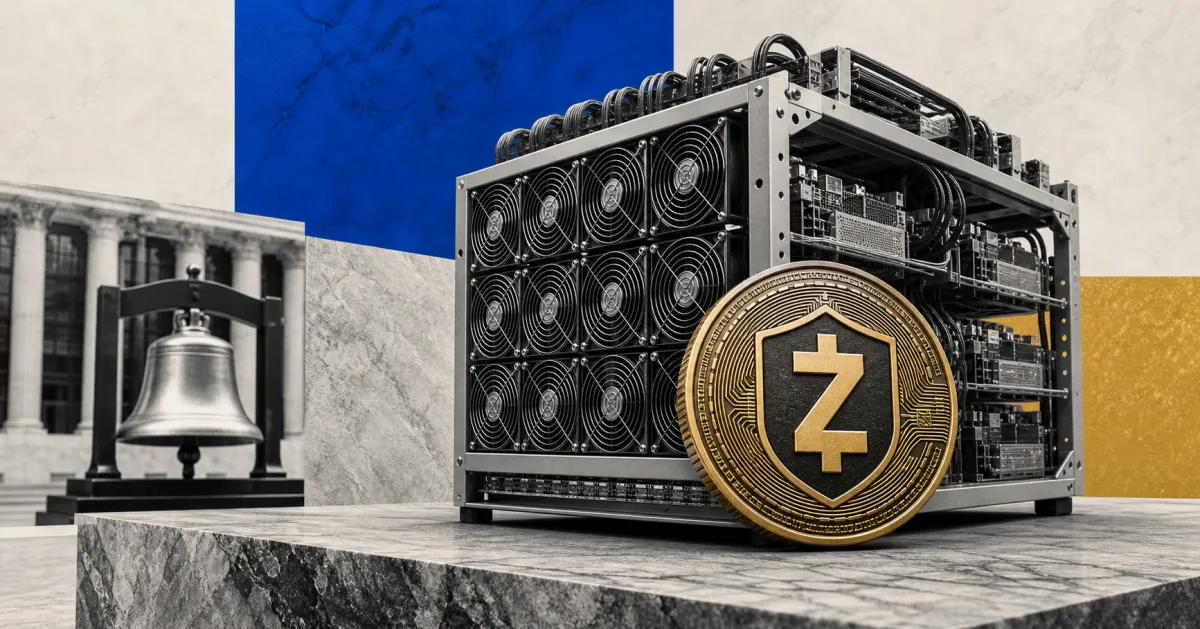
Zcash traded above $1,600 on September 23 before retreating as 21shares’ newly listed European exchange-traded product widened brokerage access to the privacy coin amid a broader expansion of crypto investment products.
The issuer announced the physically backed Zcash ETP on September 22, alongside a separate ether.fi product. Both trade on Euronext Paris and Amsterdam, putting token exposure into securities accounts without requiring investors to operate crypto wallets.
At 15:57 UTC, ZEC stood at $1,557.05, up about 25.2% over seven days, with $2.24 billion in 24-hour trading volume, according to CoinGecko’s market data. Its rolling 24-hour high was $1,658.86, underscoring the retreat from the session’s stronger levels.
In the company’s announcement, product-development director Jasmin Muelhaupt said the listings were intended to make adding the assets to portfolios comparable to buying ordinary listed securities.
The launch extends a distribution trend already visible in European banks adding crypto services. It establishes another route to exposure, but the announcement and price data alone cannot show how much of ZEC’s rally came from ETP demand.
Zcash
ZECSource: CoinGecko. Daily UTC observations and the latest September 23 reading at 15:59 UTC. Chart and market-snapshot endpoints update separately.
Zcash ETP brings a 2.5% fee to Euronext
The security uses the identifier CH1608218801. The Paris listing is denominated in euros and the Amsterdam listing in US dollars, according to the launch release. The quoted trading currency identifies how the security is bought and sold; it should not be confused with a promise that currency movements are hedged.
The ZCASH product page lists an annual fee of 2.50% and a September 21 inception date. That differs from the September 22 listing date in the issuer’s factsheet: creating a product and admitting it to exchange trading are separate steps.
At a constant investment value of $10,000, a 2.5% annual rate corresponds to about $250 over a year, before other costs. That is an illustration of the rate, not an exact bill: the investment’s value changes with the market.
Brokerage commissions and the difference between buying and selling quotes can add to costs. Currency conversion may also apply when an account’s cash currency differs from the chosen listing. Those charges depend on the platform and order, rather than being captured by the annual product fee alone.
A listing also does not establish universal availability. The issuer directs prospective holders to check their broker, while retirement-account eligibility depends on local rules and the account provider. The launch creates an exchange route; individual platforms still determine whether their customers can use it.
That distinction is especially relevant to a product marketed across borders. The same security can appear in several trading systems under different local symbols, making its international identifier a more precise reference than the token’s ZEC ticker alone.
Physically backed ZCASH remains a debt security
The September 22 factsheet identifies the Swiss-issued product’s legal structure as a debt security and its replication method as physical. It names BitGo for custody and Flow Traders and Virtu Financial Ireland as market makers and authorized participants.
Physical backing means the structure holds the underlying asset. It does not turn the security into a bank deposit or give a brokerage customer direct control over private keys. Legal claims arise through the investment product and its documents.
The factsheet reported approximately $100,212 in assets and 5,000 securities outstanding. Those are dated launch-scale figures, not a current subscription total or evidence that a large pool of European money has already moved into ZEC.
Assets under management also change when the backing asset’s price changes. A larger asset value on a later reporting date would therefore need to be assessed alongside changes in outstanding securities and holdings before being described as fresh inflows.
The distinction is familiar from Bitcoin ETF flow reporting: asset values, net subscriptions and trading turnover measure different things. A busy secondary market can involve existing securities changing hands without an equivalent increase in the product’s assets.
In an earlier explanation of its ETP market structure, 21shares described how specialist firms create or redeem securities when exchange prices diverge from underlying asset values. That mechanism can help align prices, but it does not guarantee that every customer order executes at the reported net asset value.
For the new Zcash listing, spreads and the amount available to trade at quoted prices will provide practical evidence of market quality. The presence of named market makers establishes who supports trading; it does not, by itself, establish a particular execution cost for every order size.
The available launch disclosures do not establish a causal link between this small starting asset base and Zcash’s much larger global trading market. Evidence of sustained demand would require subsequent holdings, issuance and trading data, rather than simply matching a listing date with a rising token price.
ZEC price exposure does not confer payment privacy
Zcash’s own explanation of shielded and transparent transactions describes a choice at the network level. Shielded addresses protect financial information, while transparent addresses expose it publicly.
Buying an exchange-traded security is a different activity. The customer owns an investment position recorded through a broker, rather than operating a shielded address to send a private payment. The token’s privacy features do not make the brokerage relationship or its records anonymous.
Nor does physical backing remove exposure to ZEC’s price. It describes how the product obtains its investment exposure, rather than a floor under its value. The same structure that passes through gains can transmit losses when the underlying cryptocurrency falls.
This separates the investment thesis from the network’s use. Demand for a security linked to ZEC can grow without each buyer becoming a Zcash payment user. Conversely, greater use of shielded payments need not show up as purchases of this particular ETP.
Other public-market routes have different exposures. The previously announced Fortitude Zcash-mining merger concerned an operating business with equipment, electricity and financing costs. A mining company’s shares and a physically backed token product therefore answer different investment questions even when both are sensitive to ZEC prices.
The broader sentiment backdrop was positive: Alternative.me’s Crypto Fear and Greed Index read 71, or Greed, for September 23. That is a market-wide sentiment measure, not a Zcash-specific demand gauge.
Fear & Greed Index
September 23, 2026The next evidence to watch is the product’s updated holdings, securities outstanding, exchange turnover and broker availability. The listing is confirmed; the scale of sustained demand and its contribution to ZEC’s price remain unproven.
Stay up to date
Get the latest crypto insights delivered to your inbox
Primary sources and further reading
| Source | Title |
|---|---|
| | 21shares: September 22 Zcash and ether.fi ETP launch |
| | 21shares: Zcash ETP product details |
| | 21shares: ZCASH factsheet dated September 22 |
| | Zcash: Shielded and transparent transactions |
| | CoinGecko: Zcash market data |
| | Alternative.me: Crypto Fear and Greed Index |
Fact-checked by: Daily Crypto Briefs Fact-Check Desk
Related Articles

Frequently Asked Questions
Where is the 21shares Zcash ETP listed?
21shares announced September 22 listings on Euronext Paris in euros and Euronext Amsterdam in US dollars. The ISIN is CH1608218801; access depends on the broker.
What is the annual fee for the Zcash ETP?
The annual product fee is 2.50%. Brokerage commissions, spreads and currency-conversion costs may add to the cost of holding or trading it.
Is ZCASH an ETF or an ETP?
It is an exchange-traded product. The issuer's factsheet identifies its legal structure as a debt security, rather than a conventional investment fund.
Does buying the ETP provide private Zcash payments?
No. It provides investment exposure through a brokerage account. It does not give the investor control of a Zcash wallet or make brokerage records private.