 Daily Crypto Briefs




CASABLANCA, October 25, 2026
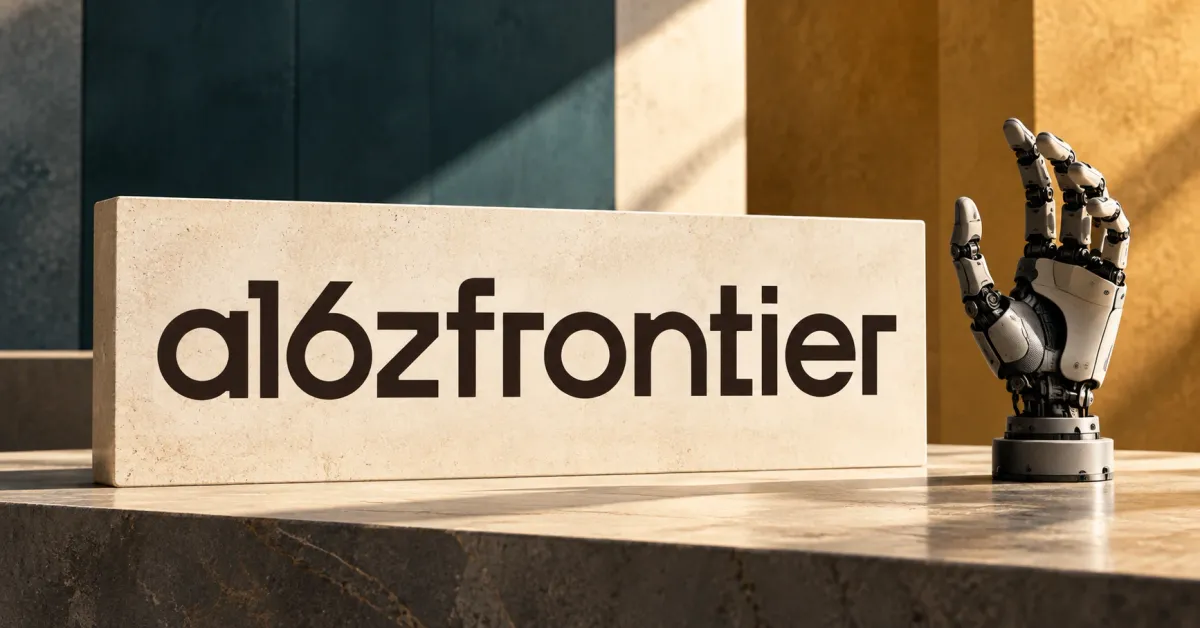
Andreessen Horowitz has renamed a16z Crypto to a16z Frontier and broadened its $2.2 billion fund beyond blockchain startups into AI and other emerging technologies, as Bitcoin trades below $81,000.
Chris Dixon confirmed the change October 22. The announcement expands the pool of businesses eligible for investment, while leaving undisclosed how much capital will go to each sector.
Bitcoin closed October 24 at $80,769.67, down 0.380%, after trading between $78,507 and $81,253, according to ChartExchange’s historical table. Those completed-session figures provide market context, rather than evidence that the rebrand caused a price move.
In the official announcement, Dixon said the team would continue investing in crypto and advocating for crypto regulation. The statement confirms a wider mandate, without announcing a withdrawal from blockchain investing.
The move follows Paradigm’s expansion into AI and robotics in July. Both firms now frame their opportunity around emerging technology rather than a single underlying infrastructure category.

Bitcoin
BTCSource: ChartExchange, sampled completed UTC closes checked October 25. The unfinished October 25 session is excluded.
a16z Frontier expands the investment brief
The firm’s Frontier description names AI, biology, crypto and hardware, including virtual reality, wearables and robotics. It describes an interest in businesses whose markets may be difficult to recognize early, rather than publishing a narrow list of approved product categories.
That changes the question a founder brings to the investor. A company developing autonomous equipment can fit the stated scope through its product and technical ambition, without having to make a blockchain the center of its pitch. It does not mean that any particular robotics startup has received funding.
The same page lists research, engineering, security, legal and regulatory support, recruiting, marketing and commercial-development assistance. Those are services offered to portfolio companies; they are separate from the amount of cash a financing round provides.
For founders, that distinction is practical. An investment check funds a company’s operations, while recruiting help or technical research can support execution. Neither establishes that a product has customers, regulatory permission or a sustainable business model.
Dixon’s announcement identifies machine-to-machine transactions and programmable financial services as potential connections between AI and blockchains. These are investment themes. The announcement does not disclose a new product launch, customer count or revenue figure for those applications.
The wider brief can put companies with different development cycles into consideration for the same fund. Assessing the actual shift will require disclosed investments and their sizes, rather than the new name alone.
The $2.2 billion fund predates the rebrand
The capital figure comes from Crypto Fund V’s May 5 announcement. That statement described a $2.2 billion vehicle backing founders turning infrastructure into products used in everyday life.
The May thesis already extended beyond buying or trading network tokens. It discussed stablecoin payments, lending, prediction markets, tokenized assets and software agents acquiring computing resources, data and services. AI-related activity therefore appeared in the investment rationale months before the Frontier name.
October’s change broadens the stated scope beyond crypto startups. It does not establish that another $2.2 billion has been raised, that this entire amount remains unspent, or that it has been transferred into AI companies. The public announcement provides no sector percentages or deployment schedule.
Those missing figures limit what can be inferred about funding available to blockchain founders. A broader mandate creates more eligible uses for capital, but it does not quantify the dollars those uses will receive. Likewise, the original fund size cannot be treated as a current cash balance.
There is an existing blockchain financing record to compare with future activity. On June 9, Morpho Association announced a $175 million round co-led by a16z crypto, Paradigm and Ribbit, with participation from financial and crypto firms.
The association said it would use the financing to strengthen technical infrastructure and commercial integrations for programmable credit. Its announcement included support from a16z general partner Guy Wuollet. That is a documented investment in financial infrastructure, although it does not identify how much each investor supplied or which a16z fund participated.
Daily Crypto Briefs’ coverage of that Morpho financing provides a concrete reference point. The Frontier rebrand does not by itself establish that existing investments have been sold or that portfolio companies have lost support.
Paradigm supplies a crypto VC comparison
In its July 8 fourth-fund announcement, Paradigm disclosed $1.2 billion for investments across crypto, AI, robotics and other technologies. It named drone delivery, manufacturing, space defense and open AI among its areas of activity.
The same statement retained a financial-market focus, citing Hyperliquid, Tempo and Kalshi. It also committed to further research and software work spanning blockchain infrastructure, AI agents and security.
That comparison shows that expanding a venture mandate can coexist with continued crypto activity. It does not establish that the two firms will allocate similar amounts, compete for the same rounds or achieve similar returns.
The useful distinction is between a fundraising event, an investment strategy and an individual deal. Paradigm’s July statement disclosed a new vehicle. a16z’s October announcement changes the scope and name associated with a fund announced earlier. Neither headline reveals every subsequent capital commitment.
Fear & Greed Index
October 25, 2026Source: Alternative.me, checked October 25: 54, Neutral, versus 51 the previous day. The broad sentiment index does not measure venture fundraising.
The next evidence will be Frontier’s disclosed deals and any allocation or deployment figures. Until those appear, the confirmed development is a wider investment brief; the amount of capital ultimately committed to crypto, AI and hardware remains unknown.
Stay up to date
Get the latest crypto insights delivered to your inbox
Primary sources and further reading
| Source | Title |
|---|---|
| | Chris Dixon: a16z Frontier, October 22 |
| | a16z: $2.2B Crypto Fund V, May 5 |
| | a16z Frontier: investment scope and portfolio support |
| | Paradigm: Announcing Our Fourth Fund, July 8 |
| | Morpho Association: $175M financing, June 9 |
Fact-checked by: Daily Crypto Briefs Fact-Check Desk
Related Articles




Frequently Asked Questions
What is a16z Frontier?
It is the new name for a16z Crypto, announced October 22, 2026, alongside a broader investment scope.
Is a16z stopping crypto investments?
No. Chris Dixon said crypto investment and advocacy for crypto regulation would continue.
Did a16z raise another $2.2 billion in October?
No new raise was announced. The $2.2 billion Crypto Fund V was unveiled on May 5, 2026.
How much of the fund will go to AI?
A sector allocation and the remaining deployable balance were not disclosed.
Has another crypto venture firm expanded into AI?
Paradigm announced a $1.2 billion fourth fund in July for crypto, AI, robotics and other technology.