 Daily Crypto Briefs




TOKYO, July 31, 2026
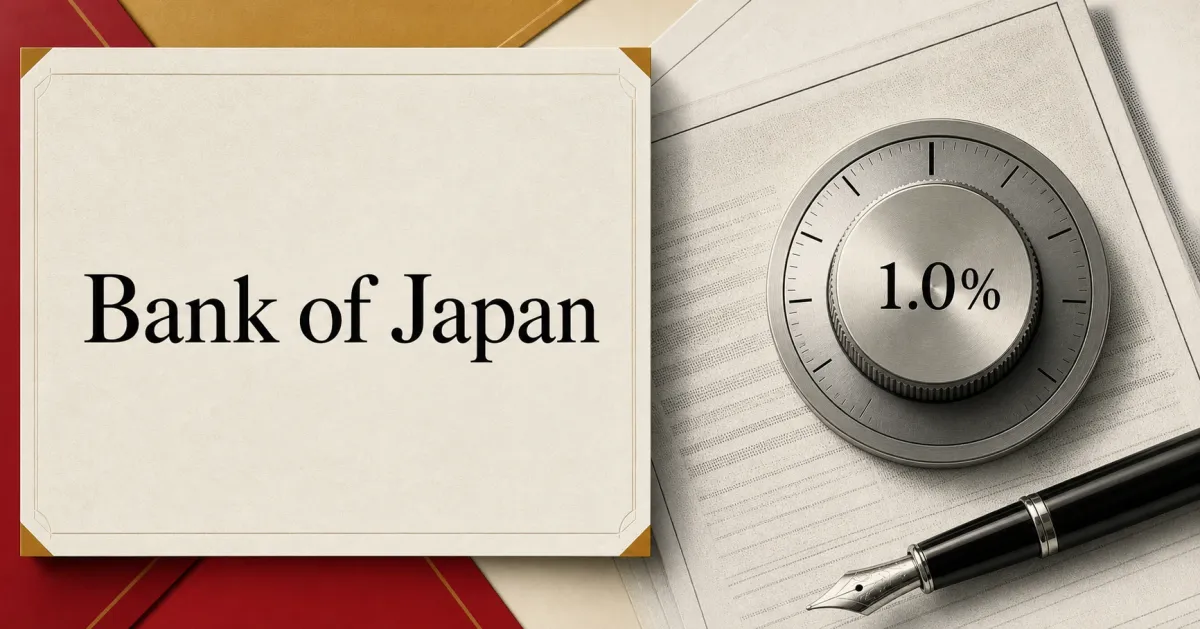
The Bank of Japan held its policy-rate target at around 1% on Friday in an 8-1 vote, with one board member seeking a move to 1.25%, as Bitcoin traded near $64,300 and traders assessed whether tighter Japanese funding conditions could again reach global risk assets.
The decision left the Bank’s guideline for the uncollateralized overnight call rate unchanged just six weeks after it raised the target to 1%. It is not a crypto policy action, but the yen’s role in global funding means the outcome is closely watched by investors in Bitcoin and other leveraged markets.
Bitcoin’s July 31 snapshot near $64,300 was about 8.1% above the $59,495 recorded on June 29 and 3.3% below its July 22 high near $66,521, according to Kraken’s Bitcoin price page. The token’s roughly $1.28 trillion market capitalization and the monthly range describe the market backdrop, not a measured reaction to the BOJ statement.
In its July 31 statement, the Bank said it would continue to encourage the overnight call rate to remain at around 1.0%. Hajime Takata, the sole dissenter, said the situation had entered a new phase requiring a nimble response to upside price risks from overseas demand shocks and financial conditions, and proposed a 1.25% target.
The hold follows the Bank’s June move to 1%, the highest level in roughly three decades, and comes after the Federal Reserve and Bank of England also left rates unchanged this week. Daily Crypto Briefs covered the Fed’s July hold, which likewise featured three officials seeking a rate increase.
The split adds a clear policy signal without changing the immediate borrowing benchmark. It leaves markets looking at whether Japanese rates and the yen move gradually or force investors to unwind crowded funding trades, a distinction that can matter more to crypto than the word “hold” in isolation.

Bitcoin
BTCBank of Japan Holds 1% Rate in 8-1 Vote
The Bank’s operating target is the uncollateralized overnight call rate, the rate at which Japanese financial institutions lend very short-term funds to one another. Friday’s vote instructs the Bank to keep that rate at around 1%, rather than fixing a retail borrowing rate or a Bitcoin-related benchmark.
The voting record included Governor Kazuo Ueda, deputy governors Ryozo Himino and Shinichi Uchida, and five other board members on the side of a hold. The meeting ran from 2 p.m. to 4 p.m. Tokyo time on Thursday and from 9 a.m. to 12:04 p.m. Friday, according to the statement’s reference section.
The timing matters because the BOJ had already moved by 25 basis points in June. A second increase so soon after that would have changed the immediate cost of yen funding, while Friday’s decision keeps the latest adjustment in place and preserves the focus on future data.
Japan’s crypto market is developing along a separate policy track. The country is examining a more securities-style framework for crypto assets and exchange-traded products, as outlined in our report on Japan’s crypto tax and ETF bill. That work does not determine the Bank’s monetary-policy vote.
Takata Pushes for a 1.25% Rate
Takata proposed that the Bank raise the operating guideline to around 1.25%. The proposal was defeated, leaving him as the lone dissenter and making the policy split a concrete point of attention instead of a generalized warning from the central bank.
His rationale was tied to risks the Bank described as overseas demand shocks and changes in overseas financial conditions. The statement does not identify a specific future meeting at which a rate increase will occur, and it does not provide a price forecast or a commitment to a defined path.
The 8-1 result is a narrower dissension than the BOJ’s rate level alone might suggest. Most of the board backed holding at 1%, but the dissent establishes that one official believes the balance of risks now warrants a faster response.
The policy backdrop also reaches Japan’s blockchain-finance plans. Earlier this month, SBI announced a strategic partnership with Solana around creating Japanese onchain-finance markets. That is an institutional-development story, while the BOJ decision concerns economy-wide funding conditions.
Bitcoin Traders Watch the Yen and September Meeting
Bitcoin does not trade under a central-bank mandate, and the BOJ has not attributed a digital-asset market move to this decision. Yet a higher Japanese rate path can change the economics of borrowing yen to buy higher-yielding or riskier assets elsewhere, particularly when currency moves and leveraged positions amplify one another.
This is the mechanism behind the yen carry-trade risk that Daily Crypto Briefs examined after the Bank’s earlier tightening cycle. The relevant variables are the speed of any yen move, Japanese yields, broader risk sentiment and crypto-market leverage, rather than a mechanical rule that every BOJ hold is positive or every hike is negative for Bitcoin.
The Crypto Fear and Greed Index stood at 28, or Fear, on July 31. The index is a broad sentiment measure and cannot show whether a particular fund has yen-funded exposure.
Fear & Greed Index
July 31, 2026The next decision, along with the Bank’s inflation and growth assessments before then, will be the next official checkpoints. For crypto markets, the immediate items to watch are USD/JPY, Japanese yields and derivatives positioning, none of which the BOJ’s one-day vote can settle on its own.
Stay up to date
Get the latest crypto insights delivered to your inbox
Primary sources and further reading
| Source | Title |
|---|---|
| | Bank of Japan: Statement on Monetary Policy, July 31, 2026 |
| | Bank of Japan: News List |
| | Kraken: Bitcoin price |
| | Alternative.me: Crypto Fear and Greed Index |
Fact-checked by: Daily Crypto Briefs Fact-Check Desk
Related Articles


Frequently Asked Questions
What did the Bank of Japan decide on July 31, 2026?
The Bank of Japan voted 8-1 to keep its guideline for the uncollateralized overnight call rate at around 1.0%.
Who dissented from the Bank of Japan's July decision?
Policy Board member Hajime Takata dissented. He proposed a 1.25% rate target, saying the Bank should respond nimbly to upside price risks tied to overseas demand shocks and financial conditions.
Why can a Bank of Japan decision affect Bitcoin?
The Bank of Japan does not set Bitcoin's price. Its rate outlook can affect the yen, Japanese bond yields and the cost of leverage, which can influence broad risk appetite and positions financed in yen.
What is the Bank of Japan's policy rate now?
After the July 31 meeting, the Bank's guideline is to encourage the uncollateralized overnight call rate to remain at around 1.0%.