 Daily Crypto Briefs




TOKYO, June 11, 2026
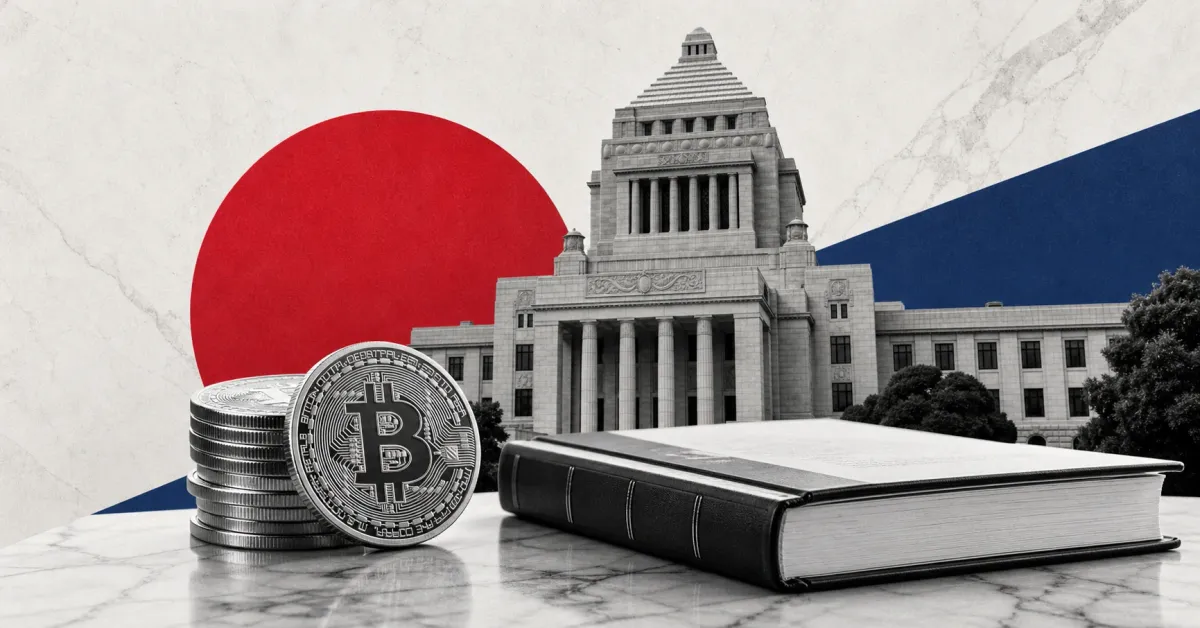
Japan’s lower house passed a crypto market bill that would move digital assets toward stock-style financial regulation, putting a 20% tax path and potential crypto exchange-traded funds in focus as bitcoin traded near $62,600.
The bill shifts the center of Japan’s crypto rulebook from payment law toward the Financial Instruments and Exchange Act, the same broad framework used for securities markets. It does not make every token a stock, but it brings trading, disclosures and market-abuse rules closer to the structure investors already know from equities.
The market snapshot gives the timing more weight. Bitcoin was near $62,600 on June 11 after falling from above $81,700 a month earlier, based on market data pulled during this run and checked against CoinMarketCap’s bitcoin page. CoinGecko market data showed bitcoin’s market value near $1.25 trillion and 24-hour volume around $28.6 billion during the same check.
Japan’s own numbers point to retail scale, not only institutional policy work. FSA materials cited more than 14 million domestic crypto account openings and said about 70% of those accounts were held by people with annual income below 7 million yen, about $43,600.
The FSA’s April explanation materials said crypto assets are becoming a more familiar investment holding for individuals and noted that crypto ETFs have been listed in markets such as the United States, where institutional inflows have increased. That was the agency’s plain policy bridge: crypto is no longer being treated only as a payment tool.
The bill was submitted by Japan’s Cabinet on April 10, according to the FSA’s Diet bill page, and the House of Representatives tracker lists it as Bill 57 for the 221st Diet. CoinDesk reported Thursday that the lower house passed the bill and that the framework is expected to take effect next year if it clears the upper house.
The immediate implication is regulatory convergence. Japan is trying to keep crypto activity inside supervised domestic venues while making the asset class easier to package for investors, exchanges and asset managers.
What remains unsettled is the final upper-house timeline, the tax implementation details, which tokens qualify for the new treatment and whether Japan’s exchanges can move quickly enough to launch ETF products once the legal lane is open.

Bitcoin
BTCJapan Crypto Bill Clears Lower House
The bill would move key parts of crypto-asset trading into the Financial Instruments and Exchange Act. FSA materials say crypto-asset trading businesses would be subject to rules broadly comparable to Type I financial instruments firms, while existing security controls such as cold-wallet custody would be carried into the new structure.
For users, the most visible change is disclosure. The FSA materials say crypto exchanges must publish information before handling an asset, and issuers of certain crypto assets must publish information before offers or sales. That includes basic facts investors need to understand, such as supply, functions, underlying technology, issuer business information and financial condition where relevant.
The bill also raises the enforcement ceiling. FSA materials say unregistered operators that violate the Financial Instruments and Exchange Act can face up to 10 years of imprisonment, compared with three years under the Payment Services Act framework. It also adds securities-style penalties for false statements and gives the securities watchdog a clearer enforcement role.
Those rules will add compliance cost. They also give Japan a cleaner answer to a problem that has followed token listings for years: retail investors often trade assets without reliable issuer disclosures, while exchanges carry much of the practical gatekeeping burden.
Japan has already been moving crypto into bank and capital-market infrastructure. Daily Crypto Briefs covered the country’s push toward a joint yen stablecoin from its three megabanks, a separate but related sign that Tokyo wants digital assets to run through identifiable, supervised rails.
20 Percent Crypto Tax Path
The tax angle is what makes the bill travel beyond policy circles. Japan’s current treatment can push crypto gains into progressive income taxation, with a combined top rate often described as about 55%. That has long been a reason traders and founders argued Japan was discouraging onshore crypto activity.
A Nagashima Ohno & Tsunematsu tax note said the 2026 tax reform contemplates fixed-rate separate taxation at 20.315% for certain eligible crypto-asset transactions, subject to an amendment of the Financial Instruments and Exchange Act. The note also said the regime is expected to apply to transactions conducted on or after January 1, 2028.
That timing matters. The lower-house bill does not mean every Japanese crypto holder receives the new rate immediately. The tax relief is linked to eligible assets, Japanese licensed exchanges and the final rule text.
The proposed treatment would also add a three-year loss carryforward for eligible crypto transactions, according to the same tax note. Losses would offset gains inside the new crypto tax category, not automatically offset stock gains.
For exchanges, a lower tax burden can change market structure by making domestic execution more attractive. If investors can trade eligible crypto on Japanese licensed exchanges at a rate closer to stocks, the incentive to move activity offshore is weaker.
The comparison with the United States is useful but imperfect. U.S. policy fights are still split across market structure, stablecoin yield and tax reporting, as tracked in our 2026 crypto regulation guide. Japan’s package is narrower, but it links market conduct, disclosures and tax design in one visible reform cycle.
Crypto ETFs Move Closer To Stocks
The ETF path is still conditional, but the legal logic is clearer after the lower-house vote. Japan cannot easily build exchange-traded crypto products while the asset class sits mainly inside a payment-services framework. Moving crypto closer to financial instruments makes ETF listing rules easier to design.
That is why the ruling Liberal Democratic Party’s June proposal mattered. CoinDesk reported that an LDP panel told Finance Minister Satsuki Katayama Japan should create a legal framework for crypto ETFs and promote yen-based stablecoins, with the proposal saying crypto ETFs would give investors easier-to-understand investment vehicles.
The ETF story also connects to Japan’s broader tokenization push. Earlier this year, Mizuho, Nomura, Japan Securities Clearing Corporation and Digital Asset tested blockchain workflows for Japanese government bond collateral, which we covered in our piece on Japan’s JGB tokenization pilot. Crypto ETFs are a retail-facing product, while tokenized bond collateral is institutional plumbing, but both require regulated interfaces between tokens and financial markets.
The risks are just as concrete. Tighter disclosure, market-surveillance and insider-trading rules can improve investor protection, but smaller token issuers and exchanges may struggle with the cost. The FSA materials also contemplate investment caps where token fundraising lacks audited financial statements, which could limit the reach of unaudited projects.
The market mood remains fragile.
Fear & Greed Index
June 11, 2026Fear-driven markets can make policy headlines look larger than immediate flows. A bill does not create ETF demand by itself, and tax reform scheduled for 2028 does not change today’s order books. What it can change is where investors expect regulated products, listings and custody relationships to form.
The next checkpoint is the upper house. After that, investors should watch final ordinances, eligible-token lists, exchange compliance standards, ETF listing proposals and tax guidance from Japan’s National Tax Agency. Those details will decide whether the June 11 vote becomes a practical market opening or a framework that takes years to convert into live products.
Stay up to date
Get the latest crypto insights delivered to your inbox
Primary sources and further reading
| Source | Title |
|---|---|
| | House of Representatives of Japan: Bill 57 tracker |
| | Japan FSA: Bills submitted to the Diet |
| | Japan FSA: April 2026 bill explanation materials |
| | Nagashima Ohno & Tsunematsu: Japan's 2026 crypto tax reform note |
| | CoinDesk: Japan lower house passes crypto bill |
| | CoinDesk: Japan ruling party supports crypto ETFs and yen stablecoins |
| | CoinMarketCap: Bitcoin price |
| | Alternative.me: Crypto Fear and Greed Index |
Fact-checked by: Daily Crypto Briefs Fact-Check Desk
Related Articles




Frequently Asked Questions
Did Japan pass a crypto bill on June 11, 2026?
Japan's lower house passed a bill that would bring crypto closer to the Financial Instruments and Exchange Act framework. It still needs upper-house approval before the full framework becomes law.
Does Japan's crypto tax rate fall to 20% immediately?
No. The reported tax path is tied to separate reform details. A Nagashima Ohno & Tsunematsu tax note says eligible crypto transactions are expected to move to fixed-rate separate taxation at 20.315% from January 1, 2028, subject to the FIEA amendment.
Could Japan approve crypto ETFs?
The bill and ruling-party proposals create a clearer legal path for crypto investment products, but Japan has not yet approved a live spot crypto ETF under the new framework.
What is still unknown?
Upper-house timing, final ordinances, eligible tokens, exchange requirements, ETF listing standards and the exact scope of tax relief remain the key open items.