 Daily Crypto Briefs



WASHINGTON AND LONDON, July 14, 2026
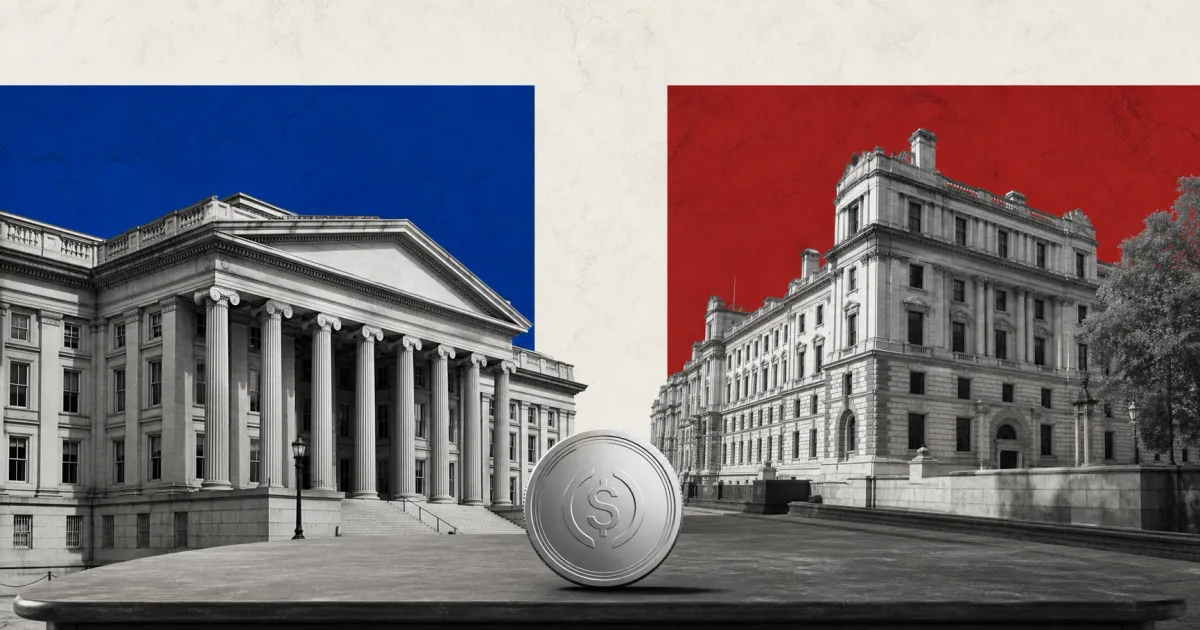
The United States and United Kingdom issued a five-part digital-assets agenda and a separate 10-point stablecoin statement Tuesday, putting cross-border tokenized securities, payment coins and reserve rules on a shared policy track without creating an immediate cross-border license for any issuer.
The documents, published by the U.S. Treasury and HM Treasury, are the first recommendations from the Transatlantic Taskforce for Markets of the Future. They ask regulators to look for common approaches to tokenized assets and say the two governments will explore a route for stablecoins issued in either market to access the other.
The package arrives as crypto markets remain wary of policy and macro risk. Bitcoin was trading near $62,500 early Tuesday, down about 0.8% from the previous day and roughly 2.9% over a month, while the Crypto Fear and Greed Index stood at 22, a reading classified as Extreme Fear.
The taskforce’s five digital-asset recommendations include a one-year, private-sector-led group to test cross-border tokenized-asset use cases. They also call on authorities including the Bank of England, CFTC, FCA and SEC to seek common treatment for questions such as final settlement of tokenized securities and the possible use of stablecoins or tokenized money-market funds as central-counterparty margin collateral.
Treasury Secretary Scott Bessent said the recommendations reflected the two countries’ shared commitment to growth and global standards that reward innovation and competition, according to the U.S. Treasury announcement. The same release said the work followed industry engagement and was designed to reduce unnecessary cross-border frictions.
The timing is notable because Britain has been finalizing its own crypto framework for 2027, while the United States continues to build out its digital-asset rules. Daily Crypto Briefs recently reported on the FCA’s planned 2027 crypto regime, which covers trading platforms, custody, stablecoin issuance and market-abuse duties.
U.S.-UK Taskforce Targets Tokenized Securities and Collateral
The taskforce began after Bessent and Chancellor Rachel Reeves announced it during the September 2025 U.S. state visit to Britain. Its remit spans capital markets and digital assets, but its first five recommendations focus directly on the plumbing that could let regulated digital money and tokenized financial claims move more readily between the two financial centers.
The first recommendation proposes that officials form a one-year industry group for experimentation and testing around cross-border tokenized assets. The report does not identify a blockchain, product, participating firms or a launch date, leaving those details to officials and industry to determine.
Its second recommendation is more specific about the legal obstacles. The authorities will seek common approaches on the regulatory treatment of tokenized assets, including settlement finality for tokenized securities transactions and whether stablecoins or tokenized money-market funds could qualify as margin collateral at central counterparties.
That is a narrower claim than a blanket approval of onchain securities or stablecoin collateral. The report says the countries will consider flexible regulatory tools where appropriate, so the eventual result depends on each regulator’s rules and processes.
The agenda also commits the two governments to support a review of international Basel standards for banks’ cryptoasset exposures. The aim, according to the taskforce, is for standards to be technology-neutral, evidence-based and capable of remaining relevant as markets change.
The work follows other efforts to put regulated digital cash into financial-market infrastructure. SWIFT’s recently announced ledger initiative is designed to support tokenized deposits and cross-border payments, a development covered in our report on 17 banks joining its blockchain ledger project. The U.S.-UK package does not endorse a particular network, but it signals that supervisors are now focusing on interoperability and legal treatment alongside the technology.

Bitcoin
BTCStablecoin Statement Sets 10 Shared Policy Positions
The companion UK-U.S. joint statement on stablecoins contains 10 shared positions, beginning with an intention to enable the use of stablecoins in cross-border finance for payments, settlement and capital-markets transactions.
Both governments say coins held out as money should be backed at least one-to-one by high-quality liquid assets. They also say reserve assets should be segregated from an issuer’s own funds, holders should have timely redemption expectations and the legal rights of holders should be clearly disclosed.
The statement goes beyond reserve language by addressing market access. It says the countries support market-driven access by regulated stablecoin issuers and users to banking and financial-services relationships, subject to safeguards, and that lawful regulated providers should have fair, risk-based access to markets.
It also says the two sides will explore a clear pathway for stablecoins issued in each jurisdiction to reach the other market. That is the most commercially direct part of the document, but the text explicitly makes it subject to each country’s laws, regulations and processes.
The UK’s domestic supervisory model remains separate. The FCA and Bank of England said in June that an issuer can move from FCA supervision to joint oversight once HM Treasury recognizes its payment system as systemic. The Bank’s framework is aimed at sterling-denominated systemic coins, rather than every stablecoin used to buy or sell cryptoassets.
The cross-border agenda could matter most to issuers and payment providers that currently have to design reserves, redemption procedures and compliance operations around different national requirements. It does not resolve conflicts between those regimes, and it does not say that a U.S. or UK-issued coin has met the other’s authorization standard.
Stablecoin Market Access Still Depends on Domestic Rules
The document is a coordinated policy statement, not legislation, a recognition decision or an operating license. It does not name USDC, USDT, a UK sterling stablecoin, a bank, an exchange or a tokenization platform as eligible for the pathway it describes.
That distinction is important as regulated institutions test blockchain-based settlement. Standard Chartered’s arrangement to mint and redeem USDC for institutional clients illustrates the operating infrastructure already taking shape, but the bank’s U.S. dollar stablecoin role does not itself establish cross-border regulatory permission.
The taskforce says progress will be reported through the U.S.-UK Financial Regulatory Working Group. Its near-term tests are therefore procedural: whether the industry group is formed, whether the named regulators publish common positions and whether the two countries define a practical market-access route.
Sentiment across crypto remained guarded despite the policy push. The Crypto Fear and Greed Index was at 22 on July 14, signaling that a framework for future market access has not displaced immediate concerns about liquidity, prices and global risk.
Fear & Greed Index
July 14, 2026For now, the most concrete outcome is the shared list of guardrails: full backing, reserve protection, redemption expectations, supervisory coordination and an intent to avoid unnecessary fragmentation. What remains unknown is which specific use cases regulators will test, which firms will participate and how quickly each domestic rulebook can turn the bilateral plan into an available service.
Stay up to date
Get the latest crypto insights delivered to your inbox
Primary sources and further reading
Fact-checked by: Daily Crypto Briefs Fact-Check Desk
Related Articles



Frequently Asked Questions
What did the U.S. and UK stablecoin statement announce?
The statement sets out ten shared policy positions for cross-border stablecoin activity, including one-to-one high-quality liquid-asset backing, reserve segregation, timely redemption and a plan to explore pathways for issuers from each jurisdiction to reach the other market. It is not a new law or a passport that automatically authorizes any issuer.
What are the U.S.-UK tokenized-assets recommendations?
The Transatlantic Taskforce recommended a one-year industry-led experimentation group, common regulatory approaches for tokenized assets, a joint stablecoin statement, a multi-money framework and a review of Basel cryptoasset standards.
Can a U.S. stablecoin now operate in the UK?
No immediate authorization was announced. The two governments said they intend to explore a clear pathway, subject to the laws, rules and processes in each country.
Which regulators are involved in the U.S.-UK tokenization work?
The recommendations name the Bank of England, the Commodity Futures Trading Commission, the Financial Conduct Authority and the Securities and Exchange Commission among the authorities expected to seek common approaches.