 Daily Crypto Briefs



WASHINGTON, June 4, 2026
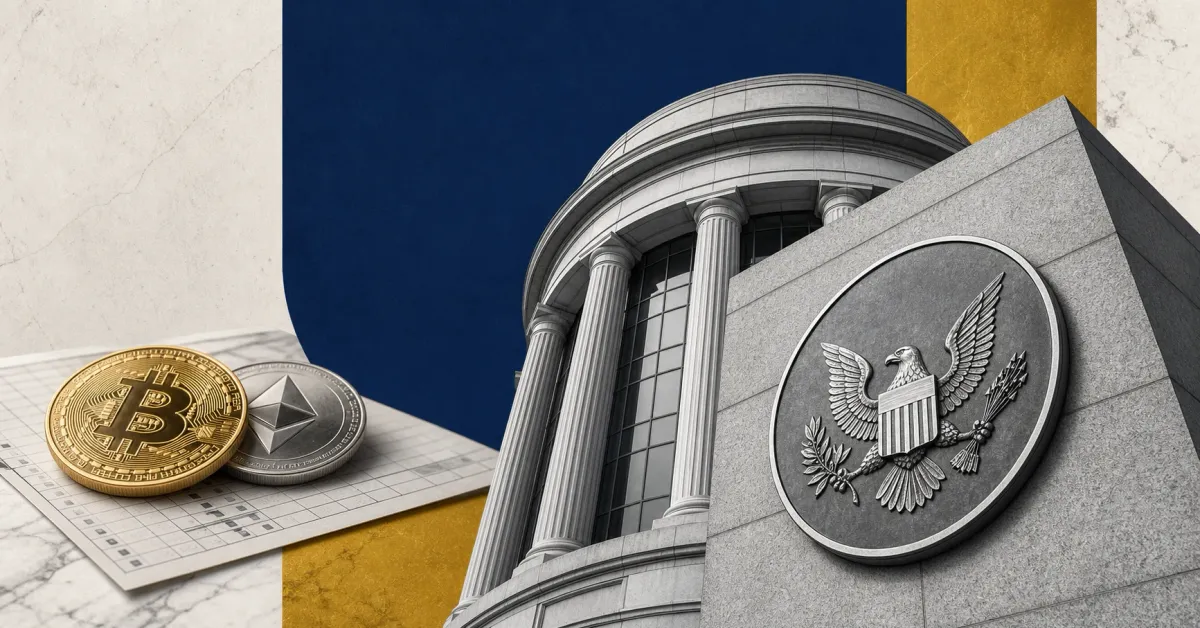
The Securities and Exchange Commission put digital assets and distributed ledger technologies inside its fiscal 2026 to 2030 draft strategic plan, opening a public comment window through July 2 as bitcoin traded near $63,300 in the latest test of whether regulatory clarity can offset market stress.
The draft plan, published June 2, does not create a new crypto rule by itself. It signals how SEC Chair Paul Atkins wants the agency to prioritize policy, enforcement, market engagement and technology over the next four fiscal years.
Bitcoin traded around $63,346, down about 3.3% over the latest 24-hour snapshot, while ether traded near $1,764, down about 4.2%. The same SEC draft said the agency oversees annual trading of about $207 trillion in U.S. equity markets and supervises more than 33,000 entities, underscoring why even strategic language can matter to firms trying to build regulated crypto products.
Atkins said the commission “will not stray from this core three-part mission,” according to the SEC press release, referring to investor protection, fair and efficient markets, and capital formation.
The plan lands after a year in which Washington’s crypto agenda has shifted from enforcement-first headlines toward market-structure bills, stablecoin rules and tokenization experiments. Daily Crypto Briefs has tracked that turn through the SEC-CFTC split debate and the broader U.S. crypto regulation map.
For exchanges, custodians and staking providers, the document is not a license. It is a policy marker showing that the agency expects crypto to sit inside the core securities-market agenda rather than outside it.
What remains unknown is how much of the language survives after public comments, and whether the SEC translates it into rule proposals, staff guidance, exemptive relief or enforcement priorities.
SEC digital assets plan sets July 2 deadline
The draft strategic plan lists three broad goals: renewing regulatory policy around innovation and capital formation, shifting agency practice toward stakeholder engagement and compliance, and modernizing SEC operations.
Crypto appears under the first goal. The document says the agency wants to provide a firm regulatory foundation for digital assets and distributed ledger technologies, using what it calls a rational, coherent and principled approach.
The wording matters because it folds digital assets into the SEC’s formal strategic planning cycle, not just speeches or case-by-case litigation. The plan also says blockchain and crypto asset technologies may deliver efficiencies, cost reductions, transparency and risk mitigation, while noting that growth has outpaced the existing regulatory framework.
Comments are being collected through the SEC’s DSP-3 comment page. The agency said submissions should refer to File Number DSP-3 and should arrive no later than July 2, 2026.
That deadline gives crypto firms, trade groups, investor advocates and exchanges a short window to shape the public record before the SEC finalizes its internal roadmap. The comment process is public, and the SEC cautioned that personal identifying information in submissions will not be redacted or edited.
Tokenization, staking and custody move into the SEC roadmap
The draft does more than say “crypto” in broad terms. It names several operating lanes that have been central to industry disputes: the boundaries of securities law for digital assets, compliant capital formation through tokenized offerings, onchain financial infrastructure, custody, trading and staking services.
That list is a useful read on where the next arguments are likely to cluster. Tokenized offerings raise disclosure and issuer questions. Onchain financial infrastructure raises venue and settlement questions. Custody, trading and staking raise intermediary questions, especially when retail customers rely on a platform to hold assets or perform technical functions.
The tokenization language also arrives after major market operators began describing onchain securities infrastructure in more concrete terms. In January, we covered the NYSE plan for tokenized securities, which tied 24-hour trading, stablecoin funding and instant settlement to a future venue still subject to approvals.
The SEC plan does not name specific tokens, exchanges, custodians or staking programs. It also does not say whether the agency will rely on new rules, exemptions, interpretive guidance or enforcement cases for each product type.
Still, the inclusion of staking is notable because staking services have often sat between technical network support and investment-product framing. A clear SEC approach could reduce compliance uncertainty for firms that want to offer staking without guessing which parts of the service create securities-law risk.
SEC-CFTC coordination stays tied to Congress
The draft says a modernized framework should clarify jurisdictional questions between the SEC and the Commodity Futures Trading Commission. That line keeps the SEC strategy connected to the same market-structure fight that has dominated crypto lobbying in Washington.
The live issue is which agency oversees which part of crypto trading. Securities-style offerings and intermediaries fall closer to the SEC. Commodity-style spot markets and derivatives lean toward the CFTC, although Congress has not completed a comprehensive federal spot-market framework.
The draft says harmonization should produce rules anchored in statute. That phrase is important because it points back to Congress, not only agency interpretation.
The House CLARITY Act and Senate market-structure talks have tried to draw those lines, though timing has repeatedly slipped. Daily Crypto Briefs previously detailed how the CLARITY Act timeline moved into 2026 and how a later Senate vote was canceled, keeping the SEC-CFTC split unresolved.
For markets, the practical impact is less about one planning document than about whether it becomes a cleaner registration and product pathway. If the SEC uses the plan to write clearer rules, firms may be able to spend less time interpreting enforcement risk and more time mapping products to defined compliance lanes.
The next catalyst is the July 2 comment deadline, followed by any final SEC strategic plan language and the first rulemaking or guidance steps that show how the agency intends to handle digital assets, tokenized offerings, custody, trading and staking in practice.
Stay up to date
Get the latest crypto insights delivered to your inbox
Primary sources and further reading
| Source | Title |
|---|---|
| | SEC: Publishes Draft Strategic Plan for Public Comment (June 2, 2026) |
| | SEC: Draft Strategic Plan FY26-FY30 PDF |
| | SEC: Submit comments on DSP-3 |
| | CoinGecko: Bitcoin price and market data |
| | CoinGecko: Ethereum price and market data |
Fact-checked by: Daily Crypto Briefs Fact-Check Desk
Related Articles



Frequently Asked Questions
What did the SEC say about digital assets in its 2026 to 2030 draft strategic plan?
The SEC said one objective is to provide a firm regulatory foundation for digital assets and distributed ledger technologies through a rational, coherent and principled approach.
When are comments due on the SEC draft strategic plan?
The SEC said comments on File Number DSP-3 should be submitted no later than July 2, 2026.
Does the SEC draft strategic plan create new crypto rules?
No. The draft strategic plan does not create binding crypto rules by itself. It sets agency priorities that can shape future rulemaking, guidance, enforcement posture and coordination with other regulators.
Why does the SEC strategic plan matter for crypto exchanges and staking services?
The draft specifically mentions custody, trading and staking services as areas where the agency wants appropriate oversight without duplicative or conflicting requirements.