 Daily Crypto Briefs




BASEL, Switzerland, June 28, 2026
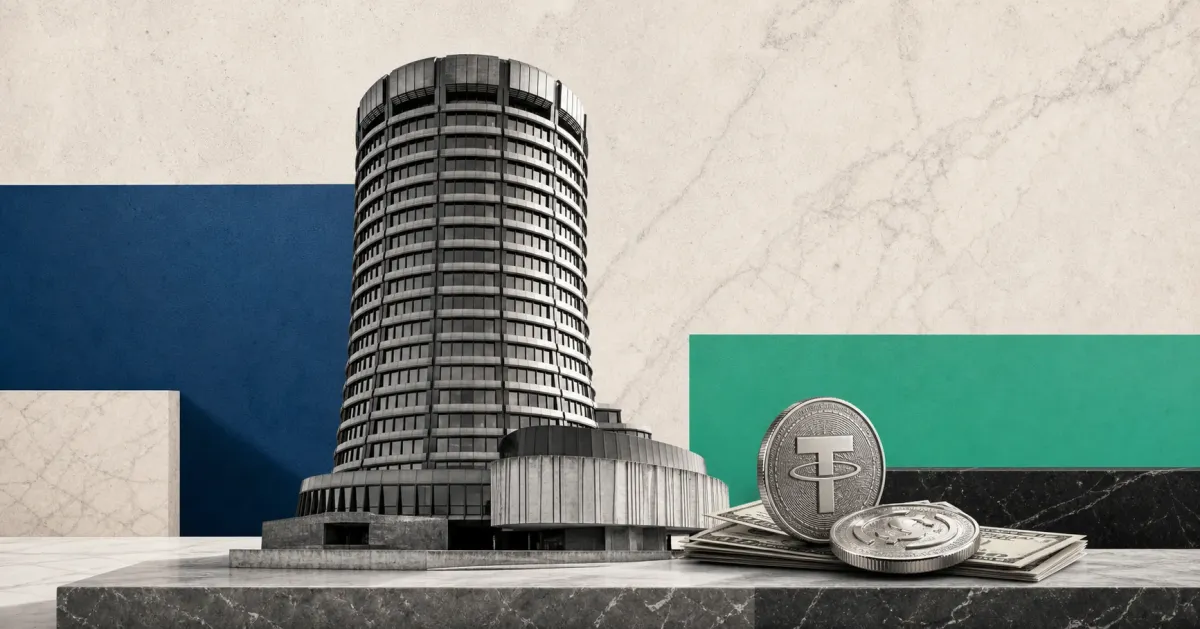
The Bank for International Settlements put the roughly $320 billion stablecoin market at the center of its 2026 Annual Economic Report, warning that private dollar tokens have grown fast but still fall short as money.
The report does not dismiss tokenization. It draws a sharper line between stablecoins such as USDT and USDC, which are privately issued claims on reserve assets, and tokenized bank money or tokenized central bank reserves, which the BIS says can preserve the structure of the existing monetary system.
Market snapshot: the BIS chapter said stablecoins reached about $320 billion at the end of May, while 99.4% of fiat-backed stablecoins were pegged to the U.S. dollar. Bitcoin was still trading near the high-$50,000 area Sunday, keeping risk appetite weak as regulators focused on the parts of crypto that are still growing.
In its press release, the BIS said current stablecoin designs “fall short” as money. The chapter framed the issue around three monetary tests: singleness, elasticity and integrity, meaning whether money trades at par, expands with legitimate demand and resists illicit finance.
The timing is important because stablecoins have already moved beyond exchange collateral. They now sit inside payment networks, broker products, settlement pilots and tokenized-asset plans, including the regulated dollar-token push Daily Crypto Briefs covered in Visa’s USDC settlement expansion.
The immediate implication is policy pressure. The BIS is not only saying stablecoins are risky. It is saying the more promising version of tokenized finance may be built around commercial bank deposits and central bank money, not standalone private coins.
What remains unclear is how quickly that preference becomes regulation. The next signals are national stablecoin rulemaking, bank tokenization pilots, exchange reserve disclosures and whether large payment firms keep expanding stablecoin settlement while central banks test their own rails.

Bitcoin
BTCBIS Stablecoin Warning Targets Dollar Tokens
The BIS focused on the basic promise stablecoin issuers make: one token should equal one unit of fiat money. That promise is central to USDT, USDC and other payment stablecoins because users rely on them as cash-like balances across exchanges, wallets and DeFi markets.
The report’s concern is that a stablecoin can trade near one dollar most of the time without becoming the same thing as bank deposits or central bank money. If redemption confidence weakens, or if reserve assets become hard to sell quickly, the token can break from par and force users to test the issuer’s liquidity.
That is the singleness problem. In a conventional payment system, regulated money forms are meant to exchange at par. In a stablecoin system, par value depends on issuer assets, redemption rights, market makers, exchange liquidity and user confidence.
The dollar concentration adds another layer. The BIS said almost all fiat-backed stablecoins are tied to the U.S. dollar, even when holders, merchants and exchanges are outside the United States. That can pull local crypto activity toward dollar funding conditions and away from domestic monetary control.
This is where the BIS report differs from a normal crypto-risk note. It is not only worried that a stablecoin holder might lose money. It is worried that a large dollar-token market can reshape payment habits, short-term funding demand and bank deposit competition across borders.
That warning lands just as U.S. lawmakers and regulators are trying to define payment stablecoins under federal law. The same tension runs through Daily Crypto Briefs’ broader guide to U.S. crypto regulation in 2026, where stablecoin reserves, yield, custody and tax treatment all sit inside the same policy fight.
Tokenized Deposits Get The Central Bank Edge
The BIS answer is not to reject blockchains or shared ledgers. It argues that tokenization should be built on money that already has a regulated claim structure, especially commercial bank deposits and wholesale central bank reserves.
That points directly to Project Agora, the BIS Innovation Hub program testing tokenized commercial bank deposits and tokenized wholesale central bank money across borders. The project includes central banks and private-sector institutions trying to improve correspondent banking without replacing the two-tier banking system.
The distinction matters for banks. A stablecoin issuer typically backs tokens with reserves such as Treasury bills, cash or repo-like assets. A tokenized deposit is a bank liability in token form, which means it stays inside the regulated banking perimeter and can interact with central bank settlement.
That is why the BIS chapter spends so much time on elasticity. Bank money can expand through credit creation and contract through repayment under regulation. A fully reserved stablecoin expands only when users bring assets in, which can make it less flexible as a broad money form.
For crypto users, this can sound like a technical fight over plumbing. For institutions, it is a distribution fight. If tokenized deposits become the preferred regulated rail, banks may regain a central role in digital payments even as crypto firms keep the user interfaces.
The same bank-versus-crypto split has already appeared in the U.S. stablecoin-yield fight, where Daily Crypto Briefs reported that banks want more control over stablecoin economics. The BIS report gives that argument a global central-bank vocabulary.
Stablecoin Rules Now Move To National Regulators
The BIS does not write national law. Its influence comes from the central banks, supervisors and finance ministries that read its reports as a policy signal.
That signal is landing in a market that is already being regulated unevenly. Europe is moving under MiCA, the United States is implementing stablecoin legislation, Hong Kong and other financial centers are writing issuer rules, and banks are testing deposit tokens in controlled pilots.
The practical question is whether stablecoins stay mainly as exchange settlement assets or become everyday payment instruments. Payment networks, remittance firms and corporate-treasury products are pushing toward broader use, while central banks are trying to keep tokenized money attached to regulated balance sheets.
The BIS warning also has a market-structure angle. If stablecoin issuers hold more short-term government debt, their reserve decisions can matter for money markets. If users redeem quickly during stress, issuers may have to sell assets or lean on banking partners at the worst moment.
That is why reserve transparency remains central. Tether, Circle and other issuers can publish attestations and reserve breakdowns, but the BIS is asking a deeper question: whether private tokens should become systemically important payment instruments at all.
Crypto sentiment stayed weak as the report circulated.
Fear & Greed Index
June 28, 2026For stablecoin issuers, the next phase is less about proving that tokens can hold a peg during normal trading and more about proving they can survive regulation, redemptions and bank competition at scale. The BIS has now made clear which version of tokenized money it wants regulators to prefer.
Stay up to date
Get the latest crypto insights delivered to your inbox
Primary sources and further reading
| Source | Title |
|---|---|
| | BIS Annual Economic Report 2026 |
| | BIS Annual Economic Report Chapter III |
| | BIS press release on the Annual Economic Report |
| | BIS Project Agora |
| | CryptoCompare: Bitcoin price |
| | Alternative.me: Crypto Fear and Greed Index |
Fact-checked by: Daily Crypto Briefs Fact-Check Desk
Related Articles



Frequently Asked Questions
What did the BIS say about stablecoins?
The BIS said stablecoins show that tokenization can move assets on shared ledgers, but current designs still fall short of core monetary requirements such as singleness, elasticity and integrity.
How big is the stablecoin market in the BIS report?
The BIS chapter said the stablecoin market was around $320 billion at the end of May 2026, with dollar-pegged coins dominating fiat-backed supply.
Why is the BIS worried about dollar stablecoins?
The BIS warned that dollar-pegged stablecoins can affect monetary sovereignty, bank funding, short-term money markets and cross-border financial conditions when they grow outside domestic banking systems.
Does the BIS want to ban stablecoins?
The report did not call for a simple ban. It argued that tokenized deposits and tokenized central bank money are a more durable foundation for the next phase of digital finance.
What is Project Agora?
Project Agora is a BIS Innovation Hub project with central banks and private institutions testing how tokenized commercial bank deposits and wholesale central bank money could improve cross-border payments.