 Daily Crypto Briefs




TOKYO, June 26, 2026
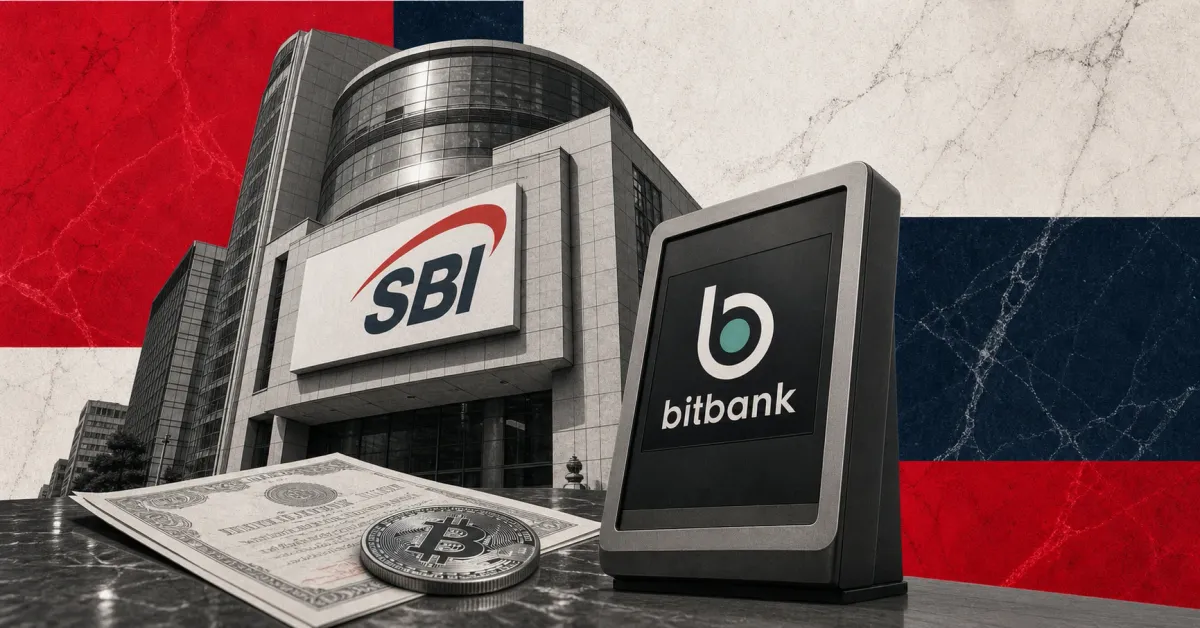
SBI Holdings agreed to buy Japanese crypto exchange Bitbank in a 46.7 billion yen deal, about $289 million, setting up Japan’s largest domestic crypto exchange group by custody assets as bitcoin traded below $60,000.
The transaction would bring Bitbank under SBI Group through SBICAH, a wholly owned SBI vehicle, and combine it with SBI VC Trade’s existing exchange footprint. The deal is a consolidation move, not a new token launch, and it is expected to close around October if Japan’s antitrust review and other conditions are cleared.
Market data gave the announcement a stressed backdrop. CryptoCompare showed bitcoin near $58,900 on June 26 after a month-long slide from the mid-$70,000s, while multiple market trackers showed elevated spot volume as traders reacted to weaker risk appetite. The deal value of 46.7 billion yen equals roughly $289 million using the exchange rate implied in company and market reports.
In its June 25 announcement, SBI said it signed a basic agreement and share transfer agreements tied to the Bitbank acquisition. The company said the combined platform would have “approximately JPY 1.1 trillion in assets under custody” and about 2.92 million crypto asset accounts, based on SBI VC Trade and Bitbank figures as of April 30.
The move follows a May alliance discussion and a broader policy shift in Japan. Earlier this month, the country’s lower house passed a crypto bill moving digital assets closer to financial-instrument oversight, a change Daily Crypto Briefs covered in its report on Japan’s crypto tax and ETF path.
The immediate implication is distribution. SBI already has banking, brokerage, payments and crypto exchange arms. Adding Bitbank would put more Japanese spot trading, custody, stablecoin and tokenization channels inside one regulated financial group.
What remains unsettled is practical: final antitrust clearance, exact closing timing, Bitbank’s operating independence, fee changes, product integration and how quickly SBI can merge customer-facing services without disrupting users.

Bitcoin
BTCSBI Bitbank Deal Builds Japan Scale
The deal structure has two steps. SBI said SBICAH will buy shares from founder Noriyuki Hirosue and other individual shareholders, while Bitbank will separately acquire shares held by corporate investors including MIXI and Ceres.
If those steps close, SBI would indirectly hold 100% of Bitbank’s voting rights. Bitbank said in its customer announcement that services would continue, while the company did not immediately disclose a detailed post-closing product roadmap.
The numbers explain why SBI moved. SBI said the combined SBI VC Trade and Bitbank figures would amount to about 1.1 trillion yen in custody assets and about 2.92 million crypto asset accounts. Crypto Briefing reported that the scale would put the group ahead of domestic rivals by assets under management.
That gives SBI a broader customer base at the same time Japan is trying to bring crypto trading into a clearer financial-market framework. It can also reduce duplication across SBI’s exchange assets after earlier consolidation around SBI VC Trade and Bitpoint Japan.
For customers, the key issue is continuity rather than deal valuation. Exchange acquisitions can change listed assets, fees, staking terms, custody arrangements and account migration steps. SBI and Bitbank have not yet published a full integration timetable.
October Closing Needs Antitrust Clearance
The transaction is expected to complete around October 2026. SBI’s announcement says completion remains subject to merger review under Japan’s Act on Prohibition of Private Monopolization and Maintenance of Fair Trade, better known as the Antimonopoly Act, and other closing conditions.
That timing gives regulators a narrow but important role. The deal does not only transfer a brand. It may combine two large regulated crypto venues, user accounts, custody balances and listing pipelines under a single financial conglomerate.
The acquisition also carries a shareholder cleanup element. Bitbank’s existing corporate investors, including MIXI and Ceres, are expected to exit through the transaction structure, while SBI’s vehicle takes control from founders and other holders.
That structure is more involved than a simple cash takeover. It gives SBI a path to full control, but it also means investors should watch the sequence of share purchases, buybacks, approvals and final corporate filings.
The company has not disclosed whether Bitbank’s management, listing committee or technology stack will remain separate. Those details matter because Japanese exchange users may care less about the parent company than about execution quality, withdrawal reliability and token availability.
There is also a regional angle. SBI has been expanding beyond Japan through digital-asset partnerships and acquisitions, while domestic policy is becoming more supportive of regulated crypto products. A bigger home exchange base can serve as the distribution layer for stablecoins, tokenized assets and future crypto investment products.
Japan Crypto Rules Push Consolidation
Japan’s exchange market is being reshaped by regulation as much as by dealmaking. The Financial Services Agency’s April materials for the 2026 bill said crypto-asset trading businesses would move closer to the Financial Instruments and Exchange Act framework, with stronger disclosure and market-abuse rules.
Those rules can favor larger operators. Compliance, custody controls, token disclosure reviews and surveillance systems cost money. A bank-linked group with 2.92 million accounts may be better positioned to absorb those costs than smaller exchanges trying to compete on fees alone.
Daily Crypto Briefs has tracked the same regulated-rail pattern in Japan’s bank stablecoin plan, where MUFG Bank, Mizuho Bank and SMBC are targeting yen stablecoin transactions by March 2027. The SBI deal is the exchange-side version of that trend: more crypto activity moving through identifiable financial institutions.
The merger also sits beside Japan’s institutional tokenization push. A larger SBI exchange group could become a useful channel if tokenized securities, stablecoin payments or crypto ETFs become more practical under the new rulebook.
The caution is that size does not remove market risk. Bitcoin’s one-month drop shows that regulated access and falling prices can coexist. A larger exchange group may improve compliance and custody standards, but it cannot make volatile assets behave like deposits.
Market sentiment remained weak as the deal circulated.
Fear & Greed Index
June 26, 2026The next checkpoints are concrete: Japan Fair Trade Commission clearance, the August share purchases from individual holders, Bitbank’s planned buybacks from MIXI and Ceres, and final confirmation around October that SBI has obtained full indirect control.
Stay up to date
Get the latest crypto insights delivered to your inbox
Primary sources and further reading
| Source | Title |
|---|---|
| | SBI Holdings: Bitbank share acquisition agreement |
| | Bitbank: SBI Holdings acquisition announcement |
| | Crypto Briefing: SBI to buy Bitbank for $289M |
| | Japan FSA: April 2026 crypto bill materials |
| | CryptoCompare: Bitcoin price |
| | Alternative.me: Crypto Fear and Greed Index |
Fact-checked by: Daily Crypto Briefs Fact-Check Desk
Related Articles



Frequently Asked Questions
How much is SBI paying for Bitbank?
SBI Holdings agreed to a transaction valued at 46.7 billion yen, or about 289 million dollars, to bring Bitbank under SBI Group.
Will Bitbank become a wholly owned SBI subsidiary?
SBI said the transaction is designed to make Bitbank an indirectly held wholly owned subsidiary through SBICAH, a wholly owned SBI vehicle.
When is the SBI Bitbank deal expected to close?
The transaction is expected to complete around October 2026, subject to Japan Fair Trade Commission clearance and other closing conditions.
How large would SBI's crypto exchange group become?
SBI said a combined SBI VC Trade and Bitbank group would have about 1.1 trillion yen in custody assets and about 2.92 million crypto asset accounts, based on April 30 figures.
Why does this matter for Japan's crypto market?
The deal would concentrate more trading and custody activity inside a bank-linked Japanese financial group as the country moves crypto closer to financial-instrument regulation.