 Daily Crypto Briefs




NEW YORK, July 10, 2026
Circle received final approval from the U.S. Office of the Comptroller of the Currency to establish Circle National Trust, giving the USDC issuer a federal trust-bank charter as USDC circulation stood at $73.2 billion.
The approval creates First National Digital Currency Bank, N.A., which will operate as Circle National Trust. Circle said the new bank will initially provide fiduciary digital asset custody services for Circle and its affiliates, with USDC reserve management listed as a future capability rather than an immediate operating change.
Market snapshot: Circle’s USDC page showed $73.2 billion of USDC in circulation and $73.4 billion of reserves as of July 9. DefiLlama’s stablecoin dashboard showed total stablecoin market capitalization near $312 billion, with USDC around $73.4 billion and Tether’s USDT near $184.1 billion. Investor’s Business Daily reported that Circle stock rallied more than 7% early Friday, while bitcoin traded near $64,000.

USD Coin
USDCCircle said the approval “marks a defining step” toward bringing blockchain technology and digital assets into the core of the U.S. financial system, attributing the statement to co-founder, Chairman and CEO Jeremy Allaire.
The move follows a December 2025 OCC conditional approval wave. The OCC said at the time it had conditionally approved applications for First National Digital Currency Bank and Ripple National Trust Bank, along with conversion applications tied to BitGo, Fidelity Digital Assets and Paxos.
The immediate implication is institutional plumbing. Circle now has a federal trust-bank path for custody and potential reserve oversight, while the market waits to see whether the charter changes how banks, payment firms and trading venues treat USDC operational risk.
What remains unknown is the opening date, the timing of any reserve-management transition, whether outside institutional custody customers will be added, and how final stablecoin rules shape the bank’s operating limits.
Circle National Trust Gets Final OCC Approval
The approval places Circle National Trust under direct OCC supervision, the same federal agency that charters and supervises national banks and national trust banks. That matters because Circle has spent years operating through state money-transmission licenses, trust-company arrangements and international licenses while trying to make USDC acceptable to banks and regulated institutions.
Circle said the bank will open with fiduciary digital asset custody for Circle and its affiliates. It may later offer custody services to a limited number of institutional customers, focusing on banks and regulated financial institutions, subject to demand and regulatory permission.
That limitation keeps the story narrower than a full retail bank launch. A national trust bank does not automatically mean Circle can take consumer deposits, make loans or offer a checking account. The approved structure is about safeguarding assets and building regulated infrastructure around digital dollars.
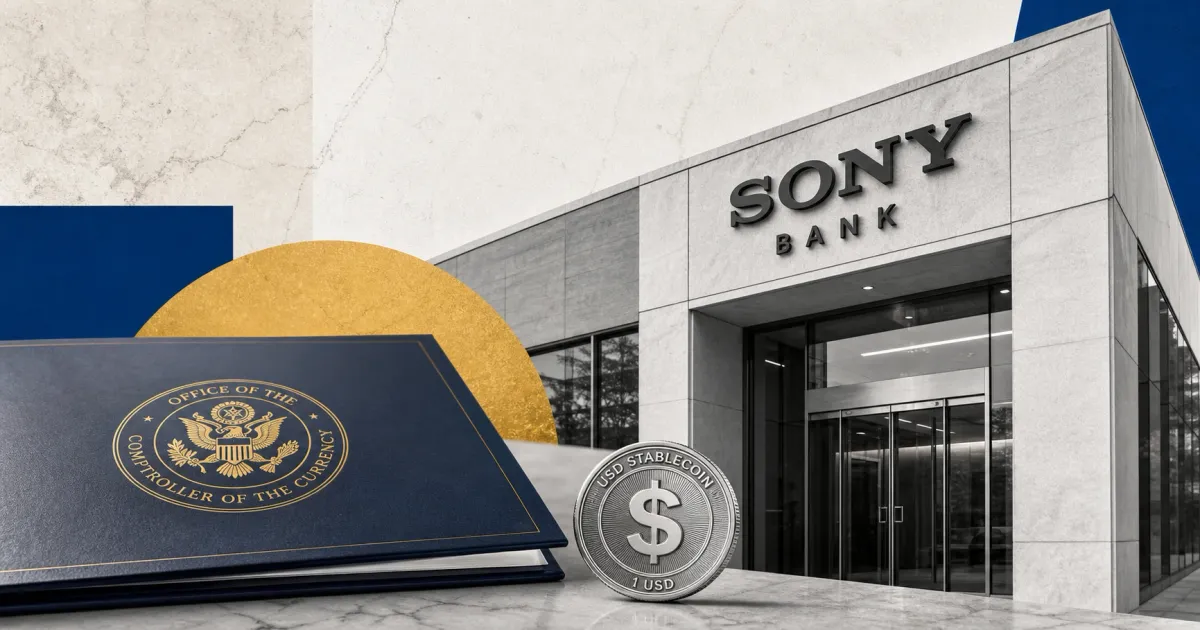
The distinction is important after a rush of crypto firms seeking OCC paths. Daily Crypto Briefs recently covered Sony Bank’s conditional Connectia Trust approval, a separate dollar-stablecoin plan that still needs final clearance before any token activity can begin.
Circle is further along because this approval is final, but the operational details still matter. The company did not immediately disclose an opening date, named third-party custody clients or a date when USDC reserve management would move under the trust bank.
USDC Reserve Oversight Becomes The Hook
The USDC angle is the core reason the approval has broader search demand. Circle described the charter as strengthening infrastructure behind USDC through federally regulated custody, while future reserve management would bring another part of the stablecoin stack under OCC oversight.
Reserves are where stablecoins meet conventional finance. Users see a token trading near $1, but issuers must hold cash, Treasury bills, repo or other approved assets so redemptions can be met when tokens are returned for dollars.
That reserve-management business is already attracting traditional financial firms. State Street launched a dedicated stablecoin reserve money market fund in June, showing that large asset managers want a role in the assets behind regulated dollar tokens.
Circle’s position is different because it is the issuer and now has a federal trust-bank entity. If USDC reserve management eventually moves under Circle National Trust, the company could present banks with a more unified regulatory story: issuance, custody and reserve controls tied to a supervised bank structure.
That does not eliminate stablecoin risk. Reserve attestations are not the same as deposit insurance, and USDC holders are not being told they have FDIC-insured bank deposits. Circle still has to show how redemption, custody, reserve governance and disclosure work once the new entity opens.
The market context is large enough to make those details consequential. DefiLlama showed stablecoins above $300 billion, and Daily Crypto Briefs recently covered USDC beating Tether in Visa’s adjusted transaction-volume data even as Tether kept the larger supply base.
Stablecoin Banks Face The Next Test
Circle’s approval lands during a wider fight over who gets to control digital-dollar infrastructure. Banks want tighter limits on stablecoin yield and reserve activity, while crypto firms want federal pathways that make custody, payment settlement and tokenized cash easier to sell to institutions.
That fight is why the OCC charter has policy value beyond Circle’s stock. A federal trust bank can make a crypto company look more familiar to risk committees, but it can also sharpen bank-lobby concerns that crypto firms are receiving bank-like credibility without the same business model as commercial lenders.
Daily Crypto Briefs has tracked that pushback through the broader story of Wall Street banks challenging OCC crypto charters. Circle’s final approval gives that argument a new concrete example, because USDC is already one of the two dominant stablecoins.
The GENIUS Act framework also remains central. The law and implementing rules will decide how permitted payment stablecoin issuers manage reserves, disclose assets, meet redemption obligations and interact with banks, brokers and exchanges.
Crypto sentiment remains defensive even as regulated stablecoin infrastructure advances. Alternative.me’s crypto index sat in fear territory on July 10, while a MacroMicro mirror of the Alternative.me data showed a 23 reading for the same date.
Fear & Greed Index
July 10, 2026The next useful signals are procedural, not promotional. Watch for Circle National Trust’s formal opening, any updated OCC decision document, changes to Circle’s reserve-management disclosures, named institutional custody users and final GENIUS Act rules that define what a federally supervised stablecoin issuer can do with customer assets.
Stay up to date
Get the latest crypto insights delivered to your inbox
Primary sources and further reading
| Source | Title |
|---|---|
| | Circle: final OCC approval for Circle National Trust |
| | OCC: conditional approvals for national trust bank charter applications |
| | Circle: USDC reserves and circulation |
| | DefiLlama: stablecoin market capitalization |
| | Investors.com: Circle stock rallies on national bank approval |
| | Alternative.me: Crypto Fear and Greed Index |
Fact-checked by: Daily Crypto Briefs Fact-Check Desk
Related Articles



Frequently Asked Questions
What did Circle receive from the OCC?
Circle said it received final approval from the Office of the Comptroller of the Currency to establish First National Digital Currency Bank, N.A., which will operate as Circle National Trust.
Is Circle National Trust a regular commercial bank?
No. Circle described it as a national trust bank focused first on fiduciary digital asset custody, not a consumer bank that takes deposits or makes loans.
How does the OCC approval affect USDC?
Circle said the charter strengthens USDC infrastructure through federally regulated custody, with future USDC reserve management planned as a capability under federal oversight.
How much USDC is in circulation?
Circle's USDC page showed 73.2B USDC in circulation and 73.4B in reserves as of July 9, 2026.
What should stablecoin users watch next?
Watch when Circle National Trust opens, whether it begins managing USDC reserves, whether institutional custody clients are added, and how OCC and GENIUS Act rules are finalized.