 Daily Crypto Briefs




SAN FRANCISCO, July 27, 2026
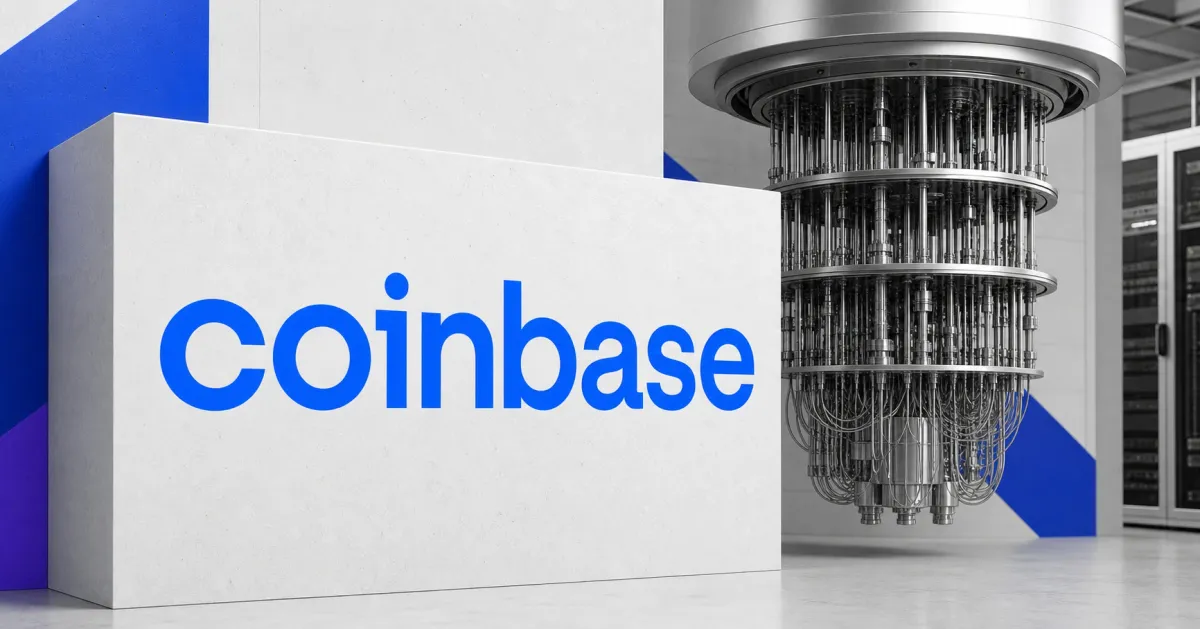
Coinbase said it has begun building quantum-safe custody tools and will co-host an August working session with Stanford, Bitcoin Core developers, cryptographers and researchers, a fresh push to prepare Bitcoin and the wider crypto industry for a future cryptography transition as Bitcoin traded near $65,359.
The exchange said the threat is not imminent, but the operational work cannot wait for a machine capable of breaking current public-key cryptography. Its plan spans a new post-quantum key-management system, internal migration planning and direct support for open-source Bitcoin security work.
Bitcoin was little changed in the immediate market context. CoinGecko’s live market page put the asset’s market capitalization near $1.30 trillion on July 27, while a July 23 market snapshot listed BTC at $65,044.81, a $1.30 trillion market value and $24.36 billion in 24-hour volume. Bitcoin’s price was still about 4.3% above its $62,652 June 23 close, based on CoinGecko historical data.
In its July 23 announcement, Coinbase said its CoreKMS system protects about 99.9% of the assets it custodies and that it is building a post-quantum version called PQ-CoreKMS. The company said it aims within the next year to deliver an automated signing pipeline that can support post-quantum signature algorithms, while stressing that a practical quantum threat has not yet arrived.
The statement gives a large exchange a concrete implementation target in a debate that has often stayed at the research-paper level. It does not set a Bitcoin upgrade deadline, and Coinbase did not disclose the cost of the work, the assets included in the 99.9% figure or the threshold that would trigger live customer migrations.

Bitcoin
BTCCoinbase targets quantum-safe custody within a year
Coinbase said PQ-CoreKMS will combine secure enclaves, secret-sharing and threshold cryptography in an automated signing pipeline. The stated objective is to let the company offer quantum-safe custody once blockchains adopt compatible schemes, rather than try to change a network’s cryptography on its own.
CoreKMS currently uses multi-party computation, a design Coinbase said prevents any one party from reconstructing a customer’s private key. The new system is intended to preserve that distributed approach while accommodating post-quantum signatures, which can bring larger keys and more demanding storage and transaction requirements.
The distinction is important. A custodian can prepare its own infrastructure, but Bitcoin’s signature rules are set by a decentralized protocol and require broad agreement to change. Coinbase said it is also inventorying cryptography across its systems and ranking components by criticality, exposure and migration complexity.
The company described the process as preparation for an uncertain timeline, not evidence of an active breach risk. Its April Quantum Advisory Council paper said the relevant quantum computer would need to be orders of magnitude more capable than machines available today, even though a full migration across wallets, exchanges and networks would take years.
That finding tracks the broader standards effort. The U.S. National Institute of Standards and Technology has already standardized several post-quantum algorithms, but standardizing an algorithm does not automatically give a public blockchain a safe migration process or convince users to move old funds.
Bitcoin developers are set for August session
Coinbase said it will co-host its first in-person session with Stanford in August, bringing together Bitcoin Core developers, cryptographers and researchers to examine viable post-quantum migration options. The company said it intends to convene regular discussions after the first meeting, but it did not announce a specific date, location or public agenda.
The exchange also said it will donate to the Bitcoin Security Consortium and dedicate engineering resources to open-source work, including efforts related to BIP-360 and the broader Bitcoin migration path. Coinbase listed BlackRock, Fidelity Digital Assets, Block, Blockstream and Strategy among the consortium’s backers.
The topic already has practical implications for how the Bitcoin community treats older funds. Daily Crypto Briefs reported in April on a draft plan to freeze quantum-vulnerable legacy wallets, which illustrates the difficult trade-off between preventing a future theft and preserving access for users who do not upgrade in time.
Coinbase’s own advisory council estimated that about 6.9 million BTC sit in Bitcoin wallet types whose public-key information is exposed on-chain. The estimate does not mean those coins can be stolen now. It identifies the category of funds that could face a greater wallet-level risk if a sufficiently capable quantum computer is eventually built.
Earlier research changed the tone of the debate. Google Quantum AI’s work on the required computing resources, covered in Daily Crypto Briefs’ report on the Bitcoin quantum-security debate, put renewed focus on the fact that a migration must be designed before it is urgently needed.
Post-quantum migration remains a protocol challenge
The immediate technical problem is not Bitcoin mining or the historical blockchain record. Coinbase’s advisory council said the principal exposure is the digital-signature layer used to prove control of a wallet, particularly where a public key is already observable on-chain.
For Bitcoin, that creates more than a cryptography selection problem. New signatures have to fit within transaction and block constraints, wallet software has to support them, and users need a clear way to transfer funds. The hardest policy question is what happens to coins in lost, inactive or unupgraded wallets. Coinbase’s council said each blockchain community will have to decide whether those assets are frozen, revoked or left exposed.
Ethereum faces related but distinct work because validators also rely on signature schemes. Coinbase said Base inherits much of Ethereum’s protection through its relationship to the layer 1, while the company develops a separate plan for Base. Daily Crypto Briefs’ coverage of the Lean Ethereum roadmap shows how post-quantum readiness is becoming part of broader protocol design rather than a stand-alone custody feature.
Broader crypto sentiment was neutral on July 27, according to a 52 reading on the Crypto Fear & Greed Index, a market-wide gauge that does not measure confidence in Coinbase or the likelihood of a quantum attack.
Fear & Greed Index
July 27, 2026The next signals are the August session’s scope, any public technical conclusions and whether Bitcoin contributors coalesce around a migration design. Coinbase has set out its custody work and a near-term convening plan, but a network-wide transition, the rules for inactive coins and an activation timeline remain unsettled.
Stay up to date
Get the latest crypto insights delivered to your inbox
Primary sources and further reading
| Source | Title |
|---|---|
| | Coinbase: What Coinbase is Doing to Prepare for Post-Quantum Cryptography |
| | Coinbase Quantum Advisory Council position paper |
| | NIST: Post-Quantum Cryptography standards |
| | CoinGecko: Bitcoin price and market data |
| | Coinbase Press: official brand assets |
Fact-checked by: Daily Crypto Briefs Fact-Check Desk
Related Articles





Frequently Asked Questions
What is Coinbase's post-quantum cryptography plan?
Coinbase says it is building PQ-CoreKMS, a post-quantum version of its key-management system, inventorying cryptography across its infrastructure and defining milestones that would trigger migration work. It says the planned signing pipeline is intended to support quantum-safe custody when blockchains adopt compatible signature schemes.
When is Coinbase's Bitcoin post-quantum working session?
Coinbase said the first session will take place in August 2026 with Stanford, Bitcoin Core developers, cryptographers and researchers. The company did not disclose an exact date, venue or attendee list.
Is Bitcoin vulnerable to quantum computers today?
Coinbase's advisory council says a cryptographically relevant quantum computer does not exist today and the threat is not imminent. It says the exposure is primarily at the wallet-signature layer for keys whose public information is visible on-chain, while the migration could take years to coordinate.
What does post-quantum migration mean for Bitcoin holders?
A post-quantum migration would require networks and wallet providers to adopt new signature schemes and give users a safe route to move funds. Bitcoin has not committed to a full upgrade plan, and questions about inactive or unupgraded wallets remain unresolved.