 Daily Crypto Briefs




NEW YORK, July 15, 2026
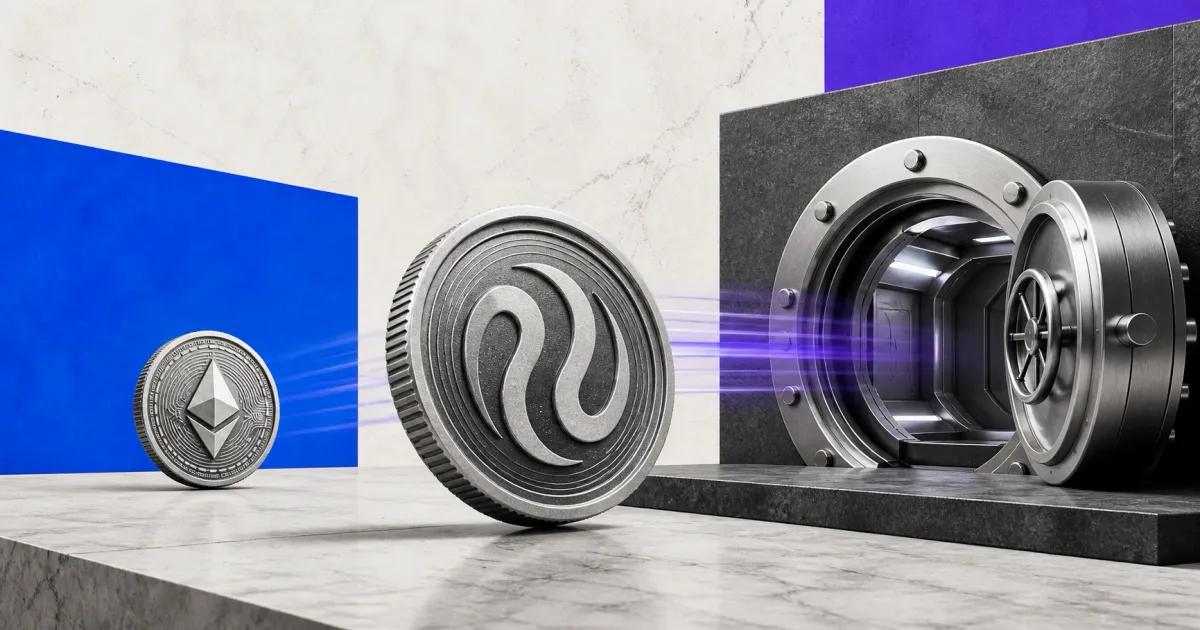
Coinbase plans to migrate Injective’s INJ token to the native Injective EVM network from July 20 through July 22, disabling sends and receives during the three-day window before ending support for Ethereum ERC-20 INJ deposits and withdrawals.
The change is an operational deadline, not a new token sale or a protocol upgrade. Coinbase has told users who want to complete the move themselves to use a self-custody wallet and the Injective Bridge, while warning that ERC-20 INJ sent to old Coinbase Ethereum deposit addresses after the migration may not be recoverable.
Market data gives the deadline some scale. CoinGecko listed INJ near $5.15 on July 15, with about $96.8 million in 24-hour volume and a market capitalization near $491 million. The token was near $5.55 a month earlier, based on CoinGecko historical data, leaving it roughly 7% lower over that period even as holders prepare for the network change.
Injective
INJCoinbase’s token-migration notice states the core restriction plainly: “INJ sends and receives will be disabled” from July 20 to 22. It also says the exchange will no longer support ERC-20 INJ deposits or withdrawals on Ethereum mainnet once the migration is complete.
The notice does not publish a conversion rate, a precise cutover hour, a fee schedule, the treatment of staked assets or whether INJ spot trading will stop. Those omissions mean users should not infer a trading halt or an automatic self-custody conversion from the announcement alone.
Coinbase INJ Migration Will Halt Ethereum Transfers
The migration changes the network rail Coinbase uses for INJ transfers. Before the cutover, a user can encounter INJ through an Ethereum-style ERC-20 address. Afterward, the relevant supported route will be the native Injective EVM network, according to Coinbase’s notice.
An asset name can remain the same while the network used to send it changes. That distinction is important because a token transfer is not simply an exchange-account balance update. The sending wallet, receiving address format and selected chain need to match the exchange’s live deposit instructions.
Coinbase’s warning about old addresses is the practical risk. The company says users should not send INJ to their prior Ethereum ERC-20 deposit addresses after the migration because the funds may not be recoverable. The warning is about the destination rail, rather than a claim that every INJ holder must move funds out of Coinbase.
The exchange lists the July 20 to 22 maintenance period under its broader token-migrations help page, alongside past and future network changes for other assets. That format suggests a standard custody and deposit-infrastructure transition, but Coinbase has not released technical detail on how it will execute the INJ migration internally.
The same network-specific caution has surfaced in other exchange changes. Coinbase’s migration page says users should use a self-custody wallet and an official bridge where they choose to migrate themselves. A self-custody transfer removes the exchange’s routing layer, which puts the responsibility for selecting the supported network and destination address on the user.
Native INJ Replaces Coinbase’s ERC-20 Rail
INJ is the native asset of the Injective ecosystem, but it has also circulated in an ERC-20 form on Ethereum. Coinbase’s planned move aligns its transfer support with Injective EVM rather than continuing Ethereum-mainnet deposits and withdrawals for the legacy route.
That is different from an assessment of Injective’s technology or token value. The exchange notice does not announce a redesign of INJ’s supply, a new investment product or a change to the network’s governance. It covers the custody path through which Coinbase users send and receive the asset.
The decision lands as centralized exchanges keep adding more chain-specific rails to their products. Coinbase has also expanded access to derivatives and market data, while its SpaceX pre-IPO perpetuals plan illustrated how exchanges increasingly package niche crypto-market exposure beside basic spot custody. The INJ migration is more routine, but the deadline is more immediate for anyone relying on an Ethereum deposit address.
The underlying market remains cautious. Coinbase Research said its July positioning report found that open interest had fallen across perpetual futures, term futures and options while activity increased, a sign that risk was being taken off balance sheets. That broader backdrop does not establish a cause for INJ’s move, but it helps explain why operational notices can draw attention when liquidity in smaller assets is uneven.
For Injective, native support can simplify the network selection shown to Coinbase users after the change. It does not eliminate the need to check every transfer. A native EVM address can look familiar to Ethereum users because both can use the 0x format, yet a transaction sent over the wrong network can still fail to reach an exchange’s supported deposit system.
INJ Holders Have a July 20–22 Deadline
For users who keep INJ on Coinbase, the immediate event to watch is the announced send-and-receive pause. Coinbase has not said that customers must withdraw their INJ before July 20, but it has said transfers will be unavailable during the migration window.
Users holding ERC-20 INJ outside Coinbase face a separate decision. Coinbase directs people who want to self-migrate to the Injective Bridge, but a bridge transaction carries its own wallet, network, gas-fee and smart-contract risks. The exchange’s notice is not a substitute for the bridge’s own instructions or for checking the destination before a transfer.
The incident-prone part of a migration is usually not the token ticker. It is the chain selected at the moment of deposit. Daily Crypto Briefs recently covered an Ostium vault exploit where a narrow authorization path had outsized consequences, a separate event that underscores why custody routes and contract interactions merit careful attention.
Coinbase has not said whether it will send account-specific reminders, publish a final cutoff timestamp or provide a post-migration recovery process. It also has not stated whether the native INJ route will be available immediately when sends and receives reopen.
Market sentiment was still defensive heading into the planned change.
Fear & Greed Index
July 15, 2026The next confirmed milestone is July 20. Users should watch Coinbase’s migration page and their account notices for the exact maintenance window, then confirm the supported network before any transfer. The central takeaway is narrow: after the transition, an Ethereum ERC-20 INJ deposit path will no longer be supported by Coinbase.
Stay up to date
Get the latest crypto insights delivered to your inbox
Primary sources and further reading
| Source | Title |
|---|---|
| | Coinbase Help: Token delistings and migrations |
| | Injective Bridge |
| | CoinGecko: Injective price and market data |
Fact-checked by: Daily Crypto Briefs Fact-Check Desk
Related Articles

Frequently Asked Questions
When will Coinbase migrate INJ to the native Injective network?
Coinbase says the migration is planned for July 20 through July 22, 2026. INJ sends and receives will be disabled during that period.
Will Coinbase support ERC-20 INJ after the migration?
No. Coinbase says it will no longer support Ethereum-mainnet ERC-20 INJ deposits or withdrawals after the migration is complete.
Can users move INJ themselves instead of using Coinbase's migration?
Coinbase directs users who want to self-migrate to a self-custody wallet and the Injective Bridge. Users should independently verify supported networks and addresses before sending funds.
Will INJ trading pause on Coinbase during the migration?
Coinbase's migration notice confirms a pause for INJ sends and receives, but it does not say whether spot trading will be paused.
What happens if ERC-20 INJ is sent to an old Coinbase Ethereum deposit address?
Coinbase warns that such funds may not be recoverable after the migration.