 Daily Crypto Briefs

RIGA, Latvia, June 20, 2026
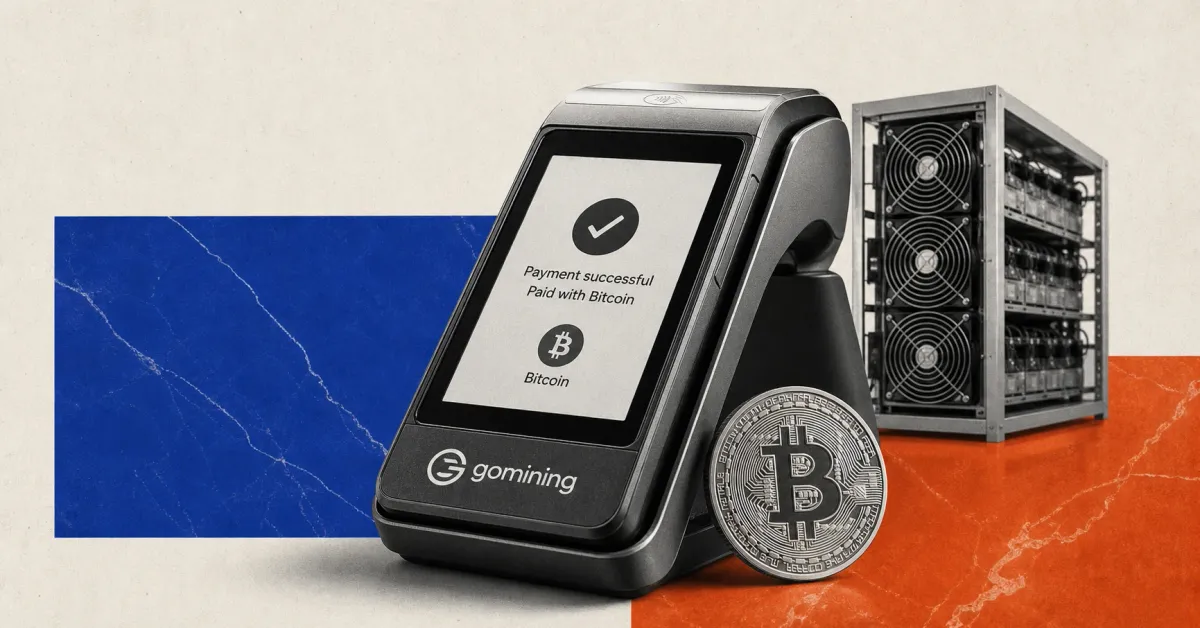
GoMining launched the GoBTC Pay Gen1 SDK and API, opening a Bitcoin layer-1 payment system to merchants and wallets with a 0.2% merchant fee, instant payment confirmation and a target of roughly 12-hour average on-chain settlement.
The release turns GoBTC Pay from a closed demonstration into developer infrastructure. GoMining said the package includes merchant onboarding, payment management, a web dashboard, online checkout integrations, public documentation and an open API for wallet providers and institutional partners.
Bitcoin traded near $68,270 late June 20, up about 2.7% over 24 hours, with a market value around $1.36 trillion and daily volume near $37.8 billion. The CoinGecko Bitcoin page showed the asset recovering from its early-June lows but still below the roughly $77,500 level seen one month earlier.
GoMining CEO Mark Zalan said, “Satoshi didn’t create Bitcoin to sit idle in wallets. It was designed to move value between people.”
GoBTC Pay first went live for GoMining users at Consensus Miami in May. The June 19 Gen1 release is the next step, with an initial group of up to 10 merchants and ecosystem partners beginning integrations and thousands of additional applicants on a waiting list, according to the company.
The launch puts GoMining into direct competition with payment systems that make different technical compromises. Square uses Lightning for fast merchant payments, while GoBTC Pay is trying to combine instant confirmation with non-custodial ownership and later settlement on Bitcoin’s base layer.

Bitcoin
BTCGoBTC Pay Opens Its Merchant API
The Gen1 package is aimed at two sides of the checkout. Merchants receive tools to register, manage payments and connect online stores, while wallet developers can use the API to place GoBTC Pay inside products their customers already use.
That distribution model matters because a payment protocol without wallet and point-of-sale support remains mostly theoretical. GoMining is not asking every customer to use one closed app. Its original protocol announcement described an open rail that hardware, software and self-hosted wallets could integrate.
GoMining says the user side is non-custodial through a 2-of-3 multisignature structure. One key remains on the user’s device, GoMining holds a co-signing key and an independent regulated custodian holds the third. The company says it cannot move a user’s bitcoin by itself.
The merchant receives BTC rather than an automatic fiat conversion. That gives businesses direct exposure to bitcoin’s price, which may appeal to bitcoin-native operators but adds accounting and treasury risk for ordinary retailers. GoMining said fiat off-ramps are planned for merchants that want them, though it has not disclosed launch markets or providers.
The approach is distinct from the stablecoin and machine-payment systems now competing for merchant attention. Coinbase’s x402 protocol is built around internet-native payments, while GoBTC Pay is focused on ordinary Bitcoin holders paying businesses without wrapped assets or stablecoins.
GoMining has not named the first merchants or wallet providers. Until those integrations are public, the SDK launch proves product availability rather than meaningful transaction demand.
Mining Infrastructure Powers Settlement
GoBTC Pay gives a merchant an instant payment confirmation, but that should not be confused with final on-chain settlement. GoMining targets an average settlement window of about 12 hours through a private mempool built on the Stratum V2 mining protocol.
The company says its mining role is the differentiator. GoMining reported operating about 15 exahashes per second of Bitcoin mining capacity and said GoBTC Pay transactions can be prioritized for inclusion in blocks produced by its private pool.
That structure links payments to mining economics. GoMining charges the merchant 0.2% and says the fee is split evenly: 0.1% goes to the wallet provider that originated the payment and 0.1% goes to participating miners.
The wallet share is intended to create a distribution incentive. A wallet that integrates the protocol can earn revenue when its users spend, while miners receive a payment-related fee in addition to the normal block subsidy and transaction fees.
The design also creates dependencies that users will need to evaluate. Instant confirmation relies on GoMining’s payment and risk controls before the Bitcoin transaction becomes final, and the targeted 12-hour average depends on the private pool’s hashrate, block production and transaction-prioritization rules.
GoMining has not published enough live merchant data to measure failed payments, confirmation reversals, settlement variance or the effect of network congestion. Those operational figures will matter more than the headline target once real stores begin processing volume.
For consumers, the product keeps Bitcoin payments separate from card-linked crypto spending. MetaMask’s Mastercard rollout converts wallet balances into a familiar card-network purchase, while GoBTC Pay asks the merchant to accept native BTC and wait for base-layer settlement.
Square Sets the Bitcoin Checkout Benchmark
Square is the clearest mainstream comparison. Its Bitcoin merchant product uses Lightning for rapid payments, lets sellers receive bitcoin or U.S. dollars, and charges 0% processing fees through 2026 before a flat 1% fee is scheduled to begin in 2027.
Block also demonstrated NFC Bitcoin tap-to-pay and said Lightning provides near-instant settlement. That gives Square an advantage in existing point-of-sale distribution and checkout speed, while GoBTC Pay is betting that some users and merchants will prefer direct layer-1 settlement and no forced conversion.
The pricing comparison is therefore less simple than 0.2% versus 1%. Square is free during its current promotional period and has an established merchant network. GoBTC Pay’s lower stated long-term fee comes with a new integration process, a smaller launch group and a materially longer path to final settlement.
Tax treatment remains another adoption barrier in the United States. Spending appreciated bitcoin can create a taxable disposal for the customer, while the merchant must record the sale as business income and track the value of BTC received. Payment software can reduce checkout friction, but it cannot remove those reporting obligations.
Crypto payment competition is also expanding beyond human shoppers. Mastercard is building agent-payment tools for machines and stablecoins, showing that merchant rails are becoming a contest among Bitcoin, stablecoins, cards and autonomous software.
Market sentiment remained in Extreme Fear as the launch reached developers. Alternative.me’s Crypto Fear and Greed Index stood at 23 on June 20.
Fear & Greed Index
June 20, 2026The next evidence will come from named merchant integrations, wallet partners and live transaction data. GoMining still needs to show how often payments reach its 12-hour settlement target, whether merchants retain BTC or use planned off-ramps, and whether a 0.2% incentive is enough to pull developers toward a new rail when Square and Lightning are already available.
Stay up to date
Get the latest crypto insights delivered to your inbox
Primary sources and further reading
| Source | Title |
|---|---|
| | GoMining: Bitcoin Was Always Meant to Move |
| | GoMining: GoBTC Pay protocol launch |
| | GoBTC Pay |
| | Square Bitcoin merchant product |
| | Block: Bitcoin tap-to-pay and mining update |
| | CoinGecko: Bitcoin price |
| | Alternative.me: Crypto Fear and Greed Index |
Fact-checked by: Daily Crypto Briefs Fact-Check Desk
Related Articles


Frequently Asked Questions
What did GoMining launch for GoBTC Pay?
GoMining launched the Gen1 software development kit and API, including merchant onboarding, payment management, a web dashboard, online integrations, public developer documentation and access for wallet and institutional partners.
How much does GoBTC Pay charge merchants?
GoMining says merchants pay a 0.2% transaction fee. Half goes to the connected wallet provider and half goes to miners in GoMining's pool.
Does GoBTC Pay use the Lightning Network?
No. GoMining says GoBTC Pay settles directly on Bitcoin layer 1 through a private mempool based on Stratum V2, while giving merchants an instant payment confirmation before final settlement.
Is a GoBTC Pay transaction settled instantly on-chain?
No. The merchant receives an instant payment confirmation, but GoMining is targeting an average on-chain settlement window of about 12 hours.
How does GoBTC Pay compare with Square Bitcoin?
GoBTC Pay emphasizes layer-1 settlement, non-custody and a 0.2% merchant fee. Square uses Lightning for fast payments, is fee-free through 2026 and says it will charge 1% afterward.
Which merchants support GoBTC Pay?
GoMining said an initial group of up to 10 merchants and ecosystem partners will integrate the system, but it had not publicly named them when this article was published.