 Daily Crypto Briefs
ST. PAUL, Minn., Aug. 1, 2026
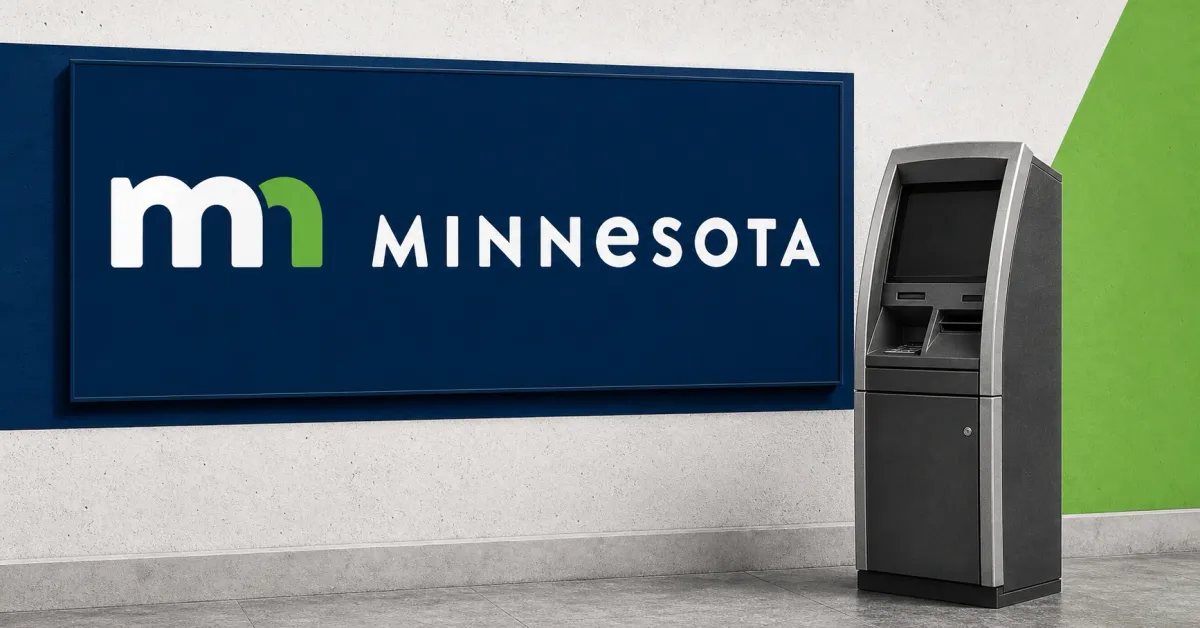
Minnesota’s statewide ban on crypto ATMs took effect Saturday, stopping virtual-currency kiosks from operating or being made available for use, after the state recorded 134 kiosk-scam complaints and nearly $1 million in reported losses from 2023 through 2025.
The law is a direct restriction on the physical machines that let users exchange cash and digital assets. It does not ban Minnesotans from owning cryptocurrency or using regulated online services, but it removes a cash-to-crypto route that state officials said scammers repeatedly used to rush victims into irreversible transfers.
The immediate scoreboard is consumer harm rather than a token move. The Minnesota Department of Commerce said 70 kiosk-scam cases in 2025 accounted for more than $540,000 in reported losses, or nearly $6,800 per transaction on average. Nationally, the FBI’s Internet Crime Complaint Center logged more than 13,400 crypto-kiosk complaints and more than $388 million in losses during 2025, with people over 50 reporting more than $302 million of that total.
Bitcoin traded near $64,044 on Aug. 1 after a volatile month, according to CoinDesk price data. That market metric does not measure the Minnesota policy’s effect, which targets a retail payment channel rather than Bitcoin’s network or its trading venues.
The state law is unambiguous: a person is prohibited from installing, operating, maintaining or making a virtual-currency kiosk available for use beginning Aug. 1, according to the enacted Minnesota Session Law 2026, Chapter 65. Minnesota Commerce Commissioner Grace Arnold said in the department’s May announcement that kiosks allow money to “disappear almost instantly,” a feature criminals exploit in urgent impersonation and family-emergency scams.
Minnesota’s crypto ATM ban starts Aug. 1
The ban reaches more than machines marketed as Bitcoin ATMs. The statute defines a virtual-currency kiosk as an electronic terminal, or a person acting for its operator, that facilitates the exchange of virtual currency for money, bank credit or other virtual currency.
That definition focuses on the transaction function, not a particular coin or brand. A gas-station terminal that takes cash and routes crypto to a wallet can fall within the rule even if it supports assets beyond bitcoin.
Minnesota previously took a narrower approach. Its 2024 framework required licensed kiosk operators to provide disclosures, limited new customers to $2,000 in daily transactions and required refunds in certain fraud cases. Those guardrails are now repealed or displaced by the 2026 prohibition.
The department said scammers had adapted by coaching victims through transactions, bypassing warnings and structuring deposits to avoid safeguards. That is consistent with the FBI’s 2025 state-by-state kiosk data, which describes criminals giving victims step-by-step instructions to withdraw cash, locate a kiosk and send funds.
The policy is aimed at a particular fraud conduit, not a finding that every crypto transaction is illicit. Minnesota’s own consumer guidance says virtual-currency exchanges remain subject to money-transmission licensing, while the physical kiosk route is no longer available.

Bitcoin
BTCCrypto kiosk operators face a Dec. 31 removal deadline
The operating cutoff is today, but the statute gives operators until Dec. 31 to remove a kiosk from any location where it is visible or accessible to the public. That difference leaves a transition period in which a machine may still be physically present while it cannot lawfully be used.
Customer balances have a separate safeguard. An operator must transfer money or virtual currency held for a new or existing customer to the customer’s designated wallet within 30 days of a payout request, and must record the transfer on the applicable blockchain. The operator can avoid that payout obligation only if it continuously maintains another lawful way for customers to access, transfer, redeem or transact their balances.
That detail is important for someone who used a kiosk before the ban. A shutdown does not erase a customer’s claim to money or cryptocurrency the operator is holding, though the statute does not promise an instant payout and does not create a recovery route for funds already sent to a scammer.
The Minnesota Department of Commerce said it would work with operators to take machines offline by Aug. 1 and remove them from retail spaces by year-end. The department did not publish a statewide count of affected machines in its announcement, and it was not immediately clear how many operators will use an alternative access method instead of making individual payouts.
The move comes as fraud enforcement is becoming a wider crypto-policy theme. In Arizona, a court recently ordered $1.4 million in restitution in a crypto-fraud case, as Daily Crypto Briefs reported. That case is separate from kiosk regulation, but both show regulators concentrating on the routes through which victims are pressured into transfers.
Minnesota replaces its 2024 crypto kiosk guardrails
The policy shift is unusually stark. Minnesota’s 2024 law tried to contain risk through licensing, receipts, transaction limits and fraud refunds for some new users. The new law removes the kiosk market itself while leaving licensed online virtual-currency businesses outside the physical-machine prohibition.
State officials tied the decision to the local complaint record and to tactics that exploit urgency. Romance, “grandparent” emergency and government-impersonation schemes can put a victim in a retail location before a bank, relative or compliance team can interrupt the transfer.
The FBI’s 2025 data sharpen that context: more than half of nationwide crypto-kiosk complaints involved people over 50. The federal figures are reports, not a count of every fraud loss, but they help explain why Minnesota chose a ban after concluding that lighter safeguards could be bypassed.
The state action does not change custody rules on crypto exchanges or restrict a Minnesotan from transferring assets through a wallet. It narrows the physical cash on-ramp, which may reduce the convenience sought by some legitimate users while removing an urgent-payment tool used in scams.
Crypto sentiment remained cautious as the rule began. Alternative.me’s Crypto Fear and Greed Index read 27, or Fear, on Aug. 1.
Fear & Greed Index
Aug. 1, 2026The next practical checkpoint is Dec. 31, when public-facing machines must be removed. Before then, the facts to watch are whether Commerce publishes enforcement guidance, how operators provide access to any remaining customer balances and whether other states follow Minnesota’s move from transaction limits to a full kiosk prohibition.
Stay up to date
Get the latest crypto insights delivered to your inbox
Primary sources and further reading
| Source | Title |
|---|---|
| | Minnesota Session Law 2026, Chapter 65 |
| | Minnesota Department of Commerce: kiosk ban announcement |
| | FBI IC3: 2025 cryptocurrency kiosk complaint data |
| | CoinDesk: Bitcoin price |
| | Alternative.me: Crypto Fear and Greed Index |
Fact-checked by: Daily Crypto Briefs Fact-Check Desk
Related Articles

Frequently Asked Questions
Are crypto ATMs banned in Minnesota?
Yes. Beginning Aug. 1, 2026, Minnesota law prohibits installing, operating, maintaining or making virtual currency kiosks available for use.
When must Minnesota crypto kiosks be removed?
Operators must remove kiosks from locations where they are visible or accessible to the public by Dec. 31, 2026. The operating ban starts Aug. 1.
Can Minnesota customers still access money or crypto held by a kiosk operator?
Yes. The statute requires a payout of money or virtual currency held for a customer within 30 days of a request, unless the operator continuously provides another lawful way to access, transfer, redeem or transact the balance.
Why did Minnesota ban cryptocurrency kiosks?
The Minnesota Department of Commerce said it recorded 134 kiosk-scam complaints with nearly $1 million in reported losses from 2023 through 2025, and said the machines were frequently used in high-pressure fraud schemes.