 Daily Crypto Briefs




RIO DE JANEIRO, September 30, 2026
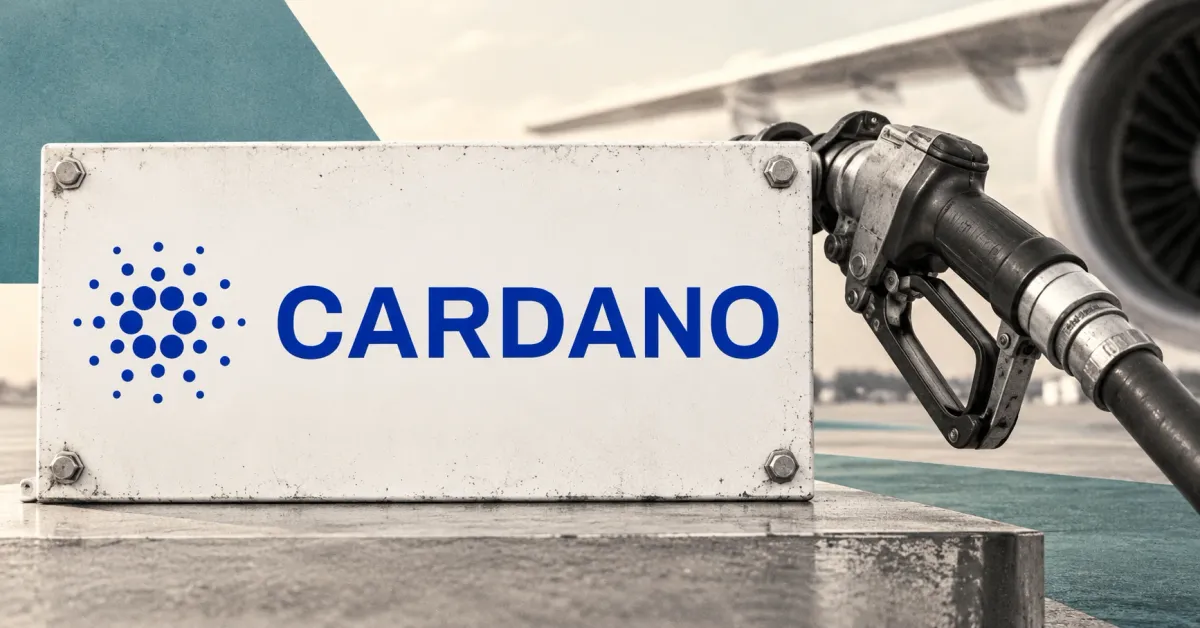
Brazil’s state-controlled oil producer Petrobras is testing Cardano in two renewable-fuel traceability applications announced September 30, extending the blockchain’s industrial use cases as ADA trades near a quarter of a dollar.
The Cardano Foundation’s announcement says an ongoing research and development collaboration delivered applications for sustainable aviation fuel, or SAF, and Diesel R, Petrobras’ renewable-fuel brand. The work involves Petrobras and PUC-Rio, with the university’s Ledger Labs participating in the aviation project alongside the Foundation.
ADA finished September 29 at about $0.2444, down 1.17% that day, according to Investing.com’s historical table. It traded between roughly $0.2392 and $0.2545 during that session, compared with an August 30 closing price near $0.1930. Those figures provide market context, not evidence of a response to the announcement.
The Foundation said the projects address fragmented environmental claims and fuel lifecycle records. Its Latin America business development lead, Rafael Fraga, said public blockchain could provide a shared record that helps industries establish where environmental information originated and who can rely on it.
The September announcement follows an April 2025 research agreement with PUC-Rio that initially targeted renewable fuels with industry partners including Petrobras. It shifts the public account from a research agenda to two delivered applications, although commercial operating scale remains undisclosed.

Cardano
ADASampled daily USD closing prices from Investing.com. The chart ends before the announcement and does not measure its effect on ADA.
Petrobras uses Cardano to track aviation fuel claims
The aviation application addresses a different asset from the fuel itself: the environmental benefit associated with a certified batch. Under the project’s Book-and-Claim model, that benefit can be assigned to an airline, company or passenger even when the physical fuel is produced or consumed elsewhere.
Cardano supplies the record linking the certificate to its eventual claim. The intended result is a traceable history of origin and allocation, with evidence that an attribute has already been used. That separation lets the project follow a sustainability claim without requiring the claimant to receive the original fuel batch.
In its Petrobras SAF case study, the Foundation describes standardized CS-SAF tokens carrying metadata aligned with the Carbon Offsetting and Reduction Scheme for International Aviation, known as CORSIA. Certificates are checked before tokenization; attributes can then be assigned and permanently retired after a claim.
The announcement also describes a passenger interface. Travelers enter departure and destination airports, calculate the corresponding CS-SAF amount and receive a certificate showing route, distance and allocation. The resulting record links their claim to the original SAF certificate, according to the Foundation.
Retirement is the critical bookkeeping step. A transferred token can still move between participants; a retired attribute is intended to stop being available for another claim. That design addresses duplicate use within the recorded lifecycle, while the original certificate and emissions calculations still need verification.
The project therefore combines a conventional certification process with a public ledger. A digital record can make the history easier to inspect, but it does not independently establish that every underlying measurement is correct. The announcement provides no quantified estimate of fraud prevented or emissions reduced.
Nor does retirement on one ledger automatically rule out a claim appearing in a separate registry. The announcement does not describe how competing records outside the application would be reconciled. The verifiable token history and the wider integrity of environmental reporting are related questions, but proving one does not settle the other.
Diesel R project connects fuel lifecycle records
The second project applies Cardano to Diesel R, using digital checkpoints across production, transportation and use. The Foundation describes a proposed model that connects information from those stages into a continuous fuel history.
Its stated focus includes Scope 3 greenhouse-gas reporting, which concerns indirect emissions across a company’s wider value chain. Those records can involve suppliers and logistics providers, leaving information distributed across organizations rather than in one database.
Connecting checkpoints could make discrepancies easier to investigate and give auditors a clearer sequence of events. That is an implication of the proposed design, not a disclosed result from a completed independent assessment. Petrobras and the Foundation did not publish an audit-performance comparison in the announcement.
For an operating fuel business, the relevant test is whether information from each organization arrives consistently and can be checked against the physical supply chain. The Foundation’s description sets out the intended continuity of the records. It does not disclose how many suppliers have joined, who verifies each checkpoint or how disputed entries are corrected.
The distinction between a research application and an operating commercial network remains important. Earlier Volvo supplier-token exploration also showed how industrial companies can investigate blockchain without announcing a production rollout. Here, the Foundation explicitly names Cardano, but leaves deployment volume and participating operators unspecified.
A closer network comparison is the Foundation’s August 31 Blockforce announcement. That supply-chain platform reported more than 500,000 records anchored in production, pairing a private network with public verification. No equivalent transaction or record count was disclosed for the Petrobras applications.
That absence prevents a direct scale comparison. Two applications establish a broader range of uses, but the number alone says little about how often they operate or how much fuel they cover.
Cardano adoption leaves rollout and ADA demand open
The announcements identify an enterprise use for Cardano beyond trading and decentralized finance. They do not quantify the resulting demand for ADA, transaction fees, spending by Petrobras or revenue associated with either application.
The development also differs from Cardano’s July protocol upgrade, which changed network capabilities. A fuel-record application uses blockchain infrastructure; it does not itself enact a protocol change or require ordinary ADA holders to migrate tokens.
Regulatory acceptance is another boundary. ICAO’s CORSIA framework sets requirements for sustainability certification, reporting and verification of eligible fuels. CORSIA-aligned metadata in an application does not by itself establish that its passenger certificates qualify for an airline’s regulatory reporting.
The Foundation’s announcement does not report a new ICAO approval. It also gives no participating airline count, fuel volume, commercial launch deadline or independently measured emissions savings. Those disclosures would make the operating impact easier to assess.
Fear & Greed Index
September 30, 2026Alternative.me’s index read 71, or Greed, on September 30. It measures Bitcoin market sentiment and is not an ADA-specific adoption indicator.
The next substantive milestones are evidence of routine use, independently verified fuel data and acceptance by the organizations relying on the claims. Until those details emerge, the confirmed development is two Petrobras R&D applications and a clearer description of how Cardano records their environmental information.
Stay up to date
Get the latest crypto insights delivered to your inbox
Primary sources and further reading
| Source | Title |
|---|---|
| | Cardano Foundation: September 30 Petrobras fuel-traceability announcement |
| | Cardano Foundation: Petrobras SAF case study |
| | Cardano Foundation: April 2025 PUC-Rio research collaboration |
| | Cardano Foundation: August 2026 Blockforce deployment |
| | ICAO: CORSIA eligible fuels and certification |
| | Investing.com: Cardano historical market data |
| | Alternative.me: Crypto Fear and Greed Index |
Fact-checked by: Daily Crypto Briefs Fact-Check Desk
Related Articles




Frequently Asked Questions
What is Petrobras testing on Cardano?
Two research applications: one tracks environmental attributes of sustainable aviation fuel, while another connects production, transportation and use records for Petrobras' Diesel R renewable fuel.
What does the CS-SAF token represent?
It represents a certified environmental attribute associated with sustainable aviation fuel. The project records its allocation and retirement, rather than using it as a replacement for ADA or as ownership of physical jet fuel.
How does Cardano help prevent duplicate fuel claims?
The SAF system tracks the original certificate, token allocation and permanent retirement. Retirement is designed to stop reuse of the same attribute within the system; verification of the original fuel data remains necessary.
Has Petrobras announced a commercial Cardano rollout?
The September 30 announcement says two R&D applications have been delivered. It does not disclose a commercial rollout date, participating airline count, fuel volume or measured emissions reductions.
Does the Petrobras announcement prove rising ADA demand?
No. It identifies Cardano as the public blockchain used for the projects but gives no transaction count, fee expenditure, ADA purchases or token-demand estimate.