 Daily Crypto Briefs





WASHINGTON, October 3, 2026
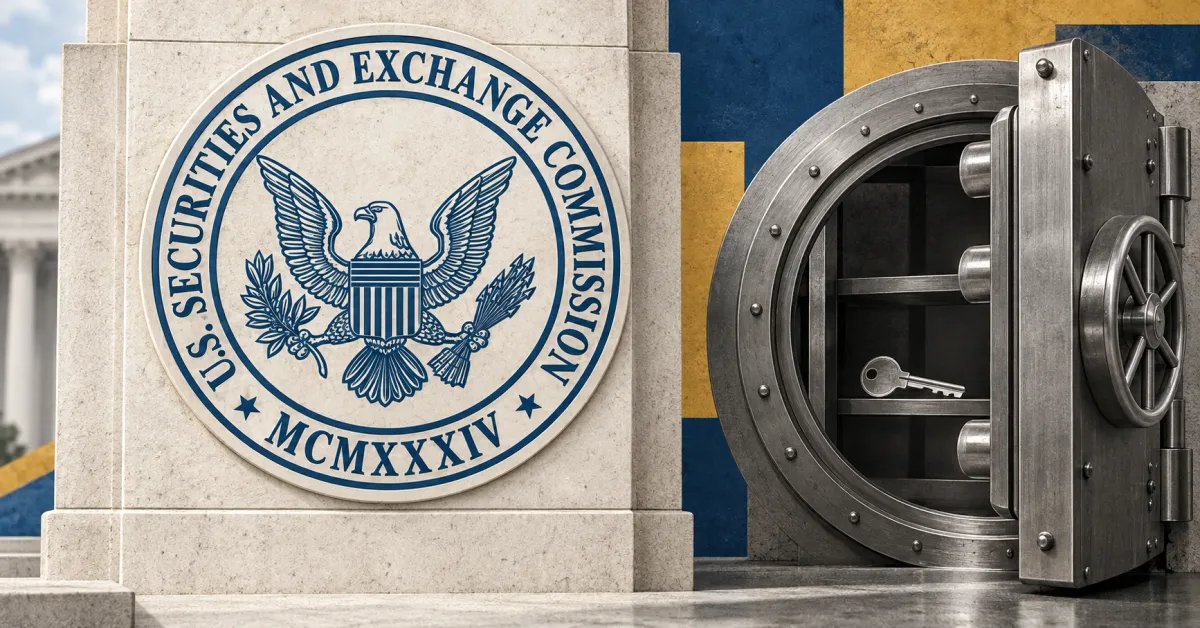
The SEC approved Cboe BZX listings for 3x Bitcoin and Ether ETFs on October 2 as Bitcoin traded near $84,500, extending the regulatory path for leveraged crypto products without establishing a launch date.
The decision covers six VS Trust funds sponsored by Volatility Shares. Alongside the two crypto products, it permits listings tied to gold, silver, crude oil and natural gas.
Bitcoin closed October 2 at $84,515.50, down 0.43% for the session, with a $83,894.30 to $87,128.60 daily range, according to Investing.com’s historical table. That was about 4.0% above September 3, providing market context rather than evidence that the approval moved prices.
The SEC’s official docket records an October 2 order granting approval under release 34-106577. Its earlier notice was dated August 14, separating the original proposal from the decision now attracting attention.
The regulatory step concerns exchange listing permission. It does not make a triple-leveraged product equivalent to holding Bitcoin or Ether, or establish that shares have begun trading.

Bitcoin
BTCSource: Investing.com, sampled daily closes. This shows Bitcoin’s price, not a backtest of either proposed leveraged fund.
SEC listing approval leaves BITH and ETHK launch open
The approval applies to file SR-CboeBZX-2026-065 and the named six-fund group. It is a specific exchange-rule decision, not a blanket authorization for any issuer to list a triple-leveraged crypto product.
The August 17 preliminary prospectus identifies BITH for the 3x Bitcoin ETF and ETHK for the 3x Ether ETF. It says securities cannot be sold until registration becomes effective.
As of October 3 at 22:13 UTC, the reviewed sources did not confirm a first trading date. Proposed tickers identify the products; they do not independently prove that a broker can execute an order.
That distinction also appeared in the Bitwise NEAR ETF’s listing and registration milestones. An exchange decision, effective registration and an actual opening trade are separate evidence points.
Cboe’s August filing explains why a specific rule change was needed: the products failed a generic listing standard that prohibits leveraged returns. The filing sought permission through a separate exchange-rule application.
The proposed funds are commodity pools, rather than investment companies registered under the Investment Company Act of 1940. That structure is another reason the familiar ETF label does not describe every legal protection attached to the investment.
For the crypto pair, the filing describes futures and other linked instruments used to obtain exposure. A share purchase therefore should not be counted automatically as an equivalent purchase of coins for a spot ETF’s custody wallet.
The preliminary prospectus lists a 1.85% annual management fee. Its estimated total fees and expenses are 2.48% for Bitcoin and 3.28% for Ether. Those draft figures need confirmation against final offering documents.
Management fees and total expenses describe different cost measures. Comparing the former with another fund’s all-in expense figure would obscure part of the cost rather than establish which product is cheaper.
Daily 3x Bitcoin leverage can diverge after two sessions
The funds seek triple daily results before fees and expenses, according to the exchange filing. Their crypto benchmarks use short-term futures portfolios, not the spot price alone. The time horizon is central: three times one day’s benchmark move is not a promise to triple its monthly gain.
The SEC’s leveraged-ETF investor bulletin says daily resets can cause performance over longer periods to diverge substantially from the stated multiple. Volatile trading can amplify that difference.
A simplified calculation shows the mechanism. Suppose an asset starts at $100, rises 10% to $110, then falls 9.09% back to $100. It ends approximately unchanged.
An idealized 3x daily fund starting at $100 would rise 30% to $130, then fall about 27.27% to $94.55. It would lose roughly 5.45% even though the underlying asset returned to its starting point.
This is arithmetic, not observed performance of BITH or ETHK. It assumes perfect daily tracking and excludes fees, financing, transaction costs and market-price differences.
An additional distinction follows from the futures benchmark: even a perfectly achieved daily objective would reference that portfolio’s move. Multiplying a Bitcoin spot-price chart by three would therefore skip both the chosen benchmark and the compounding calculation.
Daily compounding is not automatically a loss in every market. In a second simplified example, two consecutive 10% asset gains produce a 21% total gain, while two 30% leveraged gains produce 69%, rather than 63%.
Both examples demonstrate the same constraint: the sequence of daily returns affects the result. A starting price and an ending price alone cannot reconstruct a daily leveraged fund’s performance.
The SEC bulletin also warns that a leveraged product can miss its daily objective and that derivatives introduce additional risks. A quoted target should therefore be read as an investment objective rather than a guaranteed payoff.
The distribution channel differs from Robinhood’s recent U.S. perpetual-futures rollout, which offers direct leveraged contracts. A familiar brokerage share does not remove the underlying exposure problem.
3x ETF approval keeps broker obligations in focus
The October 2 approval order says Regulation Best Interest applies when broker-dealers recommend the products to retail customers. It also identifies investment advisers’ fiduciary obligations and the exchange’s customer due-diligence requirements.
Listing permission therefore does not replace the assessment of risks, rewards and costs required for a recommendation. The order’s investor-protection discussion accompanies the approval, rather than leaving those obligations solely to older general guidance.
FINRA’s Regulatory Notice 09-31 addresses firms selling leveraged and inverse ETFs, including suitability, communications, supervision and training. It says products that reset daily are typically unsuitable for retail investors planning to hold longer than one trading session, particularly in volatile markets.
That guidance predates this approval. It provides context for how intermediaries assess complex products, without proving that any particular broker has accepted these funds or announced customer eligibility.
FINRA emphasizes understanding the customer’s financial position, trading experience and investment objectives. Its communications guidance also requires explanations of the effect of holding periods and volatility, rather than suggesting that a daily objective extends unchanged over time.
The notice also discusses broker supervision and employee training for these instruments. A listing decision consequently answers a different question from whether an intermediary considers a particular recommendation suitable for a customer’s circumstances.
Our existing crypto-futures explanation covers how leverage magnifies ordinary price moves. Here, the additional question is how a daily reset changes exposure between sessions.
Broader sentiment remained positive: Alternative.me’s Bitcoin-focused Fear and Greed Index read 67, or Greed, on October 3, compared with 72 the previous day. That is a sentiment reading, not demand or trading-volume evidence for the new funds.
Fear & Greed Index
October 3, 2026The next verifiable milestones are effective registration, final offering terms and an exchange or sponsor launch announcement. Until those are established, the confirmed development is listing approval, while first trading, realized spreads and investor demand remain unresolved.
Stay up to date
Get the latest crypto insights delivered to your inbox
Primary sources and further reading
| Source | Title |
|---|---|
| | SEC: October 2 order granting listing approval |
| | SEC: SR-CboeBZX-2026-065 docket and October 2 approval |
| | SEC: August 14 Cboe filing describing the six funds |
| | VS Trust: August 17 preliminary Form S-1 |
| | SEC Investor.gov: leveraged and inverse ETF bulletin |
| | FINRA: Regulatory Notice 09-31 |
Fact-checked by: Daily Crypto Briefs Fact-Check Desk
Related Articles




Frequently Asked Questions
What did the SEC approve for 3x Bitcoin and Ether ETFs?
An October 2 order approves Cboe BZX's rule change to list and trade the two crypto funds alongside four commodity funds.
What are the proposed 3x Bitcoin and Ether ETF tickers?
The August 17 preliminary prospectus identifies BITH for Bitcoin and ETHK for Ether; final launch terms should be checked.
Are BITH and ETHK already trading?
A first trading date was not confirmed in the sources reviewed as of October 3 at 22:13 UTC. Listing approval alone does not establish a launch.
Does a 3x Bitcoin ETF triple Bitcoin's monthly return?
No. Daily leverage compounds from one session to the next, so a multi-day result can differ substantially from three times the asset's overall move.
Do these funds hold Bitcoin and Ether directly?
The preliminary filing describes linked financial instruments rather than direct holdings of physical Bitcoin or Ether.