 Daily Crypto Briefs

WASHINGTON, June 13, 2026
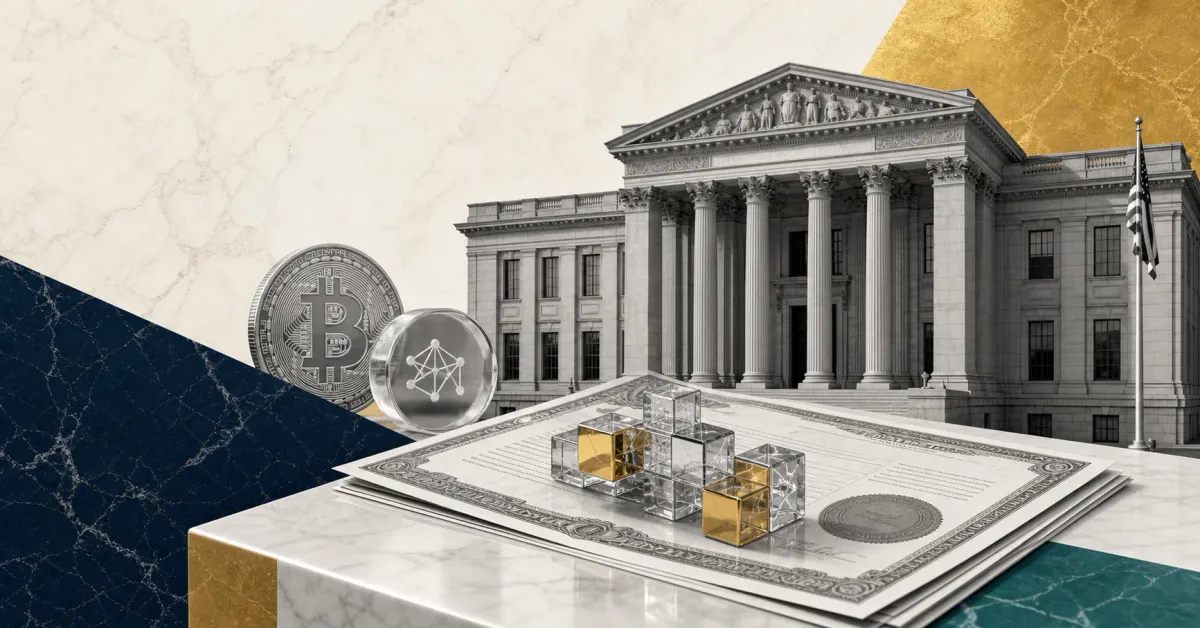
The Securities and Exchange Commission proposed scrapping two 2005 equity-market rules that have become a flashpoint for tokenized-stock trading, opening a 60-day comment window as bitcoin traded near $63,900 and tokenized stocks held about $1.83 billion in distributed value.
The June 11 proposal targets Regulation NMS Rule 611, the trade-through rule for national market system stocks, and Rule 610(e), which restricts locked and crossed quotations. The change is not final, but it puts a traditional U.S. stock-market rule directly inside the crypto market-structure debate.
Market data gave the proposal an immediate crypto backdrop. RWA.xyz showed tokenized stocks with about $1.83 billion in distributed value, up 23.98% over 30 days, along with about $4.42 billion in monthly transfer volume, 96,715 monthly active addresses and 362,770 holders. CoinGecko showed bitcoin near $63,907, down from about $81,052 on May 15, while the Crypto Fear and Greed Index stood at 13, in extreme fear.
SEC Chairman Paul Atkins said the proposal is intended to “simplify market structure and reduce costs” while allowing competition and innovation to shape equity markets.
The proposal follows a burst of tokenized-equity launches and filings. Daily Crypto Briefs recently covered Binance putting Nvidia, Tesla and Circle stocks onchain for eligible non-U.S. users, while earlier coverage tracked tokenized stocks crossing $1.5 billion in market value. The SEC proposal is different because it goes to the rulebook behind U.S. equity execution, not just a new offshore wrapper.
The practical effect is still uncertain. A rescission would not automatically approve DeFi trading of U.S. stocks, but it could remove one rule that many onchain-market designs struggle to satisfy.

Bitcoin
BTCSEC Rule 611 Proposal Targets Trade-Throughs
The SEC rulemaking page lists File Number S7-2026-20 and Release No. 34-105655. It says the commission is proposing to rescind Rules 611 and 610(e), remove related defined terms in Rule 600 and make conforming changes to other provisions.
Rule 611 blocks trade-throughs in NMS stocks. In plain terms, a trading center generally cannot execute a stock order at a worse price when another protected quote is available elsewhere. Rule 610(e) deals with quote displays that lock or cross other protected quotations.
The SEC’s fact sheet says the rules were adopted in 2005 and that U.S. equity markets are now highly competitive, interconnected and automated. The agency said the old framework has contributed to higher costs, more complexity, limited order-handling choice and fragmentation.
The proposed rule also says the combined rescission would carry about $40.9 million in one-time implementation costs, while the present value of total monetized benefits could range from about $393.9 million to $666.8 million depending on the discount rate and assumptions. Those figures frame the proposal as a Wall Street cost and routing issue even before the crypto angle is considered.
Tokenized Stocks Angle Runs Through AMMs
The tokenized-stock hook is not only coming from crypto commentators. The SEC’s 267-page proposing release says distributed ledger technology allows issuers to tokenize a security in crypto-asset form and that smart contract applications underlying automated market makers have introduced new methods of trading securities.
That language matters because an automated market maker does not work like a conventional stock exchange order book. A DeFi pool executes against its own formula-driven price, with slippage and block timing, rather than routing each trade across every protected quote in the national market system.
That mismatch is why Rule 611 has become a useful search phrase for tokenized-stock traders. If a tokenized NMS stock traded inside a DeFi pool, the pool would need a way to avoid executing against an inferior price when a protected quote existed elsewhere. That is difficult to square with permissionless liquidity pools, especially if trades settle through smart contracts rather than broker-routed exchange systems.
The proposal does not create a tokenized-stock safe harbor. It does not answer whether a platform must register as an exchange or alternative trading system, who clears the trade, how shareholder rights pass through, whether a token holder owns the share or a claim, or how off-hours liquidity should be supervised.
Still, the SEC’s willingness to revisit the 2005 framework gives tokenized equity projects a concrete rulemaking record to engage. That is a stronger catalyst than another product launch because it lets issuers, venues, broker-dealers and DeFi infrastructure teams argue from the same federal docket.
Comment Clock Leaves Big Questions Open
The next formal deadline is not a calendar date yet. The SEC said comments will remain open for 60 days after the proposing release is published in the Federal Register, and submissions should refer to File Number S7-2026-20.
For crypto markets, the comment record may be as important as the proposal itself. If tokenized-stock firms want U.S. access, they will need to explain how automated execution, custody, transfer restrictions, disclosures, market surveillance and best execution would work without recreating the same centralized routing system that made Rule 611 hard for DeFi to satisfy.
The subject also connects with the SEC’s broader digital-asset agenda. The agency’s draft strategic plan put tokenized offerings, onchain financial infrastructure, custody, trading and staking inside its 2026 to 2030 roadmap, a shift Daily Crypto Briefs covered in the SEC digital assets plan.
Traditional exchanges are already moving in the same direction. NYSE has outlined a tokenized securities platform built around 24/7 trading and instant settlement, which shows why market-structure rules are becoming part of the crypto story rather than a separate equities issue.
The market mood remains weak.
Fear & Greed Index
June 13, 2026Low sentiment does not stop rulemaking, but it can affect how quickly new products gather liquidity. Tokenized stocks are growing while bitcoin remains under pressure, which makes the SEC proposal less about near-term risk appetite and more about whether U.S. equity markets can adapt to onchain trading without stripping away investor protections.
What remains unknown is whether the SEC will finalize the rescission, change the proposal after comments or pair it with other execution-quality rules. Until then, Rule 611 is a live regulatory keyword for tokenized stocks, DeFi market makers and any U.S. venue trying to put equities onchain.
Stay up to date
Get the latest crypto insights delivered to your inbox
Primary sources and further reading
| Source | Title |
|---|---|
| | SEC: Rulemaking page for S7-2026-20 |
| | SEC: Press release 2026-54 |
| | SEC: Proposed amendments to Regulation NMS |
| | SEC: Regulation NMS reforms fact sheet |
| | RWA.xyz: Tokenized stocks dashboard |
| | CoinGecko: Bitcoin price |
| | Alternative.me: Crypto Fear and Greed Index |
Fact-checked by: Daily Crypto Briefs Fact-Check Desk
Related Articles

Frequently Asked Questions
What is SEC Rule 611?
Rule 611 of Regulation NMS is the trade-through rule for national market system stocks. It generally prevents a trading center from executing a stock order at a worse price than a protected quote available elsewhere.
Why does Rule 611 matter for tokenized stocks?
Crypto market participants say DeFi-style automated market makers have difficulty matching a rule built around centralized venues, protected quotations and cross-market routing. The SEC proposal could loosen that constraint if it becomes final.
Does the SEC proposal legalize tokenized U.S. stocks in DeFi?
No. The proposal is not final and does not resolve securities registration, broker-dealer, exchange or ATS status, custody, clearing, settlement, investor-rights, KYC or cross-border distribution issues.
When are comments due on the SEC Rule 611 proposal?
The SEC said comments are due 60 days after the proposing release is published in the Federal Register. The exact calendar deadline depends on that publication date.