 Daily Crypto Briefs




RIYADH, Saudi Arabia, August 7, 2026
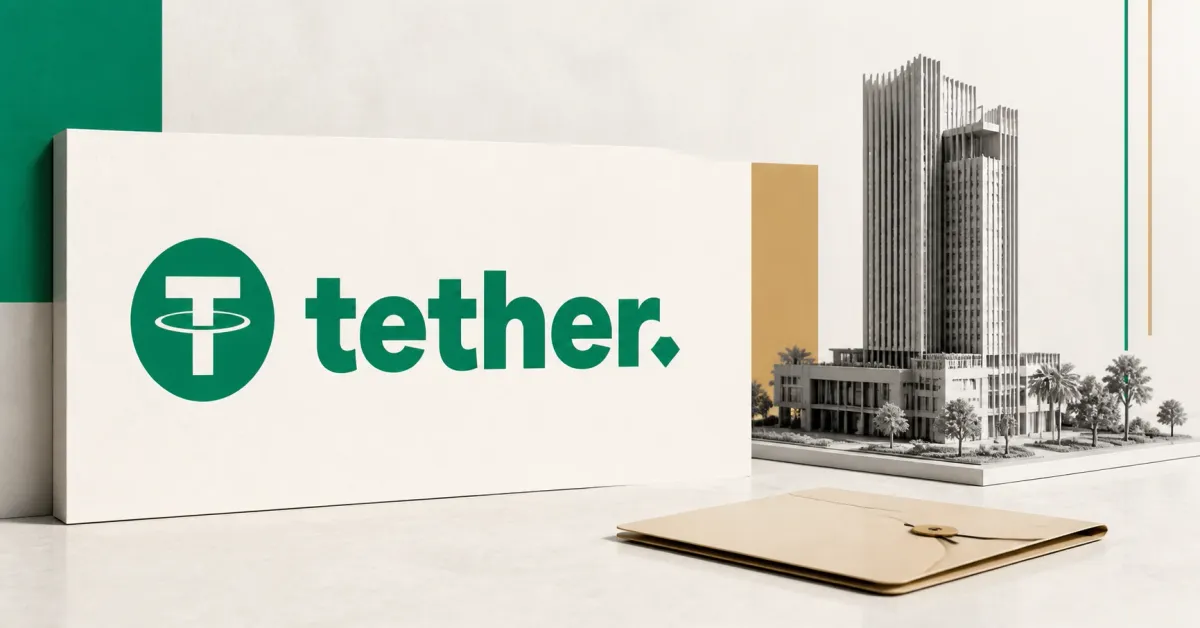
Tether said it will deploy its Hadron asset-tokenization platform with First Advanced Data for Artificial Intelligence LLC and BKN301 to support tokenization of institutional-grade Saudi real estate, expanding the stablecoin issuer’s push into real-world assets while disclosing no properties, issuance value or launch date.
Under the Aug. 6 announcement, First Data is to act as commercial lead, issuer and primary-market operator. BKN301 is to provide integration, banking connectivity, front-end and operational support, while Hadron supplies the issuance and lifecycle technology.
The structure describes infrastructure rather than a completed securities offering. Tether did not name an asset owner or building, state how much real estate could be tokenized, identify eligible investors, or say whether any regulator has approved a product. Those details will determine whether the collaboration becomes a usable market rather than a technology deployment.
Tether’s balance sheet gives the announcement unusual recognition value. Its Q2 attestation reported about $184.6 billion of USD₮ issued at June 30, $1.50 billion in quarterly net operating profit and a $4.11 billion reserve surplus. Tether’s current finance page lists a USD₮ market capitalization of roughly $183.5 billion and a Tether Gold market capitalization of about $3.06 billion, figures that are separate from any Saudi property program.

USD₮
USDTTether said Hadron is built to tokenize assets including stocks, bonds, commodities, funds and reward points. In this case, the companies are targeting property, an asset class that can be difficult to split, transfer and administer across investors using conventional ownership records.
Tether Hadron targets Saudi institutional real estate
Tether described the Saudi arrangement as a strategic collaboration, not a partnership with a published investment vehicle. First Data will use Hadron for issuance, management and lifecycle administration of tokenized assets, according to the company, and will be responsible for a primary market, where investors acquire tokens when they are issued rather than trade them secondhand.
That wording leaves several central questions open. The announcement does not specify the legal claim a token holder would receive, the custodian for the property interests, transfer restrictions, redemption rights, secondary-market venues or the blockchain that would host the assets.
Hadron’s stated tools include KYC checks, reporting and capital-market management. Those functions may be necessary for a regulated property product, but Tether did not identify the precise Saudi licensing path or say that the platform’s use itself constitutes regulatory approval.
Tether chief executive Paolo Ardoino said the company sees real-world-asset tokenization as a way to make assets more liquid and accessible. That is an expression of the company’s objective, not evidence that the new program has already created liquidity or broadened access for investors.
First Data and BKN301 divide the issuance work
The split of responsibilities makes First Data the local-facing operator and BKN301 the integration provider. Tether said BKN301 will connect Hadron to banking, payments and compliance infrastructure, while First Data will lead commercial activity and operate the proposed primary market.
The participants did not disclose commercial terms, transaction revenue, ownership stakes, a project budget or assets under management. They also did not identify any bank, broker, property developer, fund manager or government agency joining the program.
That narrower fact pattern distinguishes the announcement from a tokenized-property sale. Readers looking for a new security or a retail investment product should not infer one from the platform collaboration alone. The relevant next disclosures would be the first asset, its legal documentation, jurisdictional permissions and investor eligibility.
Saudi Arabia’s Vision 2030 economic program provides the policy setting cited by Tether. The company said the work supports modernization goals and could later extend to energy, infrastructure finance and other real-world assets, but those sectors are future possibilities rather than announced issuances.
The news also sits alongside a broader shift toward on-chain financial infrastructure. Daily Crypto Briefs recently reported that tokenized RWA deposits reached $7.4 billion, though that measure covers a different type of on-chain product and does not measure this Saudi initiative.
Saudi tokenization plan still lacks an asset and launch date
The collaboration offers Tether a branded entry point into institutional real-estate tokenization without requiring it to claim that a property token is live. It also puts Hadron, rather than USD₮, at the center of a deal designed around issuance, administration and compliance.
Tether has previously used product-specific structures in the RWA market. Its Tether Gold Shariah certification concerned XAU₮, a token backed by physical gold, while the Saudi plan concerns a technology platform and prospective property issuances. The two disclosures should not be treated as the same asset model.
For now, the concrete numbers belong to Tether’s existing business, not the Saudi rollout. The company reported $187.75 billion in total assets and $183.64 billion in liabilities as of June 30. It also said it had cut secured lending by about $2.38 billion during the quarter. None of those figures establishes the size, collateralization or risk profile of a future property token.
The Crypto Fear & Greed Index stood at 29, or Fear, on Aug. 7. That is a broad bitcoin-market sentiment reading, not a measure of investor demand for tokenized Saudi property or of Hadron’s deployment progress.
Fear & Greed Index
Aug. 7, 2026The next item to watch is a product-level disclosure from the participants: a named asset, issuance terms, legal framework, launch timetable and regulatory status. Without those, the announcement is a significant infrastructure signal for a high-profile market, but not yet a completed tokenized-real-estate offering.
Stay up to date
Get the latest crypto insights delivered to your inbox
Primary sources and further reading
| Source | Title |
|---|---|
| | Tether: Hadron collaboration with First Data and BKN301 |
| | Saudi Vision 2030 |
| | Tether: Q2 2026 Financial Figures and Reserves Report announcement |
Fact-checked by: Daily Crypto Briefs Fact-Check Desk
Related Articles



Frequently Asked Questions
What is Tether doing with Saudi real estate?
Tether said its Hadron platform will provide the core technology for a proposed program to issue and manage tokenized institutional-grade real estate assets in Saudi Arabia with First Data and BKN301.
Which companies are involved in Tether's Saudi tokenization deal?
The announcement names Tether, First Advanced Data for Artificial Intelligence LLC, known as First Data, and BKN301. First Data is intended to lead the commercial and primary-market side, while BKN301 will provide integration and banking-connectivity support.
Has Tether announced a Saudi property token or launch date?
No. Tether's announcement did not identify a property, token, issuance size, launch date, investor eligibility or regulatory approval.
What does Hadron by Tether do?
Tether describes Hadron as an asset-tokenization platform with tools for issuance, lifecycle management, KYC compliance, reporting and capital-market administration.