 Daily Crypto Briefs





CASABLANCA, June 26, 2026
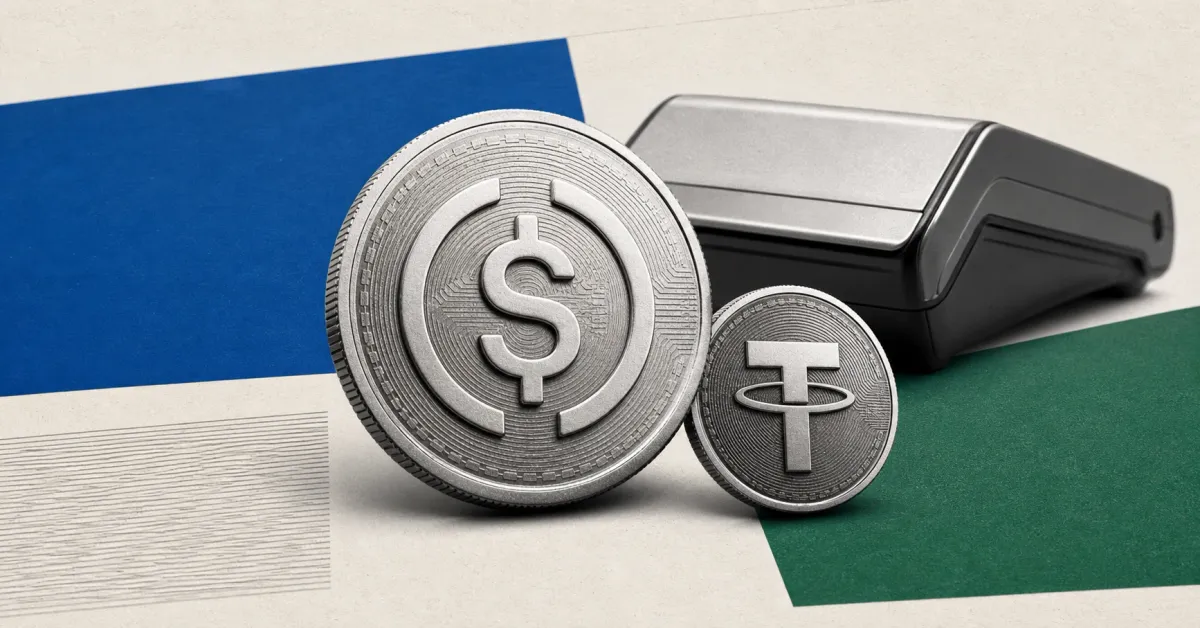
Tether’s USDT briefly overtook Ethereum by market capitalization during a sharp Ether selloff, putting the largest stablecoin above crypto’s main smart-contract network before ETH moved back ahead by less than $1 billion.
The move was a ranking shock rather than a protocol upgrade or issuer announcement. It showed how close a cash-like trading asset came to displacing Ethereum at No. 2 in crypto market value as investors kept cutting exposure to risk assets.
Market snapshot: CoinGecko’s Ethereum page showed ETH trading near $1,548.11, down 4.7% over 24 hours, with a market cap of about $186.86 billion and 24-hour volume of about $17.66 billion. CoinGecko’s Tether page showed USDT at about $0.9985, with a market cap of about $186.06 billion and 24-hour volume of about $72.29 billion.
Alternative.me put the Crypto Fear and Greed Index at 13, classified as Extreme Fear, after readings of 12 yesterday and 14 last week. That sentiment backdrop makes the ranking shift more than a leaderboard oddity: it reflects a market where liquidity preference is challenging network valuation.
Tether says on its transparency page that its tokens are pegged 1-to-1 with matching fiat currency and backed 100% by reserves, with circulation metrics typically refreshed daily. That reserve claim is central to USDT’s role as the main settlement asset across exchanges, even as traders continue to monitor issuer disclosures and redemption conditions.
The flip followed a broader risk-off stretch in which Ethereum has been hit by both price pressure and narrative pressure. Daily Crypto Briefs has tracked that pressure through the Ethereum Foundation staff cuts and through Base’s latest Coinbase layer-2 outage, two separate stories that kept Ethereum infrastructure in focus while ETH weakened.
The practical implication is not that a stablecoin is replacing Ethereum’s developer ecosystem. It is that a dollar token with massive exchange usage can become large enough to pressure the ranking of a programmable settlement network when ETH price falls hard enough.

Ethereum
ETHUSDT Briefly Took No. 2
CoinGecko’s Tether ecosystem feed carried the same market signal Friday, listing “Tether stablecoin flips Ether by market cap as ETH routs to $1.5K” among the latest Tether-related headlines. Its live coin pages later showed Ethereum back in second place, but the gap was narrow enough to keep the ranking in play.
That distinction matters because USDT is not supposed to rise like a volatile asset. Its value is designed to stay close to $1, so market-cap changes usually come from supply changes and peg stability rather than price appreciation.
Ethereum is different. ETH’s market cap is price-sensitive, and CoinGecko showed a 24-hour range from $1,517.21 to $1,637.27. A move of only a few percentage points can add or erase billions of dollars from Ethereum’s valuation.
USDT’s trading volume was also the more important liquidity number. CoinGecko showed Tether’s 24-hour volume above $72 billion, roughly four times Ethereum’s reported 24-hour volume on the same data provider. That lines up with USDT’s role as a quote asset, collateral unit and transfer rail across centralized exchanges.
Ether Selloff Narrows the Gap
Ether’s latest drop landed near the same psychological zone that prediction markets and trading dashboards have been watching all month. CoinGecko’s Ethereum page showed market questions around $1,500 and $1,400 levels, a sign that traders were actively pricing further downside rather than treating the move as a minor fluctuation.
The ranking pressure also comes after months of Ethereum-specific uncertainty. The market has already been processing debates over the Ethereum roadmap, layer-2 economics, foundation spending and whether ETH captures enough value from the activity it secures.
Those questions do not disappear because USDT briefly moved ahead. They become sharper because the comparison is simple: Ethereum has technology risk, fee-capture risk and price risk, while USDT has issuer, reserve, regulatory and redemption risk.
For a general crypto reader, the moment is easiest to understand as a stress test of market preference. When traders are willing to hold dollar tokens in size and sell ETH, the stablecoin balance sheet can look larger than the network asset it helps traders move in and out of.
Stablecoin Demand Becomes the Signal
USDT’s brief move above Ethereum also fits the wider stablecoin story. Daily Crypto Briefs has covered how banks, payment networks and exchanges are fighting over stablecoin rails because dollar tokens have become the cash layer of crypto markets, not a side product.
The ranking shift gives that fight a cleaner headline. If the largest stablecoin can challenge Ethereum’s market value during a drawdown, stablecoin regulation, reserve transparency and issuer concentration become market-structure issues rather than narrow compliance topics.
That does not make USDT risk-free. Tether’s own materials say circulation data are refreshed for transparency, while the market still depends on confidence that tokens can be redeemed and that reserves remain larger than liabilities.
Crypto sentiment remained deeply defensive Friday, with Alternative.me showing Extreme Fear at 13.
Fear & Greed Index
June 26, 2026The next watchpoints are whether ETH can hold the $1,500 area, whether USDT supply keeps expanding or contracts through redemptions, and whether market-data providers continue to show the No. 2 ranking flipping back and forth. Until those signals settle, the USDT and Ethereum race is a live measure of how much crypto capital wants liquidity over risk.
Stay up to date
Get the latest crypto insights delivered to your inbox
Primary sources and further reading
| Source | Title |
|---|---|
| | CoinGecko: Tether price and market cap |
| | CoinGecko: Ethereum price and market cap |
| | Tether: Transparency |
| | CoinGecko: Tether ecosystem latest news |
| | Alternative.me: Crypto Fear and Greed Index |
Fact-checked by: Daily Crypto Briefs Fact-Check Desk
Related Articles




Frequently Asked Questions
Did USDT overtake Ethereum by market cap?
Yes, market trackers showed USDT briefly overtaking Ethereum during the June 2026 selloff. CoinGecko later showed Ethereum back at No. 2 by a narrow margin.
Why did USDT catch Ethereum?
USDT stayed close to its dollar peg while Ether's market value fell sharply, narrowing the gap between the largest stablecoin and the leading smart-contract network.
Is USDT now permanently bigger than Ethereum?
No. The ranking can change quickly because Ethereum's market cap moves with ETH price, while USDT market cap changes mainly through issuance, redemptions and peg stability.
What does the USDT and Ethereum flip show?
It shows how defensive positioning and stablecoin liquidity can become large enough to challenge a major risk asset during a drawdown.
What should traders watch next?
Watch ETH's 1,500 dollar area, USDT circulating supply, stablecoin market share and whether market sentiment moves out of Extreme Fear.